


Construction may be early in its AI journey, but progress is visible across the value chain. As Evan Barnes, COO at Trackunit, explains, “We’re still scratching the surface, but the opportunities are huge. Every six months, new use cases emerge, and the key is to start now.”
“There is no shortage of problems to solve in construction. The value of AI lies in tackling them one by one, starting with the simple wins.” — Evan Barnes
In fact, AI in construction is advancing faster than many realize. The RICS 2025 Artificial Intelligence in Construction Report found that 72% of surveyed professionals believe AI adoption has already improved decision-making and project delivery efficiency. As a result, companies that begin experimenting today will be better positioned to lead the industry transformation.
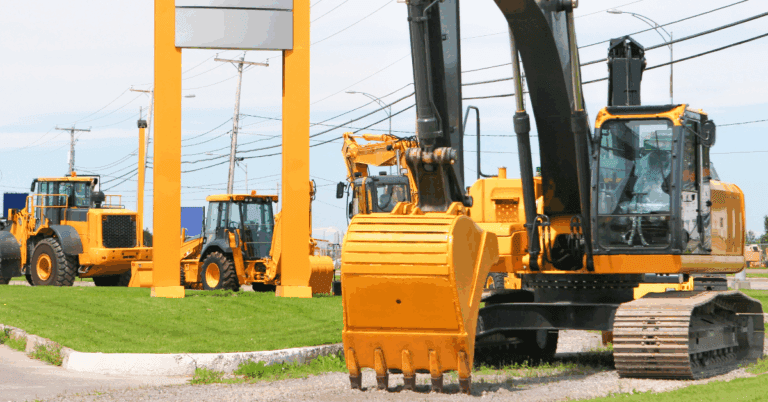
For equipment manufacturers, the biggest AI opportunity lies in service and support. OEMs are beginning to digitize their deep technical expertise, using AI assistants to help customers maintain and repair machines quickly.
Barnes explains, “Operators do not want to flip through a 200-page manual. They want instant answers. AI can deliver that knowledge in seconds.”
Furthermore, this new layer of intelligence strengthens relationships between OEMs and their customers, allowing predictive part delivery and self-service troubleshooting. It also creates recurring value beyond the sale, turning every interaction into an opportunity to improve uptime.
According to Mordor Intelligence’s 2025 AI in Construction Market Report, the global AI in construction market is expected to grow at more than 25 percent CAGR through 2030, driven largely by demand from OEMs adopting intelligent asset-management systems and predictive maintenance platforms.
Construction sites remain among the most complex and hazardous workplaces. To address this, AI is now stepping in to reduce risk. Video analytics, wearable sensors, and machine vision are detecting unsafe events and alerting supervisors before accidents happen.
Barnes emphasizes that “AI is not replacing people; it is supporting them. By analyzing real-time site data, AI can intervene faster than a human observer and prevent incidents.”
Consequently, these early successes show AI’s tangible impact on protecting workers and increasing productivity. The RICS report notes that AI-driven vision and sensor systems are among the fastest-growing areas of implementation, with more than 60 percent of contractors planning to deploy predictive safety solutions by 2026.
“AI’s ability to process complex, real-time data makes it one of the most powerful safety and productivity tools our industry has ever seen.” — Evan Barnes
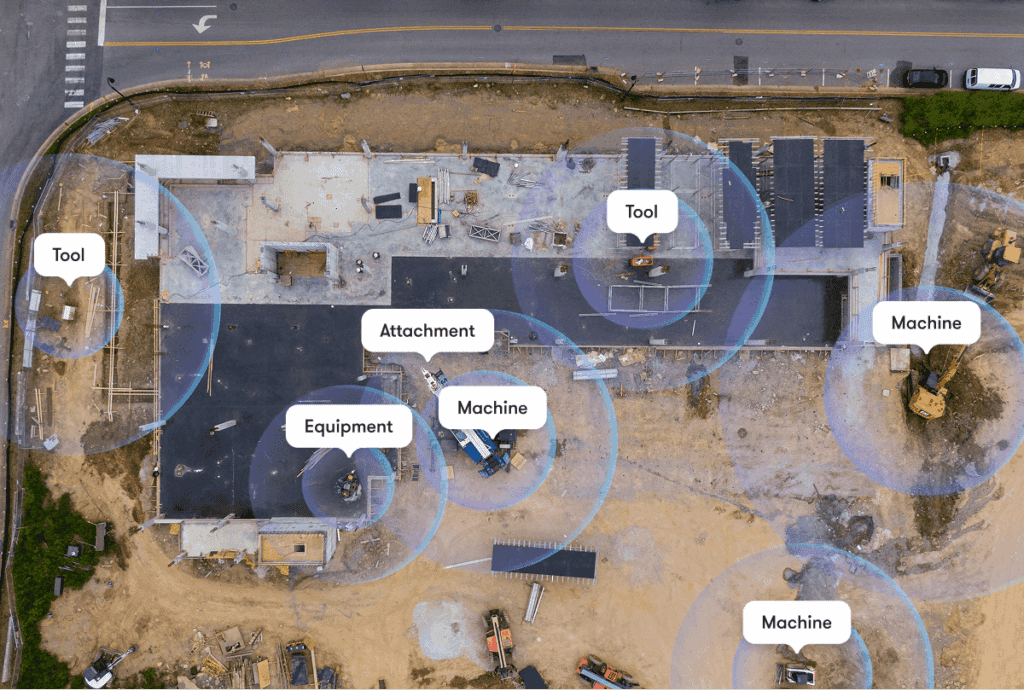
AI can help connect every tool, attachment, and machine on site, giving contractors real-time visibility into safety, utilization, and workflow efficiency.
For rental companies, AI in construction delivers clarity and speed. Machine-learning models are already helping to predict utilization, automate fleet composition decisions, and prioritize service actions when equipment returns from job sites.
Barnes explains, “AI accelerates your speed to insight. Rentals can see exactly what is working, what is under-used, and how to make machines ready for rent faster.”
Research from StartUs Insights’ AI in Construction Guide (2025) shows that predictive analytics for fleet optimization and maintenance tracking is one of the top five active AI applications in construction today. These solutions are enabling rental businesses to reduce downtime and improve asset utilization, directly improving margins.
Similarly, for rental companies, AI in construction delivers clarity and speed. Machine-learning models are already helping to predict utilization, automate fleet composition decisions, and prioritize service actions when equipment returns from job sites.
Barnes notes, “No one can solve construction’s biggest challenges alone, not OEMs, not rentals, not contractors. AI will bring us together because the value sits in shared data and collective insight.”
“The industry is realizing we are in this together. The problems are too complex for any one player, but AI gives us a shared language for collaboration.” — Evan Barnes
According to the RICS 2025 Artificial Intelligence in Construction Report, more than half of construction professionals see data sharing and partnerships as the most effective enablers of scalable AI use. The study highlights how collaboration between OEMs, rentals, and contractors is key to unlocking system-wide innovation.
The pace of change is accelerating. Barnes describes a near-term future where foremen can speak directly to their fleets: “Imagine asking your equipment who needs attention and hearing, ‘I am healthy’ or ‘I need an oil change.’ That is where we are headed.”
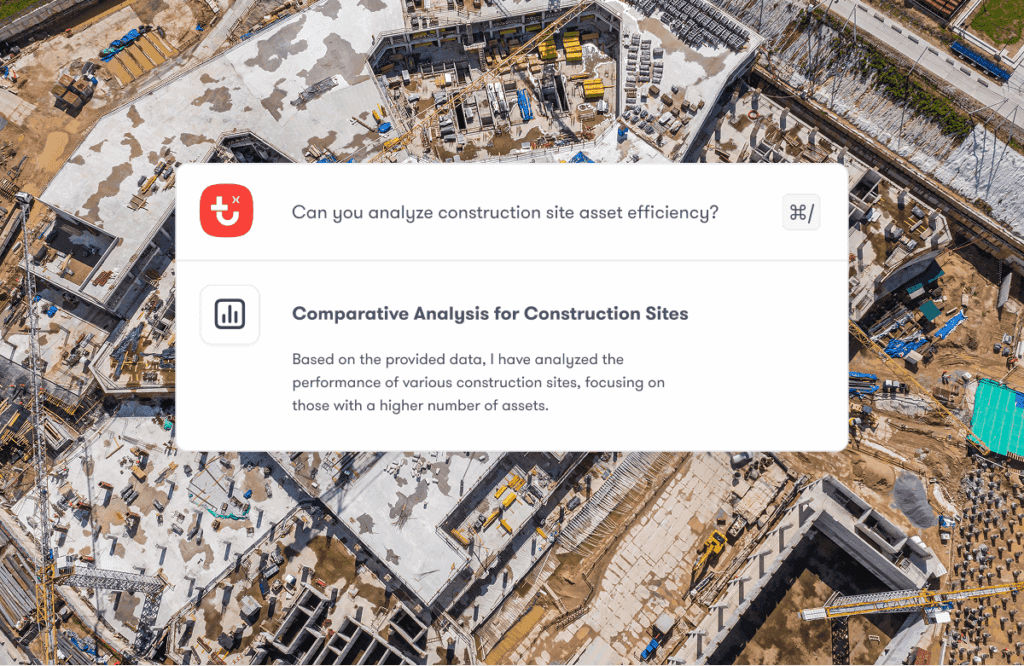
Composite AI, combining real-world data with large-language-model capabilities, will soon make these interactions a reality. Machines will respond to natural-language commands, deliver contextual insights, and even anticipate operator needs.
For construction leaders, the message is clear. AI in construction is already here. The companies that begin experimenting today will define what comes next.
AI is changing the game for the construction industry, unlocking new possibilities in efficiency, safety, and collaboration. In this series, industry leaders and experts dive into how AI is being integrated across workflows, overcoming key challenges and paving the way for more intelligent, innovative construction practices. Whether it’s predictive maintenance, workforce transformation, or data-driven decision-making, we’ll uncover how AI is driving progress and shaping what’s next for construction.