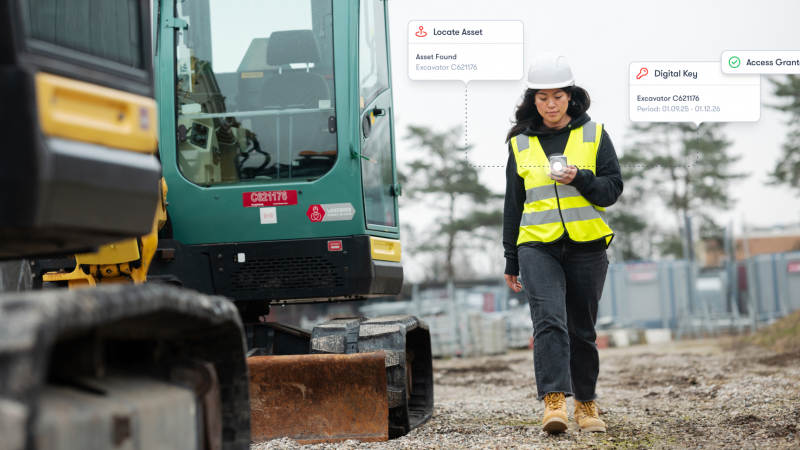






Every OEM eventually asks the same question: Should it build its own data and AI platform? Increasingly, the answer is yes, though not in the way many OEMs assume. That’s where many, in the end, fall into what I call the DIY stack trap.
The trap is not building the first version, and it is not becoming a platform company either, since that’s the actual goal. The real trap, instead, is thinking you have to build and maintain every layer of the stack to get there.
Being a platform company, in the way that matters to customers, does not require owning the infrastructure underneath it.
I’ve spent a decade working with construction equipment OEMs, and I have watched this pattern repeat across companies of every size. Here’s how to avoid it.
This shows up most, unsurprisingly, at enterprise OEMs. They have the depth and the budget, which makes the instinct look defensible.
Mid-market OEMs feel the same pull, though, without the same runway. That is just why the enterprise case is worth examining closely: If the logic doesn’t hold up there, it does not hold up anywhere.

The logic behind building in-house is straightforward, because most enterprise CE OEMs already run a SaaS platform for connectivity. But many, on top of that, are also experimenting with their own Databricks and AWS. That means building their own apps and their own BI and AI connectors.
AI has made that instinct harder to argue with, not easier. What used to require a dedicated data science team can, remarkably, get prototyped by two engineers in a weekend.
And OEMs don’t actually want telematics. They want what it enables, namely faster product support, stronger aftermarket leads and sales, and smart machines. So if AI shortens the distance to those outcomes, the shortcut starts to look tempting.
At first, it’s quite amazing what AI tools can provide in terms of insights compared to standard reports. However, what is often missing are the blueprints, connectors, and tools that enable all departments and personas to accelerate time to value of the data.
The irony is that most OEMs already have more usable data than they realize. For many OEMs, the bigger gap is no longer collection. It’s what happens to the data once it’s been collected.
The first phase is usually the easy one, since building something is achievable. Phase two is where the cost shows up, and it never really ends.
Security requirements and certifications need ongoing attention, and APIs need updating every time something changes upstream. That is not a project plan, it’s a permanent job description.
Controls engineers solve incredibly difficult machine problems, the kind nobody else can replicate. Running a commercial software platform, by contrast, is the wrong use of that talent. Every hour spent maintaining infrastructure, in short, is an hour that expertise does not go toward the machine.
Large OEMs, for their part, can build dedicated teams around it. Smaller ones typically bring on one or two people, who end up generalists rather than a real software team.
The pattern underneath all of it:
The OEMs moving fastest, in practice, do this differently. They put engineering effort into what is genuinely proprietary to them, while letting a platform handle the underlying layers: device connectivity, normalized machine data, identity and access, APIs, and security and compliance.
Real-world usage data is the clearest example. An OEM’s own engineering team, and only that team, can turn field performance into design decisions.
The trap shows up in a quieter way here too. Many OEMs, understandably, treat sales and marketing feedback as their read on what customers need. They rarely check it against what machines are actually doing in the field.
No platform, though, can do that work for an OEM. This is just the feedback loop a platform frees up capacity to run.
Where that kind of effort actually goes:
The difference in speed, plainly, shows up quickly. Platform-based portal rollouts can happen in weeks, while internal builds can stretch into multi-year efforts before delivering comparable value.
The engineering talent is there either way, and what changes is where the team points it. That’s the same choice component manufacturers now face across the wider OEM ecosystem.
The question is whether to build the infrastructure themselves, or leverage one someone else maintains.
Most OEMs made a version of this call once before, in telematics hardware. Partnering with specialists to manufacture the devices freed up engineering capacity for the machine itself.
The data platform decision follows the same logic. The question isn’t whether your engineers can build one. It is whether that’s the highest-value problem they could be solving.
The OEMs avoiding the DIY stack trap are the ones who have answered that question. They choose carefully what belongs inside the business, and leave the rest to a platform built for exactly this. Being a platform company was never about building the platform stack yourself.
Paul Wilson leads OEM commercial across the Americas at Trackunit. He has spent a decade working with construction equipment manufacturers to build connectivity programs that go beyond basic telematics. Before Trackunit, Paul ran the Customer Facing teams at ZTR – IIoT Division and held senior sales leadership roles at TELUS Communications and Info-Tech Research Group.