
Platform Overview
From edge connectivity to AI driven orchestration
Turn your equipment data into intelligence your AI agents can act on. Enriched, contextualized, and ready for the complexity of real-world operations.
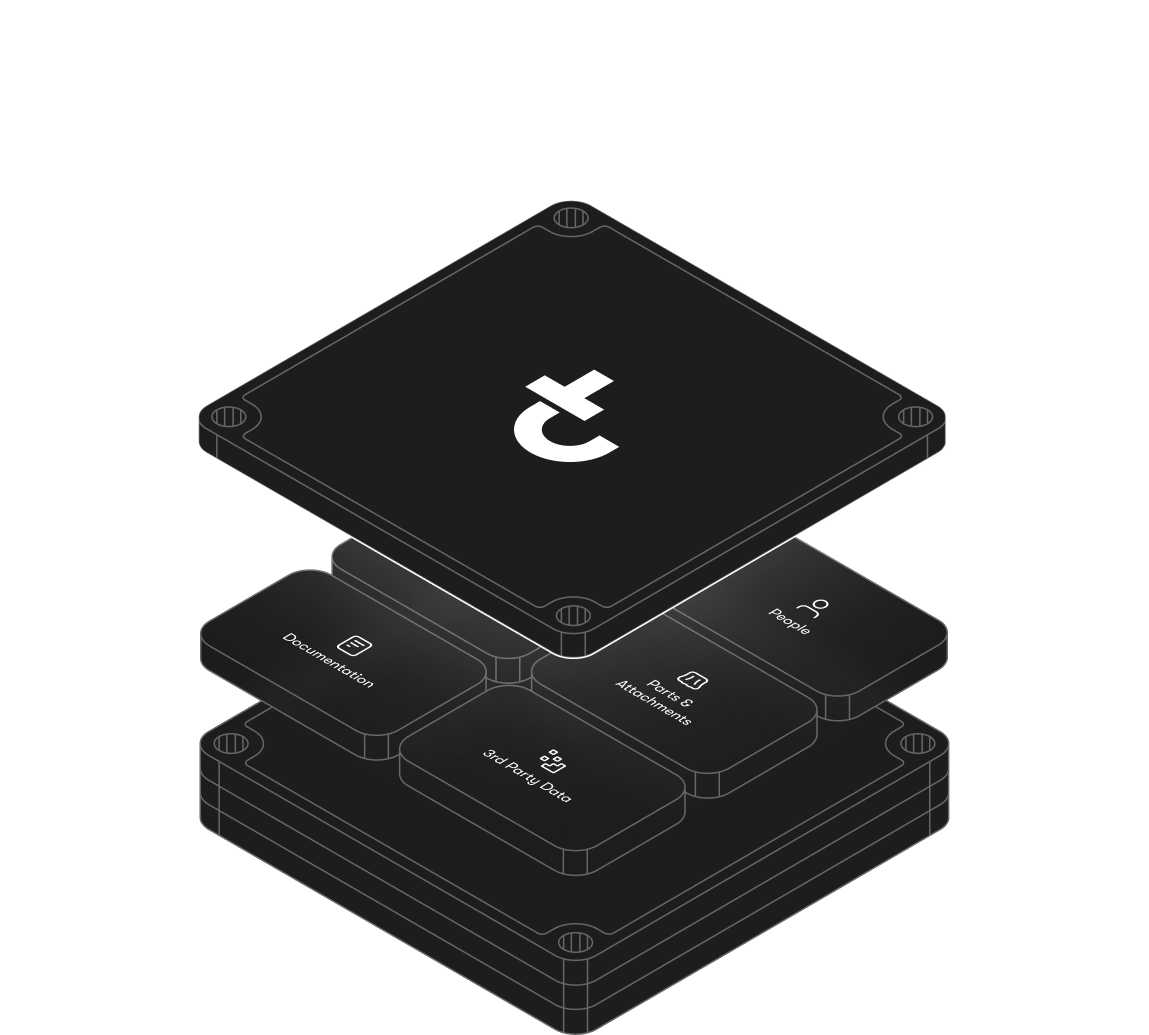
One foundation. For every site, fleet and machine.
Turn operating data into intelligence and put it to work across every team, application, and AI agent in your business. From insight to action, in a fraction of the time.
Put AI to work across your fleet, sites, and operations
Move beyond static dashboards and rigid workflows. Get insights grounded in construction-grade context, and deploy agents that act on operational decisions.
Accelerate team performance by enabling expert-level execution.
Reduce operational cost through automation and real-time intelligence.
Trackunit IrisX is the platform of choice for the biggest businesses in construction.

Built for the largest rental, contractor, and OEM operations
IrisX is the operating data platform behind major rental companies, contractors, and OEMs in construction. One foundation, built for the depth and complexity of enterprise operations.
Agentic AI built into the platform, inside and out
Recognized for the transformative impact of its IrisX platform in reshaping how the construction industry leverages data and AI.
The context AI needs to work in construction.
Every AI model is getting smarter. But a smarter model connected to raw, fragmented construction data doesn’t produce smarter outcomes – it produces faster noise. IrisX exists to close that gap.
The gap between AI potential and AI impact in construction is not a model problem. It’s a data and context problem.
Knowing an engine ran for 400 hours is data. Knowing that 400 hours is anomalously high for that machine type, in that climate, at that utilisation rate, compared to a population of millions of similar machines — that’s context.
That’s what makes AI outputs trustworthy enough to act on. IrisX exists to close that gap. A multi-layered platform that connects, enriches, and makes construction data usable — from the first machine signal to the AI agent acting on it.
Together, it forms the foundation construction intelligence is built on.
30,000+
Companies powered by IrisX
3B+
Data points created daily
2T+
Clean & structured data points
100+
OEM data feeds harmonized
1,200+
Enterprise integrations
Pre-built connections to the systems your business already depends on
150+
Marketplace apps
An ecosystem of construction-specific applications built on the IrisX foundation.
From machine signal to AI-ready intelligence.
Every AI model is getting smarter. But a smarter model connected to raw, fragmented construction data doesn’t produce smarter outcomes – it produces faster noise. IrisX exists to close that gap.
01
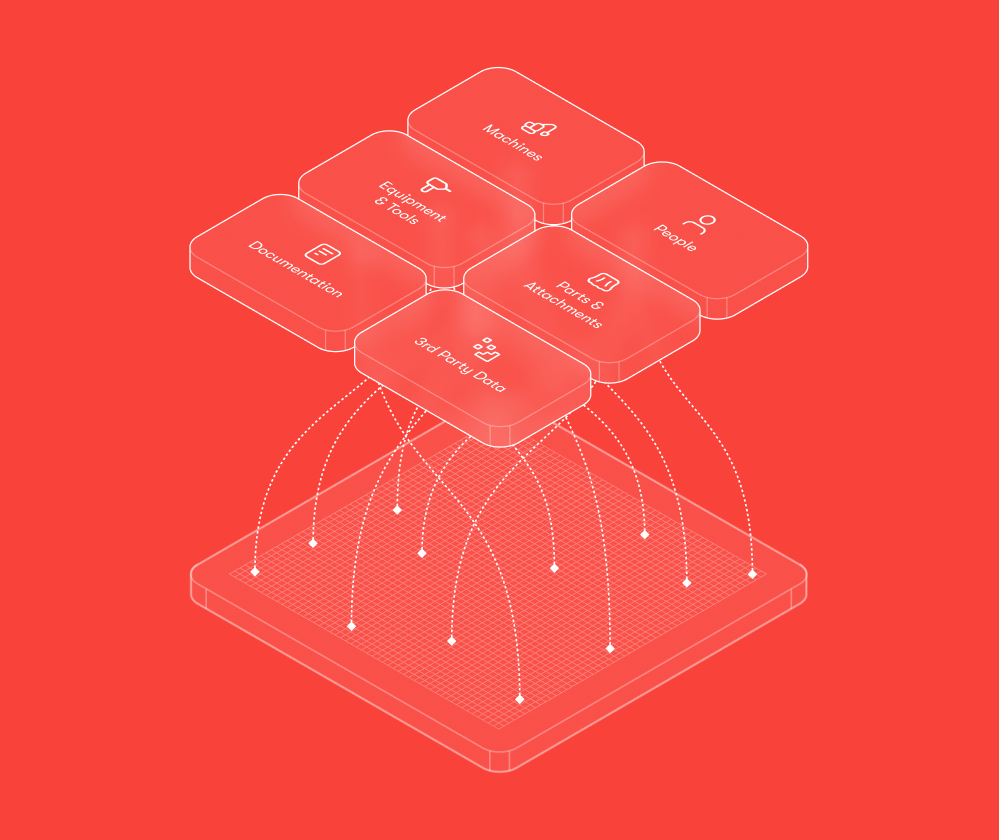
Construction IoT & Edge
The IoT and Edge layer is the connection point between the physical fleet and the IrisX platform. Trackunit IoT devices and third-party telematics feeds bring operating data into the platform in real time, across machines, sites, and mixed-vendor fleets.
IrisX operates bi-directionally. Data flows into the platform, and the platform enables structured interaction with connected equipment in return: remote access, firmware updates, and jobsite-level orchestration.

02
Data enrichment & harmonisation
Every data point is enriched with the full context of the machine it came from: make, model, configuration, operating history. And it’s normalized across sources, so fleet data is directly comparable regardless of which OEM produced it.
Enriched data is benchmarked against a shared population of millions of machine-years of operating history. That’s the basis for anomaly detection, performance comparison, and the domain intelligence layer.
03
Governance & distribution
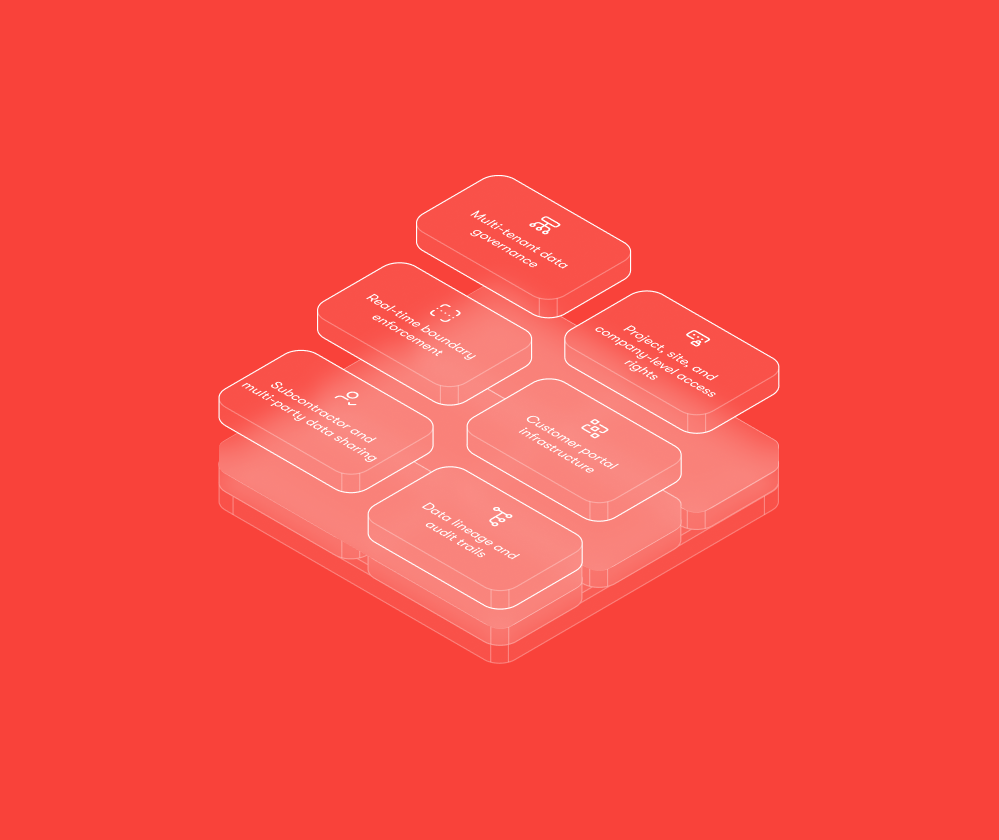
Equipment is rarely owned, operated, and serviced by the same company. Data rights change as it moves between parties and sites. IrisX is built around this reality, with multi-tenant data governance for complex construction hierarchies built into the architecture.
Access rights are tied to project, site, and company boundaries, and enforced across every query, workflow, and AI agent that touches the data. Distribution follows the same model. Every recipient accesses only what they’re entitled to.
04
Domain Intelligence
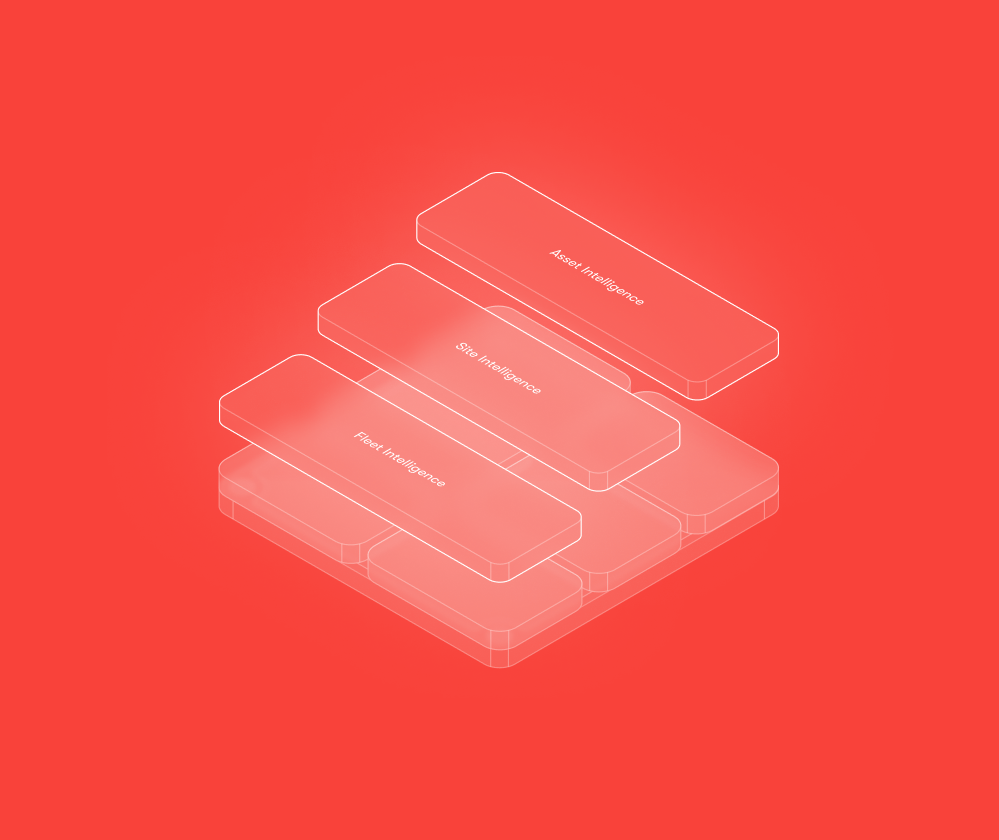
IrisX applies construction-specific ML models and algorithms to the enriched data, turning normalized telematics into operational understanding across three levels of the business.
- Asset: machine health, fault analysis, fuel and battery management, and predictive maintenance.
- Site: geographic modeling, alarm management, emissions tracking, and digital access control.
- Fleet: utilization intelligence, performance analytics, and population-level benchmarking.
This is what separates IrisX from a general-purpose platform. Domain-specific intelligence is built in, not bolted on.
05
Platform Extensions
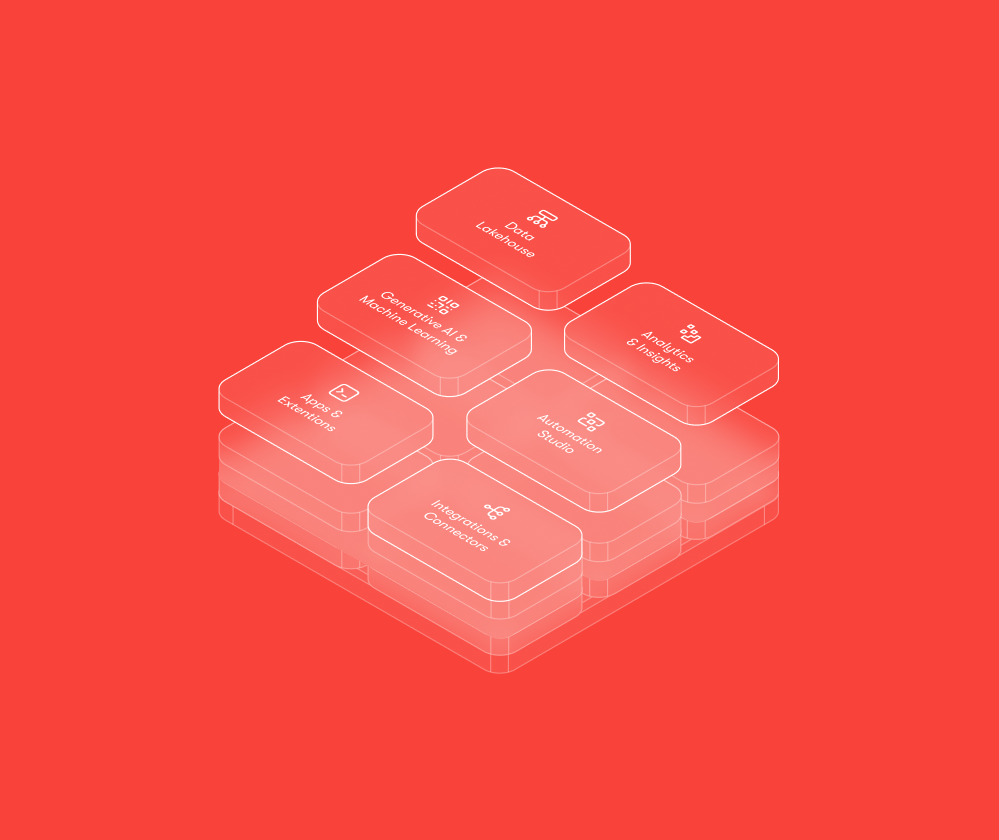
Build on IrisX with access to the full platform stack: enriched data, domain intelligence, governance, and APIs. Capabilities, frameworks, and infrastructure sit on top, with the heavy lifting already done.
Blueprints accelerate the path to apps, custom solutions, and advanced insights. Pre-built automation, analytics, and code, ready to deploy and adapt.
Development is AI-assisted by design. You build directly on enriched data and construction-native primitives, with AI accelerating every step from first prototype to production.
06
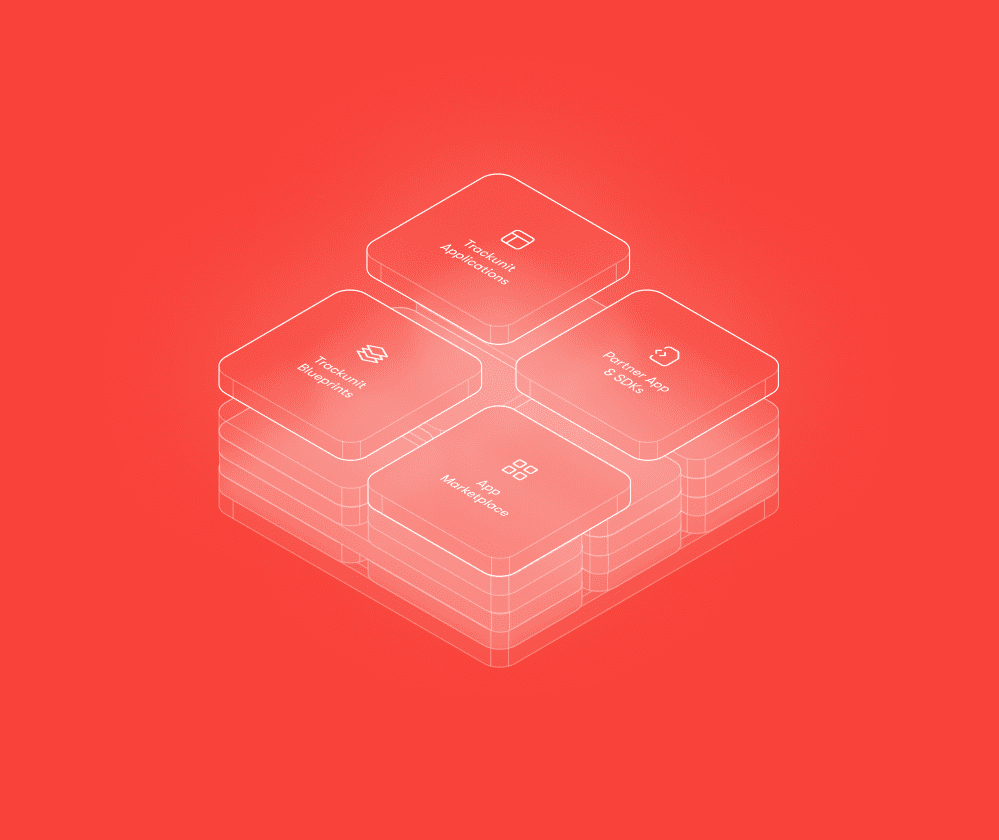
Applications
This is where IrisX reaches the people who use it every day: operations, service, and commercial teams across your organization and network.
Applications are built by Trackunit, partners, and the ecosystem, growing with the platform, not just with Trackunit’s roadmap.
Every application on IrisX is AI-native, not adjacent. Contextual insights, automated agents, and a built-in AI assistant work in every application, not as add-ons.
07
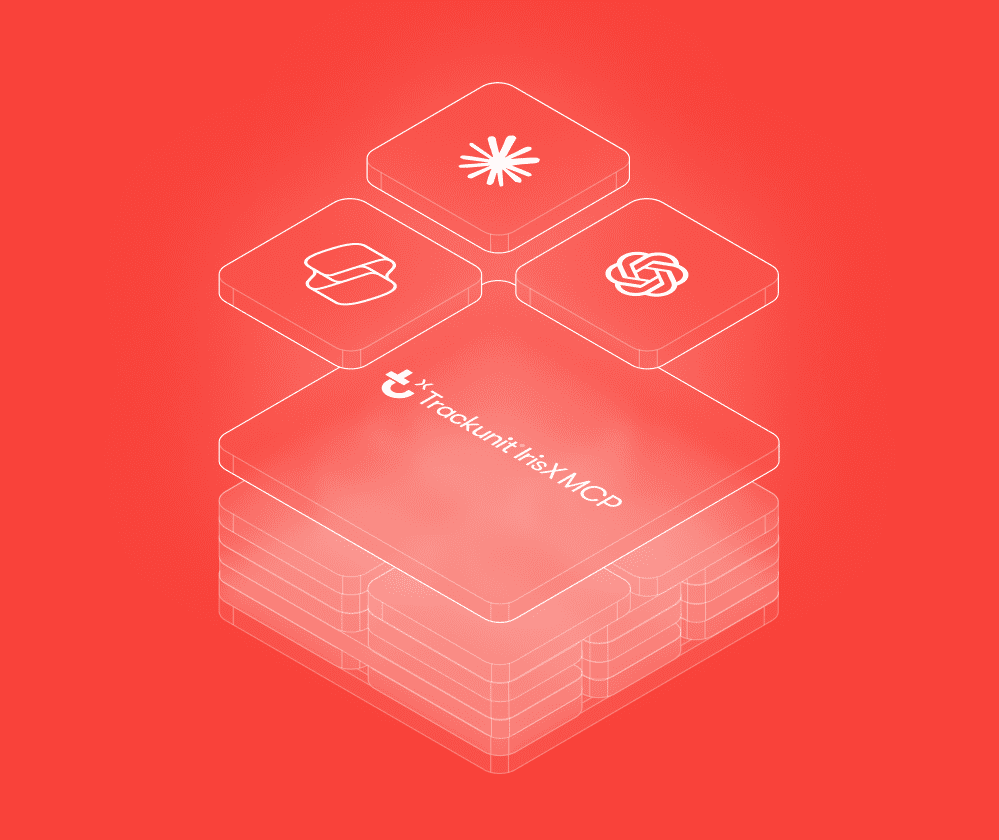
Agentic AI
IrisX sits at the center of the AI access layer, built on Model Context Protocol (MCP). The IrisX MCP lets you connect the AI agents you already use, like Claude, GPT, Gemini, or Microsoft Copilot, to the full construction domain inside IrisX, through plain-language instructions and within the governance model embedded in every layer above.
IrisX AI is the agentic AI capability inside the platform, purpose-built for operating and orchestrating construction equipment.
The world's largest fleets run on IrisX
From edge connectivity to AI, the world’s leading OEMs, rental companies, and contractors rely on Trackunit IrisX every day.

What makes IrisX different?
Generic data infrastructure stores construction data. IrisX understands it, governs it, and makes it usable at the scale and specificity construction actually needs.
Construction context, built into every data point.
The platform that gives AI agents the ability to act
A bi-directional IoT layer means your agents don’t just read data. They send commands, adjust access, and trigger actions in the real world of machines and sites.
A foundation that gets richer every time a machine moves.
Security, governance, and compliance. Built in, not bolted on.
IrisX is designed for enterprise-grade security and governance. Certified, interoperable, and architected to make complex operating data simple to act on across every layer, every query, and every agent that operates on the platform.
Compliance
Data governance
Policy-driven control over what data is accessible, to whom, and under what conditions. Access control, lineage, and health monitoring, enforced across every tool, team, and agent.
AI governance
Every AI agent operates under the same access model as every human user, enforced through OAuth 2.1, and scoped access across every interaction.
ISO/IEC 27001:2022
ISO 9001:2015
Cyber Essentials plus
Questions worth answering in full
What is Trackunit IrisX and what does it do?
IrisX is Trackunit’s Operating Data Platform built specifically for construction. It brings equipment, telematics, fleet, site, service, rental, ERP, and third-party data into one governed data foundation.
With IrisX, construction businesses can turn fragmented data into insights, AI, automation, applications, and customer-facing digital experiences. It helps OEMs, rental companies, contractors, and partners make faster decisions using trusted construction data.
What makes IrisX a better foundation for construction data than general-purpose data infrastructure?
General-purpose data infrastructure provides storage and compute. IrisX provides construction context. It is built to work with mixed fleets, OEM data, telematics, rental systems, ERP platforms, service tools, sites, operators, and third-party applications.
IrisX harmonizes construction-specific data such as location, engine hours, fuel, battery, fault codes, utilization, service events, access events, and site activity, so teams can act on trusted data faster. It helps teams move from raw data to business value faster than starting from generic infrastructure alone.
How does IrisX work with AI assistants and large language models (LLMs) like Claude, ChatGPT or Copilot?
IrisX gives AI assistants and LLMs trusted construction data to work with. It harmonizes equipment, fleet, site, service, rental, ERP, and third-party data into a governed operating data layer.
Through approved interfaces such as APIs, developer integrations, and Trackunit IrisX MCP, AI tools can help teams ask questions, summarize machine activity, explain fault history, generate reports, recommend next actions, and support automated workflows.
What is MCP and how does Trackunit use it?
MCP, or Model Context Protocol, is a standard way for AI clients to connect with software tools, data, and services.
The Trackunit IrisX MCP lets AI assistants like Claude, ChatGPT or Copilot securely interact with IrisX data and capabilities through a standardized interface. Users can ask natural-language questions, take approved actions, and automate recurring tasks across assets, sites, services, faults, utilization, access, and inspections. It helps teams move from manually navigating software to working with AI agents that understand construction operating data.
What data does IrisX work with and how is it enriched?
IrisX works with machine, fleet, operational, business, and third-party data. This can include location, operating hours, idle time, fuel, battery, fault codes, utilization, access events, service signals, ERP, CRM, rental systems, BI tools, documents, and data warehouses.
IrisX enriches this data by standardizing it into construction-specific structures and combining it with context such as sites, contracts, service schedules, customers, work orders, and operators.
Can IrisX work with telematics hardware I already have from other vendors?
Yes. IrisX is designed for mixed fleets and multi-vendor environments. Many construction businesses already use telematics hardware, OEM portals, rental systems, ERP platforms, service tools, and internal applications.
IrisX is not designed to replace everything already in place. It connects and harmonizes data across those systems, helping customers keep their existing stack while making data more consistent, governed, and usable across analytics, automation, AI, apps, and customer experiences.
How does IrisX handle data security and access control in an AI context?
IrisX is built with security, governance, privacy, and controlled access at the platform level. This is especially important for AI, because agents should only access the data and actions they are permitted to use.
IrisX is ISO 27001 certified and includes capabilities such as access controls, privacy and sharing controls, identity management, MFA, vulnerability management, secure development practices, penetration testing, vendor assessment, and least-privileged access.
Let’s connect to find the right solution for your business. Unlock the value of your data in new ways and accelerate your journey to eliminate downtime.