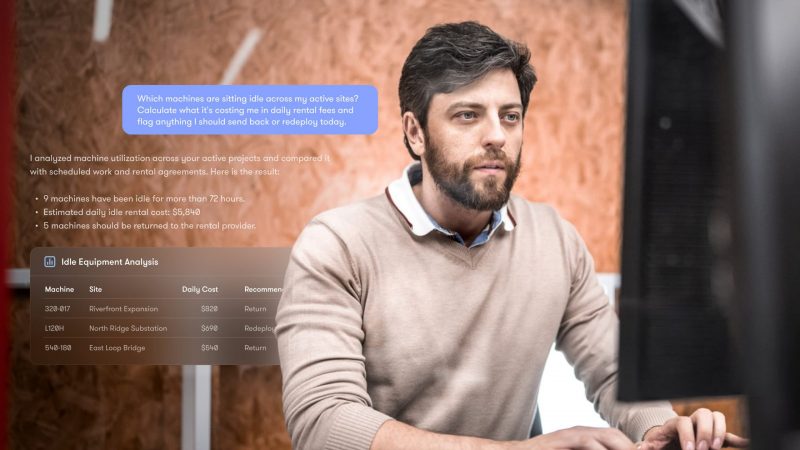






Once a component leaves the factory, its maker often loses sight of where it ends up, how it’s used and what its health is. Yet the field is where the aftermarket money is, in parts and service for every year the component keeps working.
The data to follow it is already there, because the machines those components go into collect much of it. Today that data sits in a silo with the asset owner. Getting it out, with the owner’s consent, creates mutual benefit for asset owners, machinery OEMs and component makers.
Engine makers like Cummins and Perkins moved first, because they invested early in digital services. Any component maker can follow their lead.
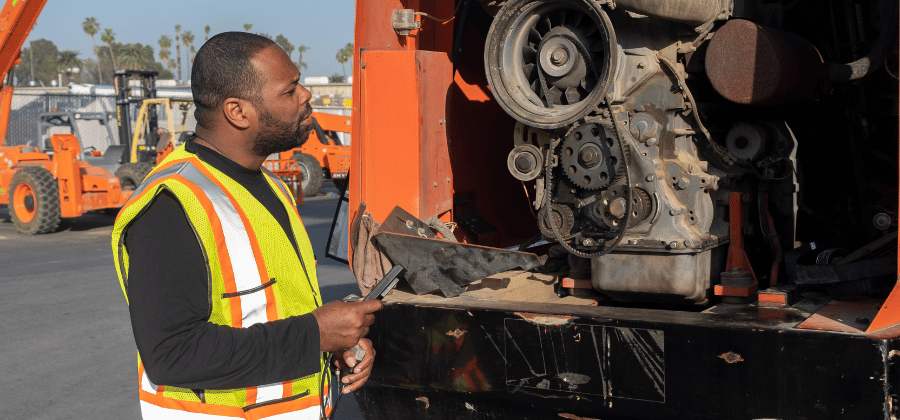
Once the warranty period ends, the component OEM can earn strong margins on parts and service through its dealers. Field data also helps prove its component is the most robust and reliable in its class, so machinery OEMs keep choosing it.
Shared data can show a component OEM where its components are, by model, serial number, size class and application. For example, if an engine OEM’s data shows a large population of engines in California, the closest distribution center can stock the right parts, and the OEM can offer 24-hour delivery and achieve high first-time fill rates.
The bigger prize is service capture. Much of the post-warranty service work goes to independent shops using non-genuine parts. A recommendation that sends the owner to an authorized dealer brings the job, and the parts, back into the component maker’s network.
Parts planning moves from historical averages to demand signals from connected machines. Every engine that needs service, whether now or at the next visit, becomes a lead for the local branch.
What a local branch manager can act on each week:
Many component OEMs first tried their own hardware programs, with an edge device built for their engine, transmission or hydraulics. A device that adds 3% to 5% to an engine’s cost is a hard sell to a machinery OEM. That’s especially true when the machine gets a tracking device later anyway, because it joins a rental fleet or a partner fits one.
On a connected machine, the controller speaks to the transmission, the engine and the hydraulics. A telematics device on that controller can capture a large share of that data. What a component OEM can see depends on the machine, the data available and what the owner agrees to share.
So the component OEM partners with the company already capturing the data. Together they build a consent mechanism for owners to share it with the component OEM, and owners only need to download an app. It’s the same build-or-partner choice machinery OEMs face with their own data platforms.
With Cummins, the relationship is purely a data exchange, and the value is in what comes back. Trackunit collects the raw engine data via the machine controller and feeds it to Cummins. Cummins then sends back recommendations, one for the operator and one for the fleet manager.
Say a large rental company owns a machine with a Cummins engine, and the engine puts out a fault code tied to the coolant system. Cummins takes that raw data, weighs it against several other data points, and sends back guidance.
The operator learns whether to finish the shift or shut the machine down now. The fleet manager learns whether to monitor the issue, service it at the next visit, or stop the machine and call a Cummins dealer.
Cummins has turned that fault-code data into more than 600 app downloads by rental fleets, and a direct commercial relationship with the asset owner. Each call for service points the owner to a Cummins dealer.

If I ran a large rental fleet, I’d want the engine maker to stock parts closer to my operations. But if I don’t share that data, how can I expect the engine maker to make that choice?
Asset owners are right to ask who sees their data and what it’s used for. Unlike consumer data, this is a B2B choice. You’re not going to push a business into a decision against its own interest.
Because Trackunit connects machines across classes and brands, it acts as custodian of that data and the link between owners and component makers. I’d call that role an honest facilitator. The data owner decides what’s shared, and with whom.
The machines carrying a component OEM’s engines, transmissions and hydraulics are already in the field, and many are already connected. The best return comes from building the aftermarket on that installed base, rather than on a new hardware network.
For component OEMs ready to grow parts and service revenue, Trackunit’s invitation to partner is open.
Shouri Bagchi is Director, Enterprise Americas Region at Trackunit, with 18+ years in the equipment industry across Perkins Engines, Liebherr, and Trackunit. He works directly with OEM and component manufacturers, helping them turn fleet data into faster, more accurate decisions.