





In nearly a decade advising OEMs at Trackunit, I’ve sat through a lot of strategy reviews where the same line comes up: “We are collecting more machine data than ever, and most of it is fragmented, inconsistent, and hard to act on.”
The usual next move is to add another tool. A new dashboard, one more integration, an analytics project that quietly stalls. I understand the instinct, but it rarely changes much, because none of it feeds what the machines report back into the product.
But something else is going on. Two manufacturers can ship the same machines, with the same sensors, getting back the same data, and one still pulls ahead. The difference is how fast each turns that data into a better machine.
I’ve started calling that learning velocity: how quickly field data becomes a better machine, a smarter service call, a lower cost to keep it running. More and more, it is what separates one OEM from another.
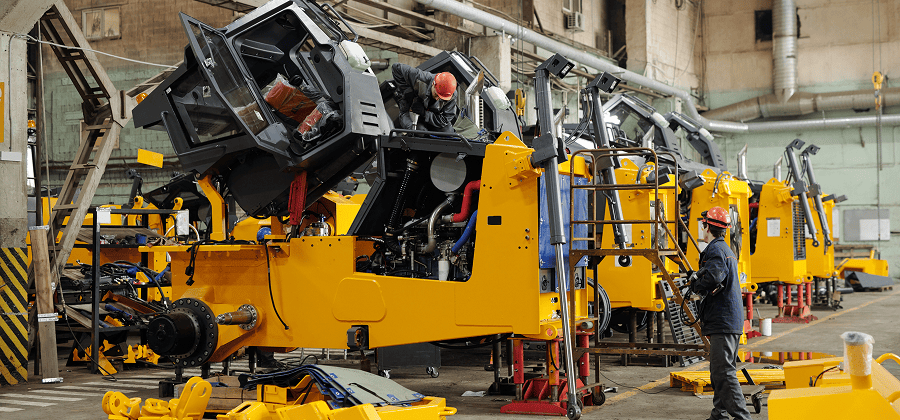
For most of the industry’s life, the machine was the product, finished the day it left the factory. Two things are changing that.
First, the electronics are consolidating. Dozens of small control units are giving way to one far more capable onboard computer, with room to run real software.
Second, that software can be updated remotely, over the air. The machine keeps improving in the field, not just when the next model arrives.
So the machine is no longer fixed when it ships. It can get better every month it works. Which raises a simple question: better, based on what?
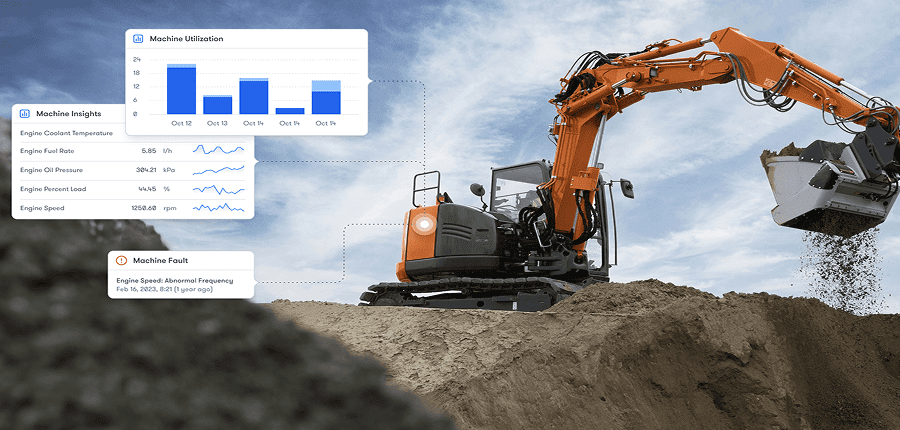
Most OEMs still judge a machine by how good it is the day it ships. The ones pulling ahead also watch how it behaves months later, in the field. That gap is where the advantage is moving.
A clean dashboard is easy to admire. It starts to matter only when the data changes something real: a load-sensor recalibration, a parts order, the next machine on the line.
In my experience, a manufacturer can match a rival’s spec and still lose the customer, because the edge now builds over time.
How learning velocity compounds:
The pattern is a simple loop: data from the field improves the product, and the better product generates better data again.
Here is what that looks like. A telehandler starts tripping its load-moment limiter more often than usual at eighteen hundred hours. On a single machine, that is a service call waiting to happen.
Across a connected fleet, it is a signal. The same load-moment pattern is forming on two hundred other machines. Reading the whole fleet at once, what some call fleet intelligence, turns one machine’s nuisance trip into a fix for all of them, and into a better next model.
Three things happen at once:
The honest objection is that this sounds like connectivity rebranded. It isn’t. Telematics would have told you that one telehandler tripped its load-moment limiter. Learning velocity is what turns two hundred of those nuisance trips into a recalibrated sensor, a faster fix, and a lower cost to keep the fleet running.
Connectivity is the input; learning is the output. Many OEMs have the first and little of the second, which is why so many connected fleets feel inert. Building that capability is one challenge, and turning it into commercial results is another.
Ask where the advantage will come from over the next ten years, and the honest answers rarely point at a single machine. Data on its own is not the advantage; learning from it faster is. Product roadmaps are quietly turning into learning roadmaps, and the manufacturers building that habit now will be hard to catch.
Twenty years ago, scale meant building more machines. For the next twenty, it will mean learning from more of them.
Vice President of Business Consulting, Trackunit
Domokos Spéder is Vice President of Business Consulting at Trackunit, where he has spent nearly a decade advising construction OEMs, rental companies, and contractors on turning connected-equipment data into commercial results. He is the featured executive in Databricks’ customer story on how Trackunit built its IrisX platform.