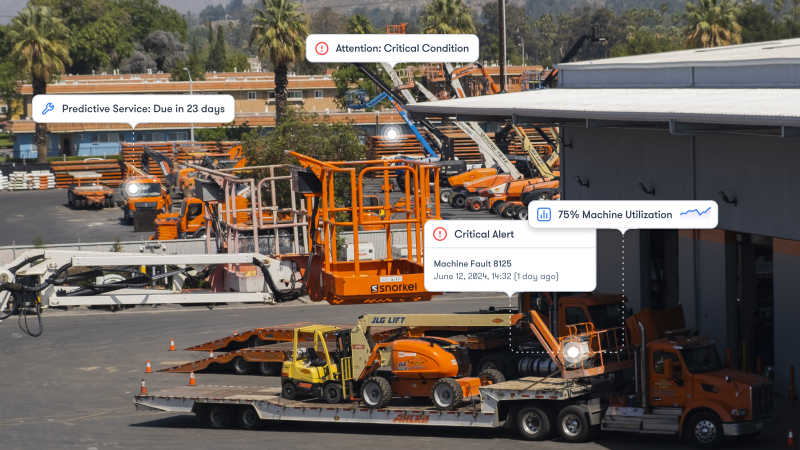





IrisX is Trackunit’s Construction Operating Data Platform. It powers telematics and fleet management by transforming fragmented machine data into structured, AI-ready intelligence.
Telematics transformed construction fleet management. Before it, fleet managers had no reliable way to know whether a machine was running or approaching a service interval.
The core function is data capture and transmission. GPS location, engine hours, utilization status, fault codes, and fuel consumption all arrive in near real time.
For a single-brand fleet in the early years of connectivity, that was enough. Managers finally knew where machines were, and utilization reports replaced guesswork.
Telematics was built to answer one question: what is happening with this machine right now? It was not built to answer what the data means across a mixed fleet.
It cannot connect data from eight OEM brands into an ERP, or prepare that data for AI. Those are structural limits, not technical failures.
Construction operations have grown well beyond what telematics was designed to handle. A mid-sized rental company runs machines from multiple OEMs, each transmitting to a different portal in a different format.
A contractor manages sites across regions with no shared data layer. An OEM has telemetry from thousands of machines that rarely returns in a form engineers can act on.
The result is the 10% problem. Data is generated and captured, but never reaches anyone who can use it.
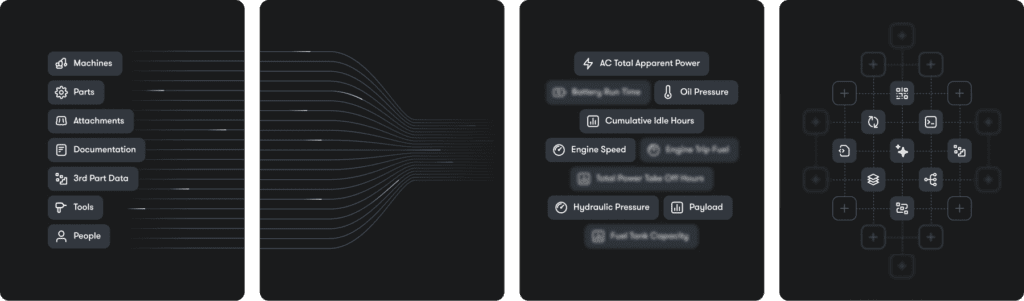
An Operating Data Platform lives in the gap between data collection and data activation. It takes raw telematics data and maps it into a single common model, regardless of which brand or machine it came from.
That common model is what makes scale possible. Every machine in the fleet speaks the same data language, so cross-brand analysis and automation work without custom engineering for each OEM.
Without it, a fault code from one brand triggers nothing in another brand’s workflow. With it, any fault code from any machine can trigger the same service process across the entire fleet.
IrisX takes operating data from any source and standardizes, labels, and stores it in a common data lake. Removing either layer, telematics or the platform, breaks the chain.
The table below shows how the two layers compare.
| Telematics | IrisX Operating Data Platform | |
|---|---|---|
| Primary function | Captures and transmits machine data | Maps, governs, and activates data across systems |
| Data scope | Single machine or OEM brand | All OEM brands, all sites, all connected systems |
| OEM data normalization | Not designed for cross-brand use | Built in |
| AI readiness | Not designed for AI | AI-ready data lake |
| Enterprise integration | Minimal | 1,200+ prebuilt connectors |
| Governance | Minimal | Security controls, data lineage, compliance frameworks |
The answer depends on what the operation is trying to do. A single-brand fleet with straightforward reporting needs may not need an operating data platform yet.
The picture changes when the fleet spans multiple OEM brands and utilization data needs to be compared across them. It also changes when service workflows need to trigger from real machine events rather than calendar schedules, or when equipment data needs to flow into an ERP or feed an AI model.
Telematics alone cannot deliver any of those outcomes. They all require a layer that normalizes and connects the data first.
For OEMs, there is also a financial case. Aftermarket services carry operating margins approximately 2.5 times higher than new equipment sales, according to Deloitte. Capturing that margin requires the digital infrastructure to deliver proactive service at scale, which starts with a governed data layer.
For OEMs, machines leave the factory and the data loop closes. Telemetry feeds into portals that product engineers rarely access in a usable form.
Service runs on calendar intervals instead of actual machine condition. Customer relationships thin between transactions.
An operating data platform reopens that loop. Machine data maps into a single model that engineering, service, and product teams can all query. Field failure patterns and duty cycle data reach engineering teams in structured, queryable form.
That shortens R&D cycles and reduces over-engineering against assumptions rather than field evidence.
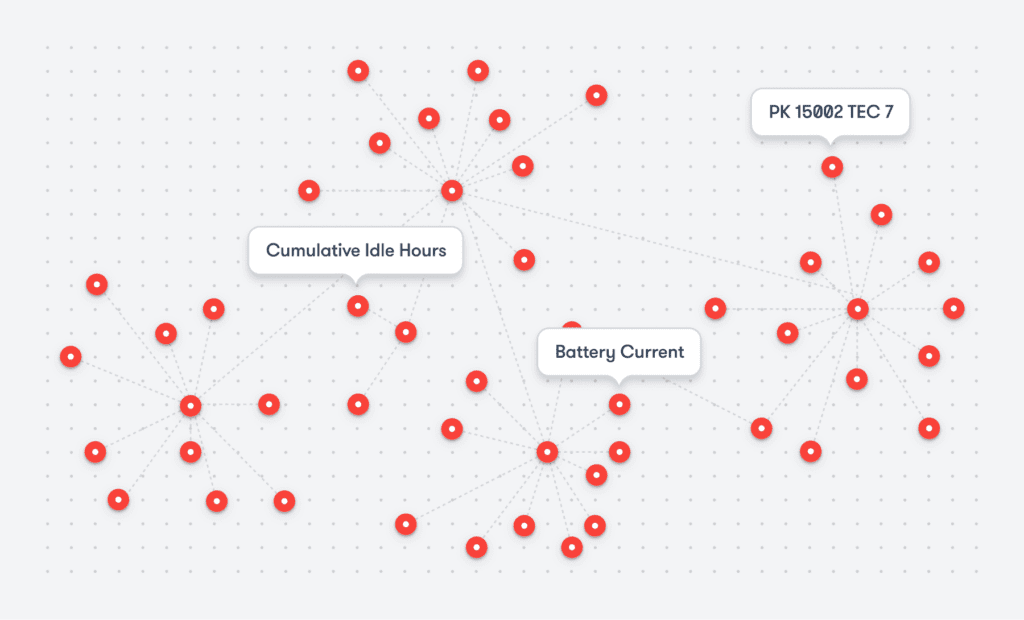
Most mixed rental fleets are managed through separate OEM portals. Utilization cannot be combined across brands, and out-of-contract usage goes undetected until the billing moment has passed.
A shared data layer connects utilization across every brand and links it to actual contract terms. One Trackunit rental customer with approximately 5,000 machines surfaced more than $1 million in additional revenue this way.
That was usage invisible across separate portals. A single governed layer made it visible and recoverable.
The same layer supports faster turnarounds. Service status, location, and utilization data are accessible in one view, so redeployment decisions no longer require manual reconciliation.
For contractors, equipment tracking, project management, and ERP run in separate systems. Fleet managers make deployment decisions on incomplete information.
When data sits in a single governed layer, work that currently takes hours becomes available in one view. Emissions reporting also becomes possible from existing machine data, without additional instrumentation.
Compliance improves too. Safety inspection records, service history, and utilization data sit in one accessible place for site managers and project owners. That matters when client contracts require documented evidence of equipment status.
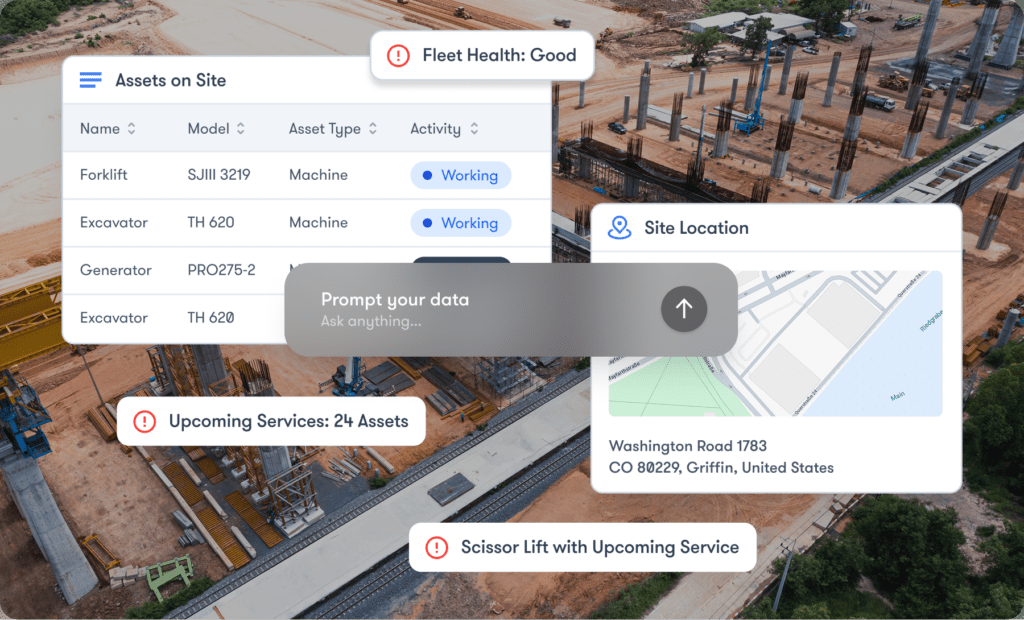
Three forces are converging. First, data volume. Construction operating data is scaling toward trillions of records, and telematics portals were not designed for that query performance.
Second, AI. Models need clean, labeled, consistent data that fragmented telematics from multiple OEM brands cannot provide. An operating data platform creates the base that makes AI reliable in the field.
Third, ecosystem complexity. Construction’s value chain spans OEMs, dealers, rental companies, contractors, and owners, each needing equipment data in different formats. Handling that safely requires the governance and integration infrastructure that an operating data platform provides.
For most operations, the ROI case is not about new technology cost. It is about recovering value that is already being lost.
For a full look at what this means for each segment, see Industry cloud platform for construction: what it means for OEMs, rental, and contractors.
Telematics captures and transmits equipment data from machines to a central system. An Operating Data Platform maps that data across OEM brands into a common model, connects it to business systems, and governs it for security and compliance. Telematics is the collection layer. An operating data platform makes the collection useful.
No. Telematics remains the data collection layer. An Operating Data Platform maps and governs what telematics collects. Existing telematics infrastructure stays in place.
Most companies act on less than 10% of the data their machines generate. That figure comes from Trackunit’s experience across OEM, rental, and contractor customers. The rest is captured and transmitted but never connected to the systems where it could drive decisions.
It depends on what the operation is trying to do. A single-brand fleet may not need one yet. Mixed-brand fleets, teams building AI applications, and operations needing equipment data connected to other business systems all need what an Operating Data Platform provides.
Yes. An Operating Data Platformingests data from existing telematics systems, including OEM feeds from multiple brands, and maps everything into a common model. Nothing in the existing connectivity layer needs to be replaced.
AI models require clean, consistent, labeled data. Telematics from multiple OEM brands arrives in different formats with inconsistent field definitions. An operating data platform maps all of it into a single data model before it reaches any AI application.
The calculation starts with what the data could be doing, not what the platform costs. Aftermarket services carry operating margins approximately 2.5 times higher than new equipment sales, according to Deloitte. That margin is only capturable with infrastructure to deliver proactive service at scale.
Building on an established platform typically takes three to six months to reach live value. That compares to 18 months or more when building from generic cloud infrastructure. The difference is time spent on data modeling and building integrations to existing business systems.
A purpose-built operating data platform carries ISO 27001 certification and end-to-end encryption by design. IrisX embeds data governance controls, access management, and compliance frameworks from the ground up. Each OEM data feed is ingested under defined access policies, and data lineage is tracked for audit reporting without additional configuration.
An operating data platform brings fuel and utilization data from every brand into a single layer. Scope 1 emissions reporting becomes possible from existing machine data, without additional instrumentation or manual aggregation across separate portals.
Generic cloud handles compute and storage. A construction industry cloud platform adds OEM-specific data normalization, an equipment data model, and prebuilt integrations with the systems construction operations actually run. IrisX connects to more than 1,200 systems through prebuilt connectors, removing the custom integration work that makes generic cloud deployments slow.
Without a shared data layer, deployment decisions draw on data from multiple disconnected systems. A single governed layer gives fleet managers one view of machine location, utilization, and condition across the entire fleet, linkable to project timelines and ERP systems.
Mikkel Dalgas is Chief Technology Officer at Trackunit. He leads the architecture and development of IrisX, Trackunit’s Construction Operating Data Platform. With extensive experience in cloud infrastructure and enterprise data systems, he has focused on building secure, scalable, construction-specific platforms that unify operating data across OEMs, rental companies, and contractors.