




In construction, an industry cloud platform must be built around how equipment data actually works: multiple OEM brands, mixed fleets, rental contracts, and project sites that all need to share a common data layer.
IrisX is Trackunit’s Construction Operating Data Platform. It powers telematics and fleet management by transforming fragmented machine data into structured, AI-ready intelligence.
Generic cloud platforms provide computing, storage, and networking. They do not include the blueprints for a specific industry.
Every construction company building on generic cloud solves the same problems independently. OEM data normalization, rental contract workflows, and regional compliance all require separate engineering programs.
Together, those problems consume 60 to 80% of total platform effort. That burden compounds before a single customer-facing feature gets built.
An industry cloud platform solves those problems once. Every company that builds on it inherits the solution, so engineering effort goes toward customer value instead. According to Gartner, by 2027 more than 70% of enterprises will use industry cloud platforms. That was less than 15% in 2023.
The shift is accelerating because the true cost of generic cloud is not licensing fees. It is engineering time, maintenance burden, and the delay between investment and value.
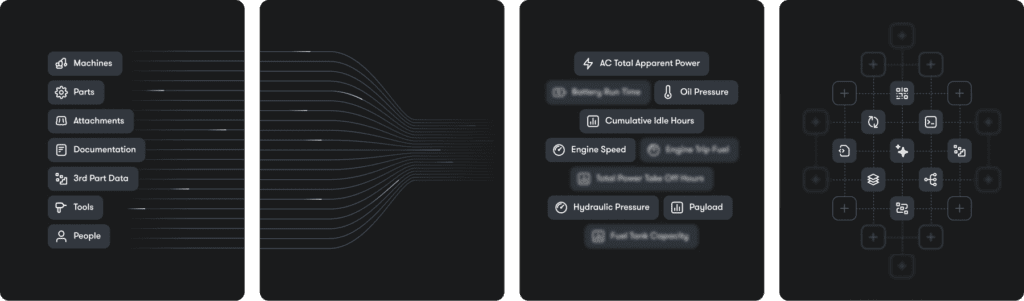
An industry cloud platform is not a generic platform with construction templates added on. It is purpose-built infrastructure for a specific domain.
In construction, that domain is operating data. Machine telemetry, fault codes, rental contract data, site events, and enterprise systems all feed into it.
The table below compares the two approaches across the dimensions that matter most for construction.
| Industry cloud platform | Generic cloud platform | |
|---|---|---|
| Time to first customer value | 3 to 6 months | 18 months or more |
| Engineering overhead | 20 to 40% on platform | 60 to 80% on platform |
| OEM data normalization | Built in | Must be built |
| Rental workflow models | Built in | Must be built |
| AI readiness | Ready from day one | Requires significant data engineering |
| Project risk | Established, proven platform | Around 70% fail to deliver expected outcomes |
Most equipment manufacturers lose sight of their machines the moment they leave the factory floor. Field data exists, but it rarely returns in a usable form.
Service runs on calendar intervals rather than actual machine condition. Product design rests on assumptions rather than field evidence.
Building the infrastructure to close that loop on generic cloud is a multi-year commitment. OEMS allocate most of the engineering budget toward keeping the platform current rather than shipping product features.
An industry cloud platform changes that equation. Construction-specific data models, OEM integration patterns, and governance frameworks are already in place.
Around 80% of the platforming work is already done, based on Trackunit’s experience. Engineering effort concentrates on the features that differentiate the product.
For OEMs, that means machine design based on actual field usage and service triggered by real fault signals. Aftermarket services carry operating margins approximately 2.5 times higher than new equipment sales, according to Deloitte.
One Trackunit OEM customer deployed 10,000 branded customer portals in two weeks. That same customer had spent three years building integration architecture with nothing deployed.
Ready-to-deploy starting points for data-driven product design and battery management insights are available in the Trackunit Marketplace.
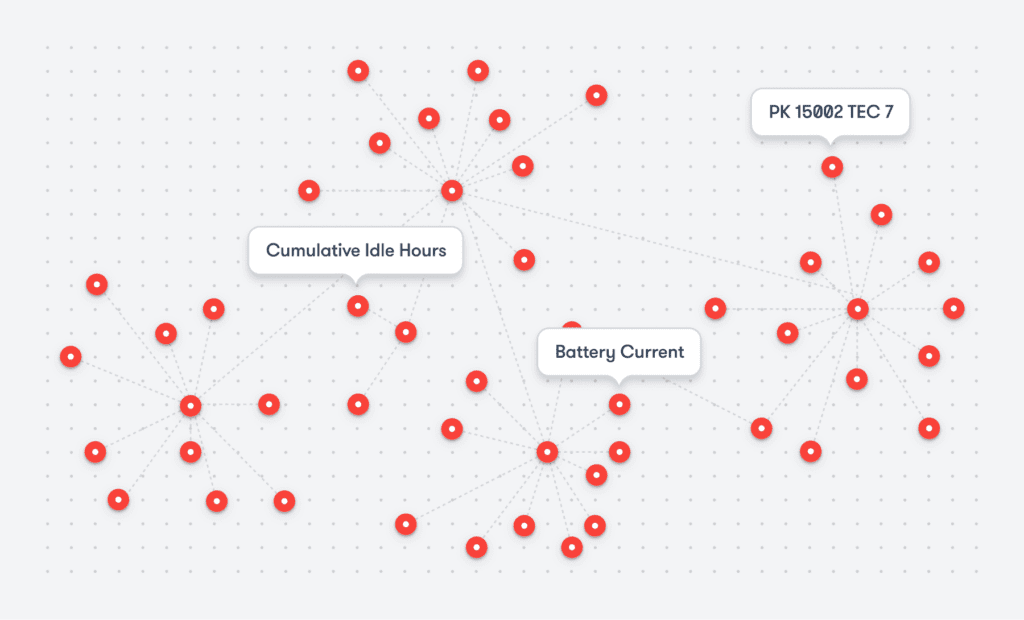
Rental companies have more data than almost any other construction business. They also have less time to act on it.
Most rental fleets manage machines through separate OEM portals. Teams cannot combine utilization data across brands, and out-of-contract usage goes undetected until the billing moment passes.
The cost is measurable. A 5,000-machine rental fleet can surface more than $1 million in additional revenue by bringing machines back on rent faster.
A regional fleet of around 2,000 machines has saved approximately $100,000 in annual labor cost. Both figures come from Trackunit’s experience with rental customers.
These outcomes require a data layer that connects utilization across every OEM brand and links it to actual contract terms. On an industry cloud platform, that layer is already in place.
Rental teams can get started with Trackunit’s out-of-contract usage and smart servicing capabilities. Both activate directly against live fleet data in the Trackunit Marketplace.
A contractor running equipment from multiple OEMs is running multiple incompatible data streams by default. Each brand transmits to its own portal, and none of it connects automatically to the project management system or ERP.
Fleet managers make deployment decisions on incomplete information. Emissions reporting demands per-machine fuel consumption data that most contractors cannot produce without manual aggregation.
An industry cloud platform provides the normalization layer that makes cross-brand, cross-site analytics possible without custom engineering. Data that currently takes hours of manual work becomes available in a single governed view.
One Trackunit partner built an emissions insights application covering tens of thousands of machines in two days. Engineering teams had previously scoped the same build at two months.
The site optimization for idle cost capability in the Trackunit Marketplace makes idle time visible across every brand and site. No custom reporting is required.
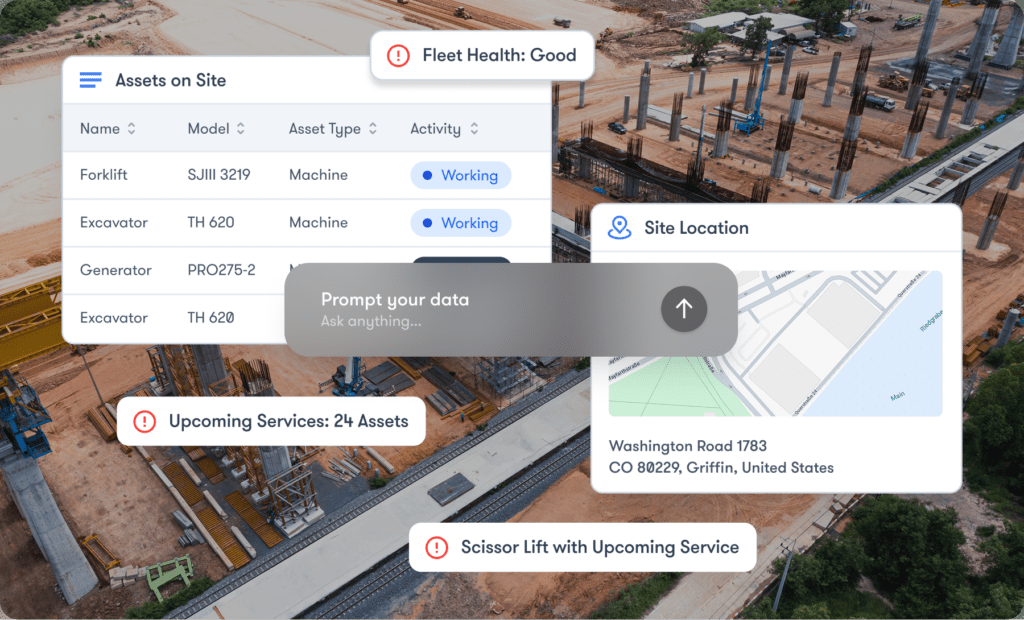
Trackunit built IrisX on more than two decades of work with the construction industry. It is purpose-built for off-highway equipment operating data.
Three principles shaped the design. First, security: construction operating data powers business-critical decisions, and IrisX is ISO 27001 certified and end-to-end encrypted by design.
Second, scalability: construction operating data is growing toward trillions of records, and IrisX is built for that query performance. Organizations do not have to solve that engineering challenge themselves.
Third, interoperability: IrisX provides an SDK and more than 1,200 prebuilt connectors. Any system in the construction stack can connect without custom development.
For the full IrisX data architecture, see What is an operating data platform and why construction needs one.
An industry cloud platform suits organizations operating mixed fleets from multiple OEM brands. It fits companies that need cross-fleet analytics, AI readiness, and enterprise integration across ERP, CRM, and dealer management software.
That typically means OEMs managing connected machine fleets, rental companies running multi-brand fleets, and large contractors operating across multiple jobsites. It is less suited to single-OEM operations without cross-system data requirements.
The businesses building on a platform now are the ones with AI-ready operating data when the industry shifts.
An industry cloud platform is a cloud infrastructure built for a specific industry. It bundles data governance, integration patterns, and operational best practices for that industry into a single deployable layer. Companies build on it rather than solving those problems independently on generic cloud.
Gartner defines industry cloud platforms as offerings that bundle cloud services with industry-specific composable capabilities. Gartner predicts more than 70% of enterprises are projected to use an industry cloud platform by 2027. That figure was less than 15% in 2023.
A generic cloud platform provides compute, storage, and networking with no industry context. An industry cloud platform adds data models, compliance frameworks, integration patterns, and best practices specific to the target industry. In construction, that means OEM data normalization, rental workflow models, and operating data optimized for fleet-scale analytics.
No. Telematics is the data collection layer. Fleet management software is the workflow layer built on harmonized data. A construction data platform powers and governs the data that makes both more useful. Existing telematics infrastructure does not need to be replaced.
Each OEM transmits data in a different format to a different portal. An industry cloud platform normalizes that into a single governed data layer. Utilization, machine health, and fault data from every brand appear in one view. IrisX connects to more than 1,200 systems through standard connectors, with no custom engineering per brand required.
Yes. Integration is a core capability of an industry cloud platform. It connects to ERP, CRM, dealer management, and project management systems through standard APIs and ready-made connectors. Equipment data flows automatically into the systems already in use.
Mixed-fleet operations from multiple OEM brands get the most value, particularly where cross-fleet analytics, AI, and enterprise system integration are priorities. Smaller single-brand operations or fleets without cross-system data needs are less likely to require it at this stage.
The main prerequisite is connected machines. If telematics devices already transmit data from the fleet, an industry cloud platform can ingest and normalize it from day one. For organizations starting fresh, Trackunit’s telematics hardware and OEM integrations cover the connection layer first.
Ready-to-deploy solutions in the Trackunit Marketplace activate directly against live fleet data already in the platform. Teams can start with a single use case, prove the value, and expand from there. No data preparation or separate rollout is required.
An industry cloud platform provides the data layer and app infrastructure that branded portals run on. OEMs and rental companies can configure and deploy customer portals directly, without building or maintaining separate backend systems. One Trackunit OEM customer deployed 10,000 branded portals in two weeks, compared to three years of infrastructure work on a previous self-build attempt.
Mikkel Dalgas is Chief Technology Officer at Trackunit. He leads the architecture and development of IrisX, Trackunit’s Construction Operating Data Platform. With extensive experience in cloud infrastructure and enterprise data systems, he has focused on building secure, scalable, construction-specific platforms that unify operating data across OEMs, rental companies, and contractors.