




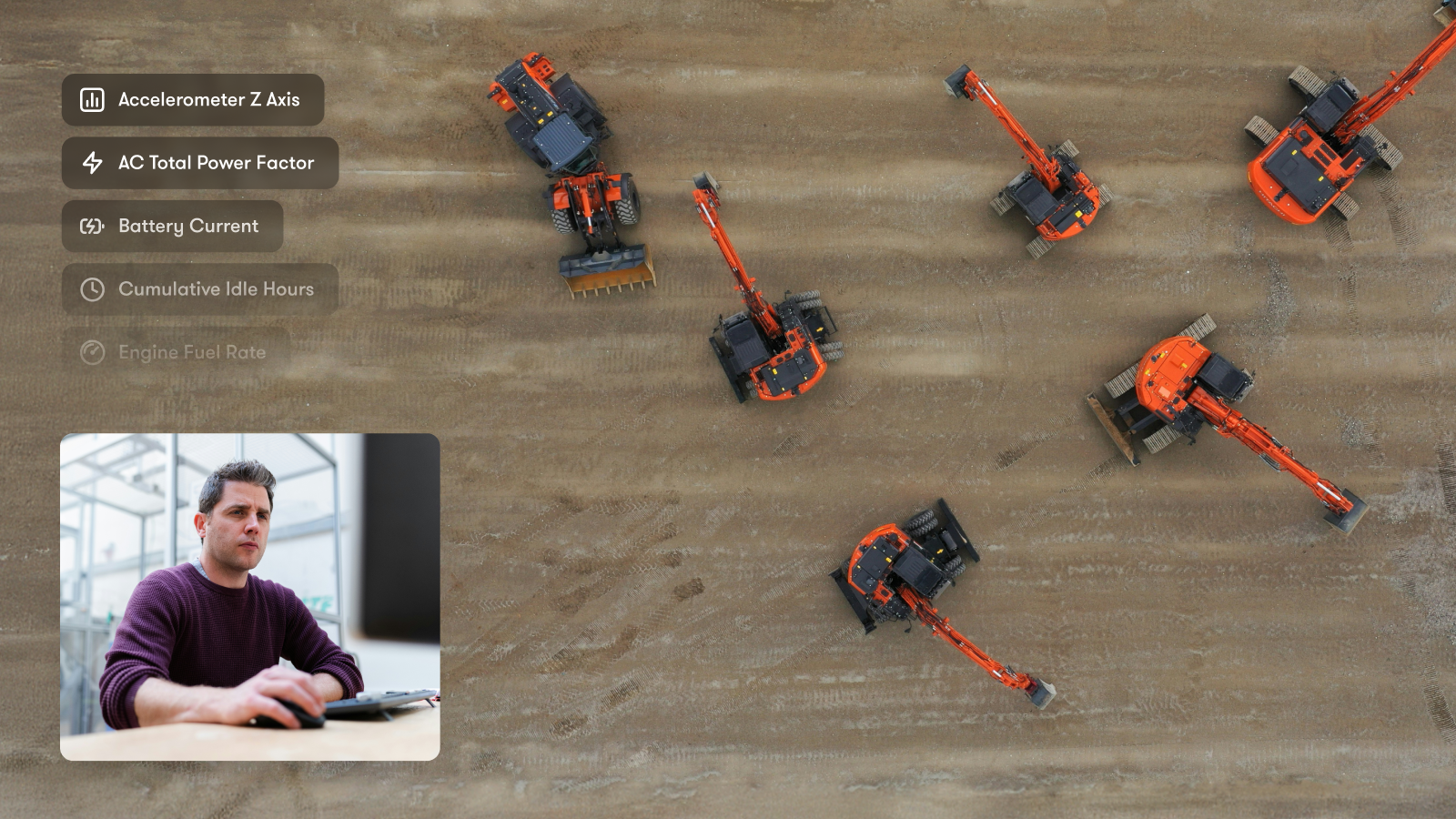
Most construction equipment OEMs now offer some form of connectivity. Basic telematics (location, hours, fault codes) has become table stakes. The machines look similar on a spec sheet.
That’s exactly where differentiation gets interesting. The OEMs pulling ahead aren’t winning on features. They’re winning on how connectivity is embedded into the way they design machines, support customers, and run their dealer networks.
This is no longer a telematics program decision. It’s a strategy decision, and how OEM connectivity ambitions evolve tells you a lot about where the market is heading.
What is the problem with partial fleet connectivity? It’s simple: a partially connected fleet is too inconsistent to build anything reliable on top of.
Every machine that ships without connectivity is a permanent blind spot. One that cannot be filled retrospectively.
Connectivity creates compounding value when it covers the whole fleet. That’s when data becomes consistent enough to act on across design, service, supply chain, and customer experience.
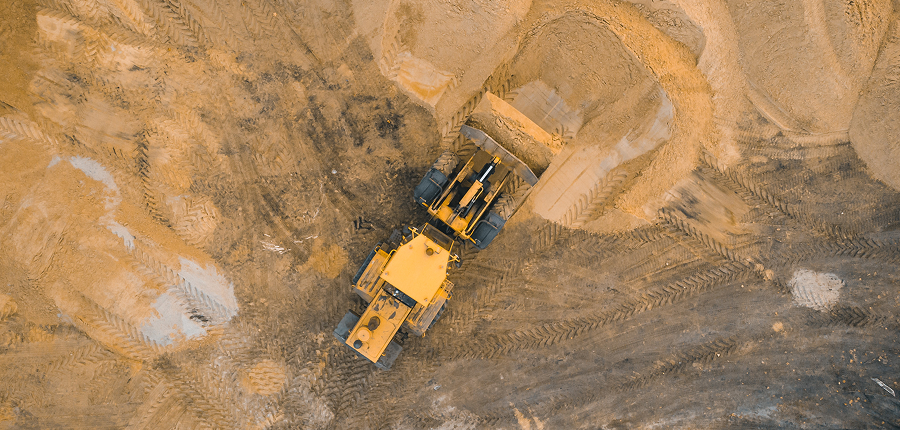
An equipment data platform takes raw telematics from every machine and turns it into usable data that OEM teams can act on. It normalizes and centralizes machine data across the entire connected fleet, making patterns visible that would otherwise stay hidden.
When every machine sends data, engineering teams see how machines are actually used across different regions, applications, and operators. Design decisions get faster and more grounded.
According to BCG, aftermarket service gross margins for industrial manufacturers are roughly twice those earned from equipment sales
The same connected data that informs better engineering decisions also improves how machines perform over time, generation after generation. Service and aftermarket teams gain visibility across the entire installed base.
According to BCG, aftermarket service gross margins for industrial manufacturers are roughly twice those earned from equipment sales, and service revenue grew 10% in 2023. Full-fleet data is what makes those margins defensible, supporting stronger aftermarket performance and more targeted maintenance strategies.
Supply chain teams get a more accurate demand signal. OEM supply chains run on twelve-month lead times. Fleet usage data grounds production planning in actual activity rather than projections. Even single-digit improvements in forecast accuracy can move millions in working capital and lost sales when lead times are that long.

One of the most under appreciated advantages of full-fleet connectivity is the ability to push software updates across every machine in the field, independent of hardware release cycles.
Twenty years ago, OEMs iterated software every five to ten years. Today it moves far faster than that.
When machines are connected, an OEM can ship a platform in 2026 and iterate the software in 2027, ‘28, ‘29, and beyond, keeping the whole installed base current without waiting for a new hardware generation.
Software is the longest lead item in machine design. When OEMs release it independently of hardware, development cycles shorten and time-to-market improves.
Connected competitors improve their machines post-sale. Those who aren’t connected can’t. That iteration speed is a structural advantage that widens with every release cycle.
Around 60% to 70% of OEMs now have some form of connectivity. About half have a strategy to leverage the data. But only around 30% have reached the point where connectivity is genuinely embedded in how they operate.
That 30% isn’t winning because they have better technology. They’re winning because connectivity runs through everything: S&OP, the machine, the financing, the service, the parts.
It ties OEM, dealer, and customer together into a functioning ecosystem and opens the door to digital revenue streams that standalone connected features simply cannot support.
The ones who treat digital as a separate product get stuck trying to sell it separately. The ones who embed it find that customers don’t just buy the machine. They buy into the ecosystem around it.
How should OEMs decide what to build versus what to partner for in their connected strategy? The answer comes down to where differentiation actually lives.
Nobody builds the whole stack. Nobody makes their own chips or cell towers. The telematics stack will always involve partners. The question is how far up that stack an OEM brings the partnership.
Build-it-all strategies almost always result in slower cycle times, higher fixed costs, and tech debt that crowds out the application work where differentiation actually lives.
A useful test: if your best people are maintaining infrastructure instead of designing offers and workflows, you’re focused on the wrong layer.
Industry-specific platforms already understand equipment data, including hours, utilization, fault codes, and machine states, which makes that data usable immediately rather than requiring years of internal effort to contextualize. Strong partners with the scale to stay current allow OEMs to move quickly without rebuilding the foundation every few years.
Three practical steps for senior leaders deciding where to focus:
The construction equipment market is moving toward a place where connectivity is assumed. The question is no longer whether to connect machines. It’s whether the data those machines generate creates consistent, compounding value across the business.
Full-fleet connectivity is what OEMs can action today to boost machine performance and build a foundation that strengthens with every machine that ships.
The separation isn’t between OEMs with more connected features. It’s between those who have made connectivity the backbone of how they operate and those still treating it as an add-on. That gap is already measurable, and it’s compounding.
Federico Rio is a 25-year veteran of construction having cut his teeth in the heavy equipment industry with Caterpillar. Specializing in machine design, digital & technology, and sales & marketing, he joined Trackunit in 2023 where he is Senior Vice President of Product and Pricing.