




Adversity has a way of clarifying priorities. It strips away the optional and forces focus on what truly drives resilience and performance. The recent oil price shock — triggered by geopolitical uncertainty and felt across global markets — is one such moment for the construction industry.
It is uncomfortable, certainly. But it is also instructive.
Since the end of February, global oil prices have climbed sharply, with Brent crude. a key international oil benchmark, rising to around USD 100 a barrel, as The Guardian reports. For construction businesses, where fuel is not a peripheral cost but a core operating input, the implications are immediate.
Margins tighten. Project assumptions shift. What looked viable at the start of the year can quickly come under pressure.
Yet while the industry cannot control oil prices, it can control how it responds. And this is where a clear opportunity emerges. One that should accelerate the adoption of artificial intelligence across construction.
Because this is not just a fuel story. It is a visibility story. A control story. And increasingly, an intelligence story.
The pressure point
Fuel has always been a significant cost driver in construction. But volatility changes its nature. When prices move rapidly and unpredictably, fuel stops being a line item to manage and becomes a risk to mitigate.
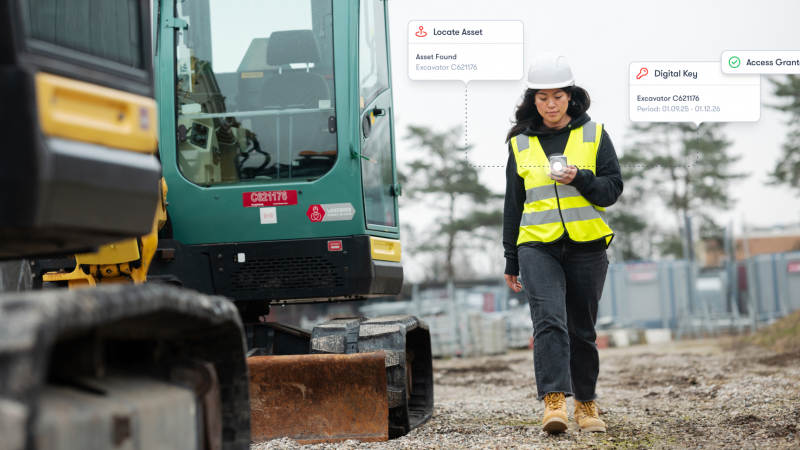
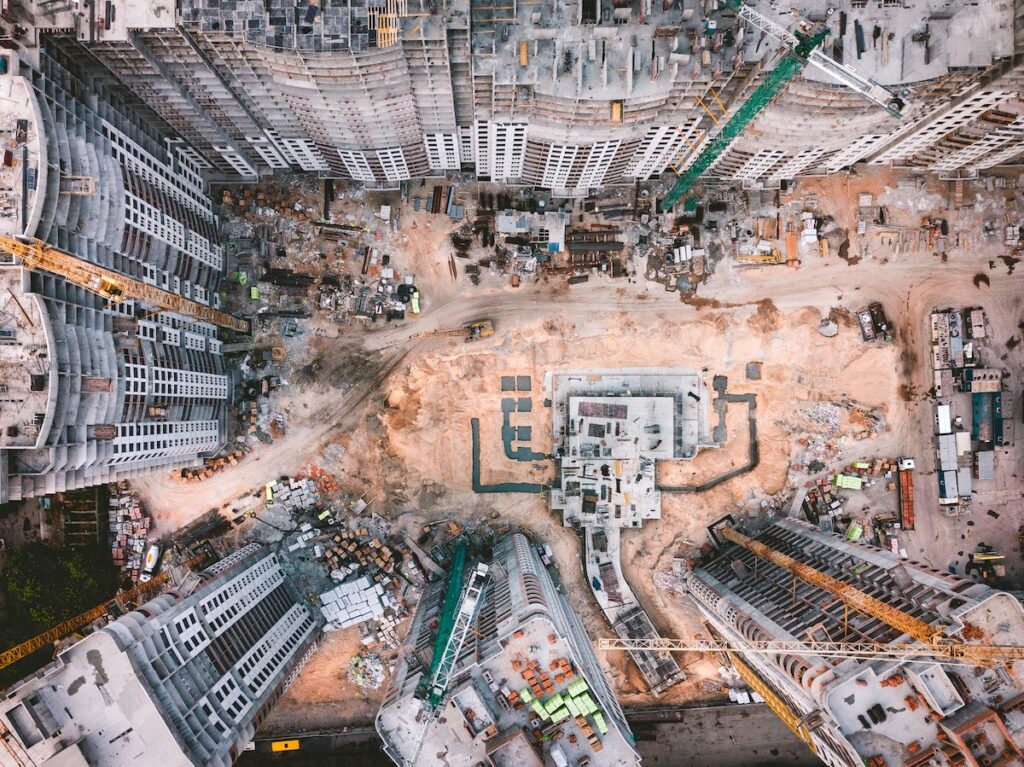
What makes this particularly challenging is the complexity of construction operations. Jobsites are fluid environments, where equipment is constantly moving, pausing, operating under different loads, and interacting with multiple teams. Without clear, real-time visibility into how machines are being used, inefficiencies can persist unnoticed.
‘When prices move rapidly and unpredictably, fuel stops being a line item to manage and becomes a risk to mitigate.’
Idle time is perhaps the most obvious example. It is widely accepted that equipment can spend up to 40% of its operating time idling, burning fuel without contributing to output. In a stable pricing environment, this inefficiency is often tolerated. In a volatile one, it becomes a liability.
The issue is not that the industry is unaware of idle time. It is that tackling it consistently, across fleets and projects, has historically been difficult. Data exists, but it has not always been accessible, contextualized, or actionable in a way that drives behavior change.
This is precisely where AI begins to shift the equation, as the International Monetary Fund highlights.

From hindsight to real-time insight
Construction is not short of data. Connected equipment, telematics, and digital workflows generate vast amounts of information about machine behavior, location, and performance. The challenge is turning that information into something useful.
AI enables that transition from data to decision.
By identifying patterns across machines and sites, AI systems can highlight where inefficiencies occur and, crucially, why. Excessive idling, for example, is rarely just an operator issue. It may reflect workflow bottlenecks, poor planning, mismatched equipment allocation, or breakdowns in coordination.
What AI does is bring these insights to the surface in real time. Instead of reviewing reports after the fact, site managers can act in the moment, adjusting workflows, reallocating machines, or addressing inefficiencies before they escalate.
‘By identifying patterns across machines and sites, AI systems can highlight where inefficiencies occur and, crucially, why.’
This shift from reactive to proactive management is fundamental. It changes how decisions are made and how quickly improvements can be realized.
We are already seeing tangible results. Businesses leveraging AI-driven insights are reporting reductions in idle-related fuel consumption of up to 20%, alongside improved equipment utilization. These are not marginal gains. At scale, they translate into meaningful cost savings and more resilient operations.
Efficiency becomes competitive advantage
In a high-cost, uncertain environment, efficiency is no longer just about operational excellence—it is about competitiveness.
Companies that can extract more value from their existing assets, reduce waste, and optimize workflows are better positioned to protect margins and maintain project viability. Those that cannot are more exposed to external shocks, whether from fuel prices or other market dynamics.
AI plays a central role in enabling this shift.
It allows organizations to see their operations with greater clarity. To understand not just what is happening, but how different variables interact. To identify underutilized equipment, overworked assets, and opportunities to streamline processes.
Importantly, this is not about replacing human expertise. Construction remains an industry built on experience and judgment. But AI augments that expertise, providing a continuous layer of insight that supports better, faster decision-making.
The result is a more controlled, more predictable operation and one that can adapt more effectively to changing conditions.
Small changes. Scaled impact.
One of the strengths of AI in construction is its ability to unlock incremental improvements that scale. A reduction in idle time on a single machine may seem insignificant in isolation. But across an entire fleet, operating over months and years, the cumulative effect is substantial. The same is true for gains in utilization, workflow efficiency, and fuel consumption.
These are not headline-grabbing transformations. They are consistent, repeatable improvements that compound over time.
‘Construction remains an industry built on experience and judgment. But AI augments that expertise, providing a continuous layer of insight that supports better, faster decision-making.’
AI enables this by operating across the system. It does not focus on isolated fixes but on patterns that span machines, sites, and operations. It continuously learns, adapts, and refines its recommendations based on real-world data.
In an industry as complex as construction, this systemic approach is critical. Because inefficiencies rarely exist in isolation, they are part of broader operational dynamics.
The goal, therefore, is not to wait for stability. It is to build the capability to operate effectively despite instability. This alignment matters. It means that investments in AI are not just a response to short-term volatility, but a step toward long-term resilience. Lower costs are not competing priorities; they are increasingly interconnected.
From catalyst to resilience
Industries do not transform overnight. More often, change is accelerated by moments of disruption—when existing ways of working are no longer sufficient. The current oil price shock has the potential to be one such catalyst for construction.
The foundations are already in place. Equipment is connected. Data is being generated. AI capabilities are proven. What has sometimes been lacking is urgency. That urgency now exists.
What may previously have been viewed as a future initiative is becoming a present necessity. Not because of technological ambition, but because of operational reality.
This shift in mindset is important. Because the real value of AI is realized when it is embedded into daily operations—when it becomes part of how decisions are made, rather than an overlay or afterthought.
It is natural then to hope that geopolitical tensions ease and that markets stabilize. But uncertainty, in one form or another, is likely to remain a defining feature of the operating environment.
The goal, therefore, is not to wait for stability. It is to build the capability to operate effectively despite instability. AI is central to that capability. It provides the visibility needed to understand complex operations. The control required to respond quickly. And the intelligence to continuously improve performance over time.
Fuel volatility may have brought this need into sharper focus, but the underlying challenge is broader. Construction businesses must become more adaptive, more data-driven, and more resilient.
Turning insight into action
Ultimately, the value of AI comes down to execution. Insights alone do not reduce fuel consumption or improve efficiency. Action does. And the ability to take that action consistently, across teams and projects, is what differentiates leaders from laggards.
This requires more than technology. It requires a shift in mindset toward data-driven decision-making, greater transparency, and continuous optimization. It also requires leadership. A willingness to question established practices and embrace new ways of working.
The companies that do this will not only navigate the current oil price volatility more effectively. They will build a foundation for long-term performance in an increasingly uncertain world.
Adversity does not automatically lead to progress. But it often creates the conditions for it.
The oil price shock is one such condition. And for construction, it presents a clear choice: absorb the impact, or use it as a catalyst to accelerate change. The case for AI is no longer theoretical. It is practical, immediate, and increasingly difficult to ignore.