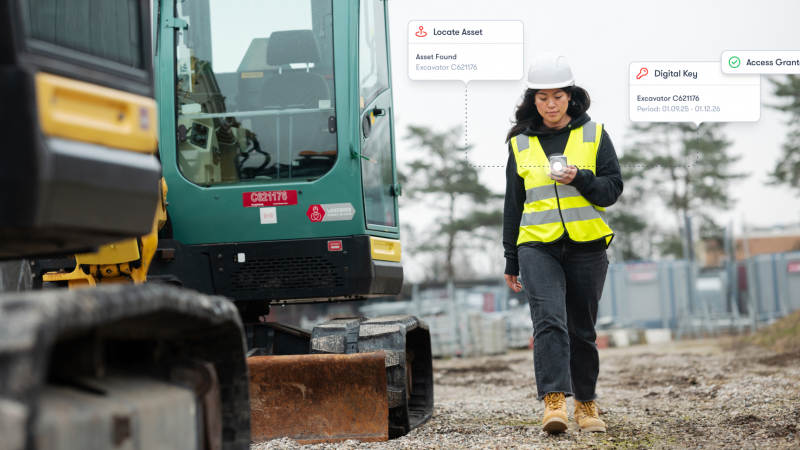






In the battle for aftermarket dominance, connected OEMs are pulling ahead fast. According to McKinsey, aftermarket services can represent up to 40% of an equipment manufacturer’s annual profit, and connected machines consistently deliver higher margins through streamlined maintenance, optimized service scheduling, and better uptime performance.
What’s more, connected equipment creates a two-way relationship between OEMs and customers. Every data point captured through IoT connectivity delivers insight into how assets perform in the real world. These insights allow OEMs to tailor maintenance programs, improve designs, and strengthen warranty performance, turning what was once a one-time sale into a relationship that spans the entire machine lifecycle.
“Insights can turn what was once a one-time sale into a relationship that spans the entire machine lifecycle”
The best-performing OEMs have already realized that connectivity isn’t a feature, it’s an enabler of resilience. As the construction industry digitizes, customers expect more than a machine, they expect an intelligent partner that keeps their operations running. And that expectation is now being met by connected OEMs who use data to stay one step ahead.
Connectivity transforms service from reactive to proactive. When OEMs have full visibility into equipment health, they can flag potential issues before they happen, plan interventions around the customer’s schedule, and deliver remote diagnostics that keep machines working longer and safer.

This not only reduces costly downtime for customers, it positions OEMs as indispensable partners in their operations. Data from Deloitte shows that digitally enabled service organizations saw an improvement of 25% in spare parts availability and a 20% reduction in customer wait time.
“A connected OEM can demonstrate reliability in measurable terms, turning uptime into a competitive advantage.”
When machines are connected through Trackunit, OEMs gain real-time visibility into performance, location, and utilization. Service teams can respond instantly to alerts, dispatch technicians with the right parts, and even update software remotely. These capabilities not only increase uptime but also reduce service costs by cutting unnecessary field visits and parts usage.
And customers notice. A connected OEM can demonstrate reliability in measurable terms, turning uptime into a competitive advantage that drives repeat business.
The aftermarket opportunity isn’t just about improving service; it’s about reshaping the business model. As connected machines feed continuous data back to OEMs, they enable performance-based contracts, subscription services, and digital twins that optimize entire fleets and extend equipment lifespan.
This shift is already driving measurable business impact. OEMs using telematics-driven insights are reporting service parts revenue growth of 10–15% per year, alongside improved retention and cross-sell opportunities. And because connectivity provides direct visibility into how customers actually use machines, it opens doors to entirely new business models like leasing, usage-based billing, and even shared ownership models built on verified utilization data.
“OEMs using telematics-driven insights are reporting service parts revenue growth of 10–15% per year.”
Connectivity also brings consistency. Rather than relying on manual reporting or fragmented dealer systems, connected OEMs manage a single source of truth across their networks. That means faster warranty validation, better parts forecasting, and greater customer trust, all of which reinforce the OEM’s position long after the initial sale.
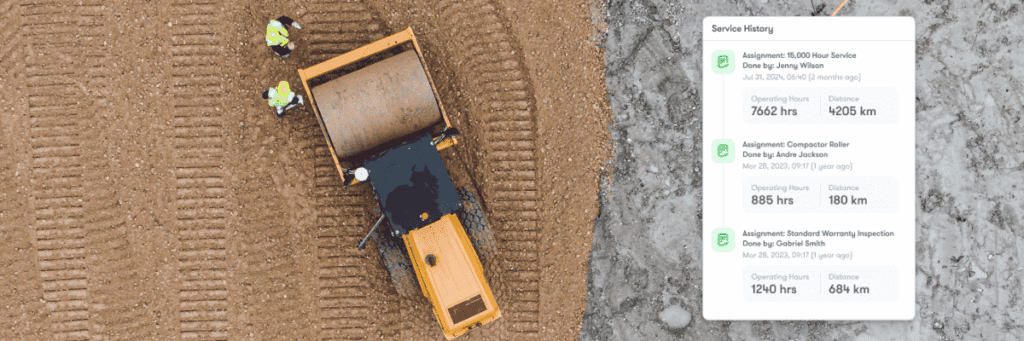
Trackunit’s ecosystem is purpose-built for OEMs ready to accelerate this transformation. By connecting every machine, every customer, and every service touchpoint, OEMs gain the transparency and agility needed to lead in a data-driven aftermarket.
With Trackunit, OEMs are transforming from product manufacturers into lifelong partners, using connectivity to reduce downtime, improve asset health, and unlock new digital revenue streams.
Connectivity isn’t an experiment anymore. It’s the engine of the next era for OEMs, where every data point fuels smarter service, stronger margins, and lasting customer loyalty.
The evidence is clear: connected OEMs outperform their peers on profitability, customer satisfaction, and operational efficiency. Those who invest now will define the standards for the connected construction industry of tomorrow.
The aftermarket race is on, and connected OEMs are already winning. If you’re ready to take the next step, explore how Trackunit helps OEMs build connected fleets, strengthen service, and grow aftermarket revenue. Visit our OEM solutions page to see what you can activate today: https://trackunit.com/oem/.