




Connectivity doesn’t guarantee clean data. In construction, only validated installs ensure your devices are truly ready to deliver value.
In construction telematics, connectivity alone does not guarantee clean, usable machine data. For years, the industry has treated one milestone as the finish line. A device comes online. The machine is connected. Job done.
In practice, most fleet managers know that is rarely the end of the story.
Across construction fleets, the same pattern repeats. Devices appear connected, yet the data is incomplete. Utilization is unreliable. Key machine insights are missing. Support teams chase issues that are difficult to diagnose after the fact.
The problem is not connectivity. The problem is assuming that connectivity alone equals readiness. Being connected is necessary. It is not sufficient.
What is installation validation in construction telematics?
Installation validation is the process of confirming that a telematics device is correctly powered, wired, configured, and mapped to the right construction asset before the installation is considered complete.
Without installation validation, connected construction equipment may appear online while still delivering incomplete or unreliable data.
A large regional rental company began rolling out devices across its off-rent fleet. On paper, the deployment looked successful. Devices showed as connected. But within weeks, over 20 percent of units failed to report complete data.
On a 50 machine rollout, that meant about 10 machines underperforming due to unvalidated installs, incorrect signal wiring, or asset mapping errors that were only discovered after equipment returned to job sites.
After introducing the Trackunit Fit mobile app and validating installs at the point of service, results improved significantly. In a comparable 50 machine deployment, non reporting units dropped to 3.6 percent, or just two machines. CAN capture reached 43 percent on eligible equipment, up from 11 percent previously, and metadata capture improved from 51 percent to 100 percent. Eighty percent of machines reported correct hours immediately, with most remaining exceptions explained by missing hour meters rather than installation errors.
Connectivity tells you a device is present. Validation tells you whether it’s ready to deliver value.
In on-road telematics, standardized ports and vehicle designs reduce installation variability. In construction, variability is the norm. Machines are installed between rentals, during tight service windows, or directly on site, each with different wiring layouts and signal behaviors.
When installation outcomes aren’t validated, issues often surface days or weeks later. By then, the machine has moved, the team has changed, or support is chasing logs remotely.
What could have been fixed in five minutes during install becomes a two-hour support ticket or a costly trip to the machine.
Installation validation shifts accountability to the moment of install. Instead of reacting to telematics issues days or weeks later, it confirms in real time whether a connected construction device is ready to report clean data.
Installation validation answers questions that connectivity alone cannot:
When these are confirmed before the installer leaves the site, construction fleets reduce non-reporting units, eliminate repeat service visits, and accelerate access to reliable fleet data.

Most teams installing devices are experienced, careful, and want to get it right. But even seasoned technicians can’t validate what they can’t see.
Trackunit Fit doesn’t second-guess your people. It equips them to prove the install worked, right there on site. Think of it like test-driving a repair. It gives everyone confidence that the data will flow as expected.
This isn’t about adding steps. It’s about removing guesswork.
What is installation validation in telematics?
It’s the process of confirming that a device is correctly powered, wired, and ready to report clean machine data before installation is considered finished.
How is validation different from diagnostics?
Validation confirms readiness up front. Diagnostics investigate issues later. Validation prevents many of those issues from happening at all.
In construction telematics, connectivity health refers to how reliably and completely a device delivers machine data over time.
Connectivity health does not start in the cloud. It starts at installation.
Validated installs create a clean data foundation. Monitoring tools like Device Health inside Trackunit Manager maintain that foundation and detect new disruptions early.
Without installation validation, monitoring systems spend more time flagging preventable installation issues than identifying real operational problems.
Construction is rapidly digitizing. Companies are investing in connected machines to reduce downtime, improve utilization, and make smarter decisions. But those outcomes only happen when the data is clean, and that starts with installation.
“If you’re invested in the industry-wide effort to eliminate downtime, then connectivity only matters when it’s backed by confidence in the data.”
Fred Rio, SVP of Product Management at Trackunit
Installation validation is the process of confirming that a telematics device on construction equipment is correctly powered, wired, configured, and linked to the correct asset before the install is finalized.
Telematics data is often unreliable when devices are connected but not validated. Common causes include incorrect wiring, unstable power supply, incomplete CAN data mapping, or mismatched asset identification.
Connectivity confirms that a device is online. Installation validation confirms that the device is correctly installed and ready to deliver accurate, complete machine data.
By confirming correct power, wiring, and asset mapping at the time of install, fleets prevent devices from appearing connected while failing to report usable data later.
Connectivity health measures how reliably and completely telematics devices deliver machine data over time. It reflects both installation quality and ongoing monitoring.
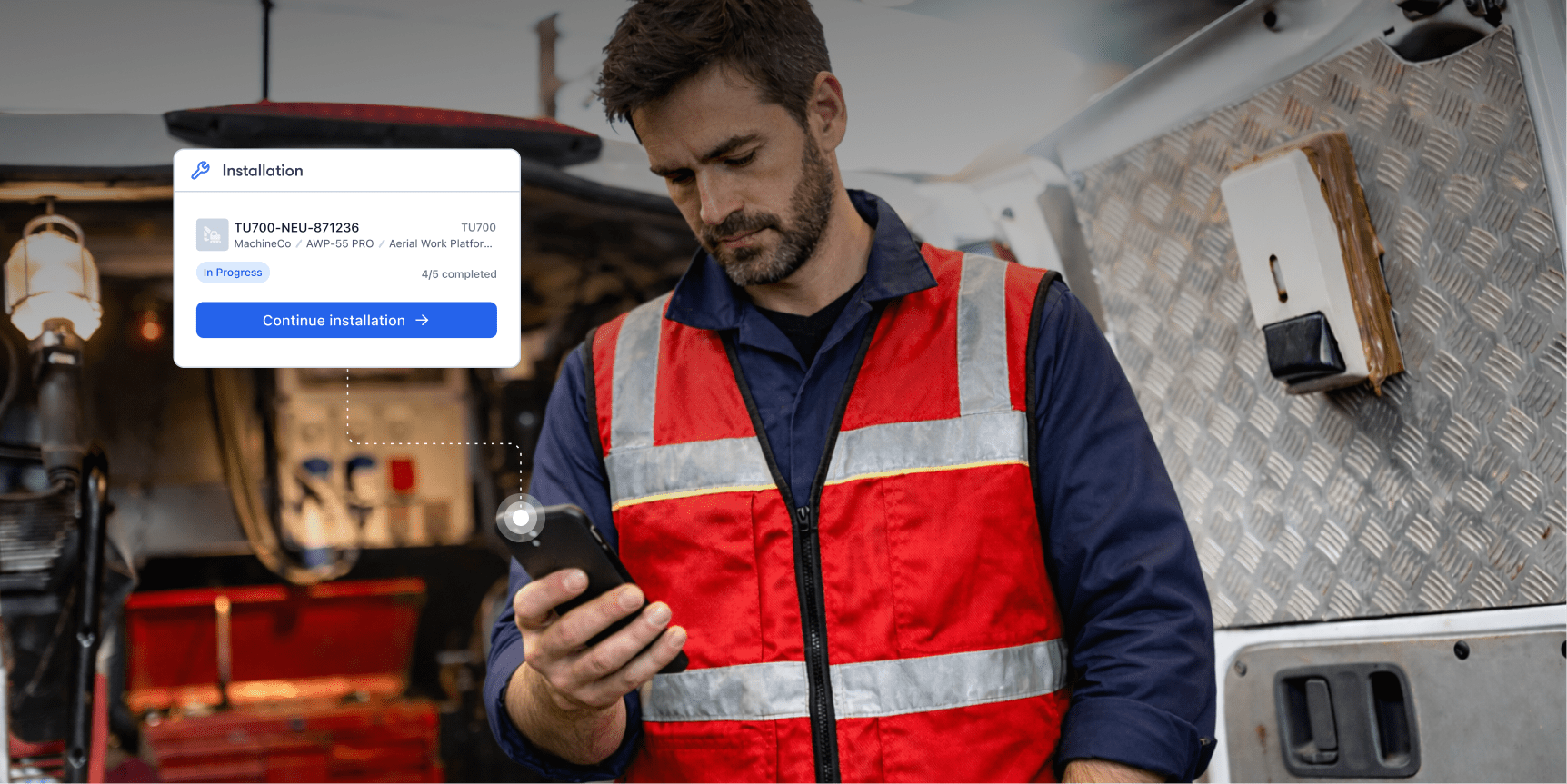
The Trackunit Fit mobile app enables technicians to validate telematics installations on-site by confirming power, machine insights, and correct asset mapping before leaving the machine.
After validation, devices are continuously monitored through Device Health in Trackunit Manager to detect future connectivity or performance issues early.
Even experienced technicians cannot visually confirm data integrity without validation tools. Installation validation provides objective confirmation that the device is ready to deliver accurate telematics data.
Trackunit Fit works with the TU600 and TU700 telematics devices, which collect and transmit data from heavy construction machinery across mixed-brand equipment fleets. This data enables real-time machine insights and helps reduce unplanned downtime by ensuring devices are correctly installed and configured from the start.
The Trackunit Fit mobile app is designed to support installation, activation, configuration, and validation of these Trackunit hardware units in the field.
– Using the app, technicians can:
– Install and activate TU600 devices
– Install and activate TU700 devices
– Verify device connectivity
– Confirm correct configuration before deployment
Trackunit Fit helps ensure that TU600 and TU700 telematics devices are properly set up and transmitting reliable equipment data, supporting accurate fleet visibility and long-term operational performance.
Jacob Kramer Rydborg is Associate Vice President of Solution Delivery Engineering at Trackunit, a global SaaS company that connects construction equipment through IoT technology to deliver data-driven insights. He leads global technical teams focused on delivering scalable IoT solutions.
With nearly 20 years of experience in operations and product leadership, Jacob builds high-performing technical organizations that turn complex technology into measurable customer outcomes.
He writes about IoT deployment at scale, technical account management, AI-enabled engineering, and technical team leadership.