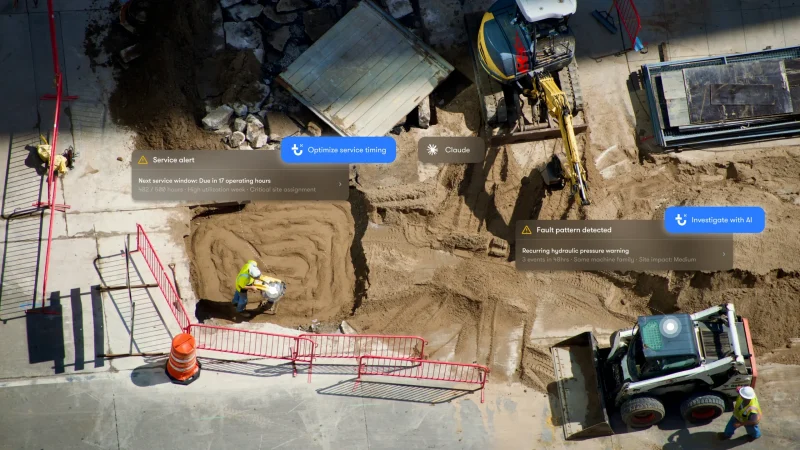





On a busy site, the equipment causing the biggest headache isn’t always the biggest machine.
It might be the welder someone needs right now. The trailer that moved between projects. The light tower sitting unused while another site’s asking for one. Or the portable heater nobody can find.
These assets matter, but a lot of them have sat outside the connected fleet because wired telematics wasn’t practical. That’s the gap Trackunit Spot S300 closes.
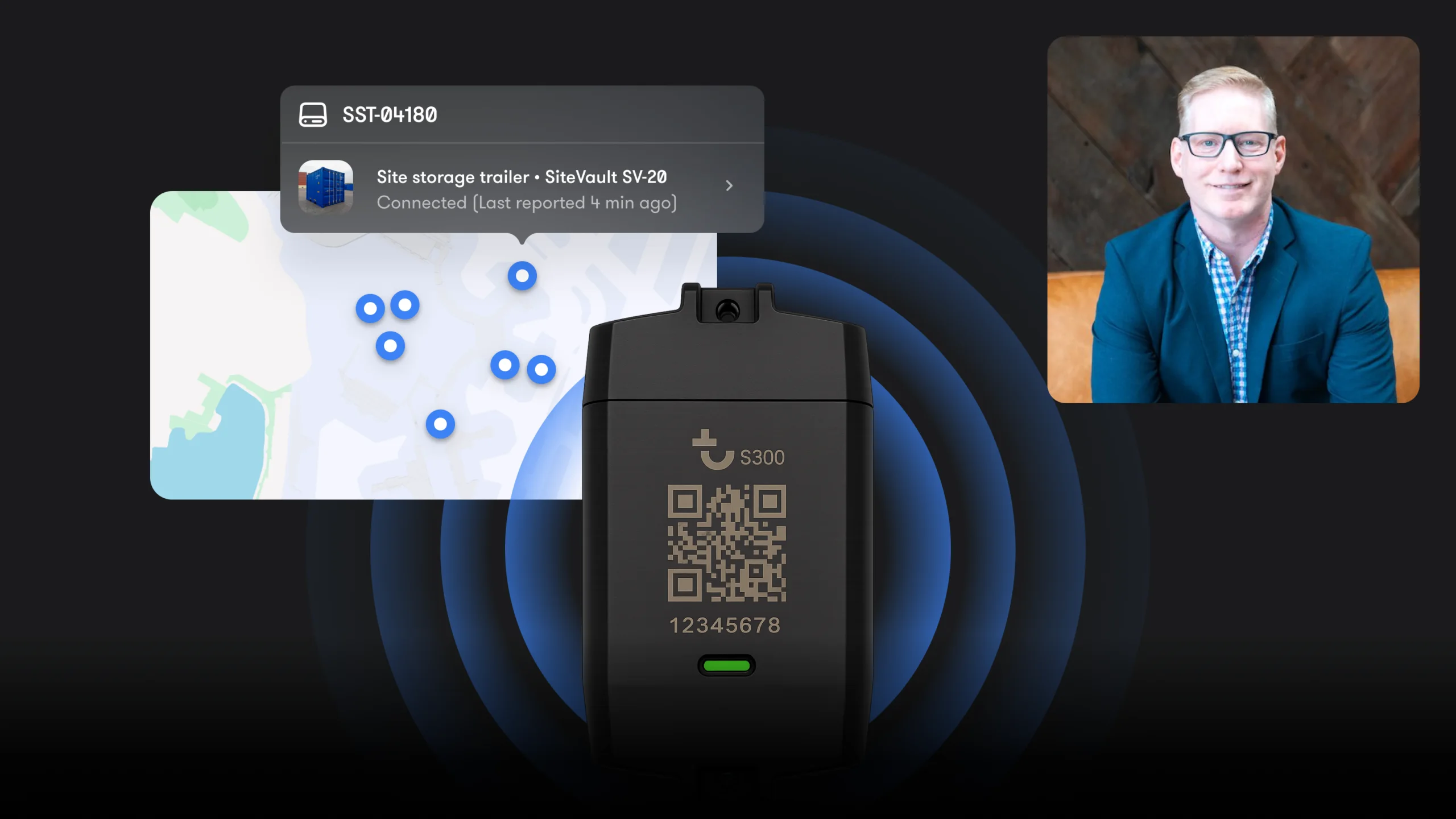
Spot S300 is a battery-powered cellular tracker built for equipment that’s hard to wire. Once it’s connected, that equipment shows up in Trackunit Manager with the rest of the fleet.
For contractors, that means answering three practical questions more consistently: Where is it? Is it earning? Is it safe?
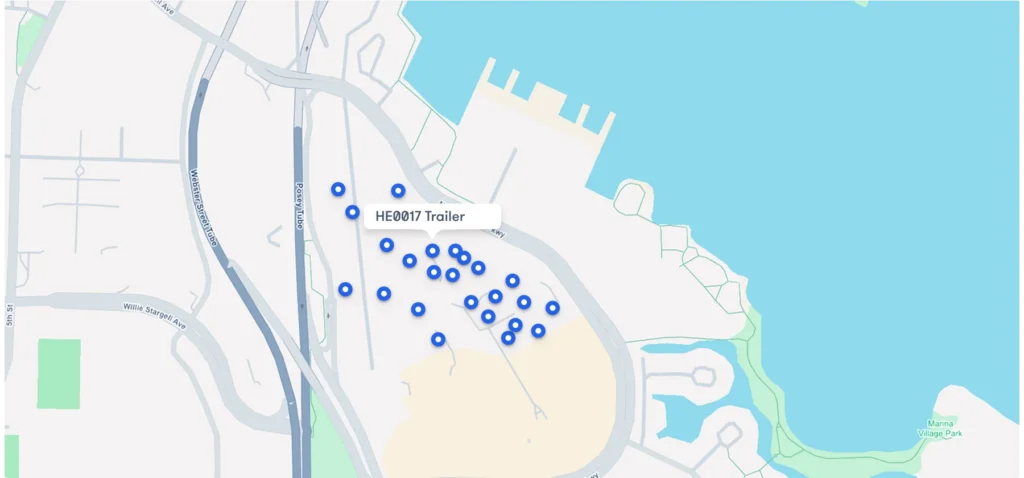
Equipment gets shuffled between job sites all the time. A portable compressor is supposed to move to the next site, but it doesn’t always get logged when another foreman grabs it first.
For an unconnected asset, tracking it down means calling around to other sites, checking the yard, or asking whoever’s driving that week. With Spot S300, whoever’s dispatching equipment can just check Trackunit Manager and start from its last reported location instead.
That location doesn’t just sit on a map. It feeds into Trackunit IrisX, so equipment that used to take a phone tree to find becomes something the wider system already knows.
Location is useful, but a tracker can tell you something else too: Whether an asset is moving. Spot S300 uses that movement to separate active equipment from equipment that’s sitting idle.
It’s not engine-runtime utilization, and it won’t replace wired telematics where that detail matters. But for equipment that used to produce no data at all, movement is still useful.
Across a larger fleet, that adds up to a bigger picture. Trackunit can automatically flag equipment that looks underused. An operations manager can then check whether it’s worth moving to another site instead of renting or buying more.
None of it works without the asset being connected in the first place. “The tracker answers “where is it?” The platform helps answer “does somebody need to do something about it?”
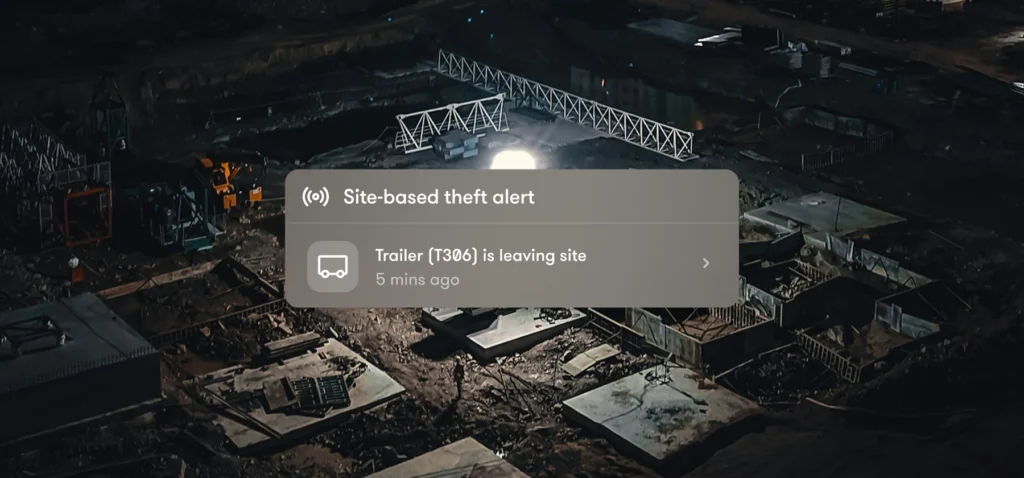
Visibility also matters when equipment moves when it shouldn’t. Trackunit can alert the team the moment something leaves a site after hours, instead of everyone finding out days later.
Spot S300 isn’t a live-tracking system, and it shouldn’t be treated as one. But it does mean there’s something to go on if equipment looks out of place. Spot S300 uses movement data to help teams tell active equipment from equipment that’s sitting idle.
That matters most for equipment like trailers, tanks, containers, and welders. They’re the kind of assets that often sit outside telematics coverage until something goes missing.
The first challenge is just getting enough of these assets connected. Installing one tracker is easy. Doing it across hundreds or thousands is different, where install time, configuration, and battery upkeep matter as much as the tracker itself.
Buyers comparing unpowered trackers should look past battery life. What matters more: how the device connects, whether it needs a gateway or proprietary network, reporting frequency, field serviceability, and whether the data joins the rest of the fleet platform.
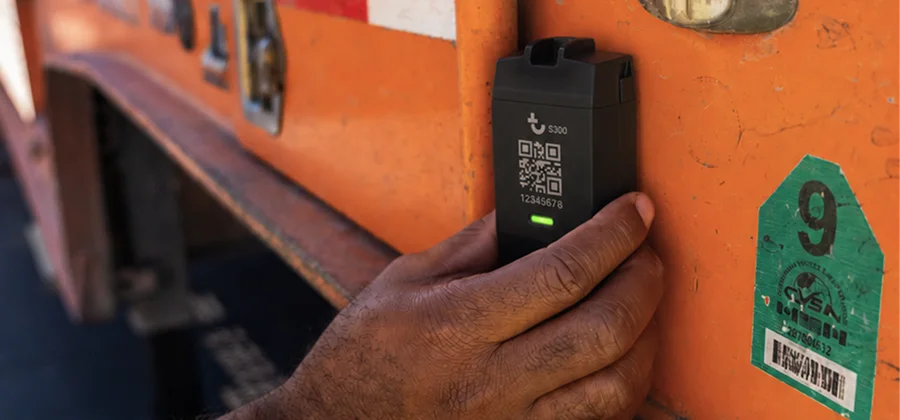
Spot S300 needs no wiring harness or gateway. An installer mounts it with a screw or magnet and activates it on the spot. It’s reporting into Trackunit Manager right away, the same system already running the rest of the fleet.
Battery life trades off against reporting frequency. Spot S300 is built for up to seven years at its default four reports a day. Trackunit Fit can adjust that schedule at install time, or use Trackunit Manager after install to make a different choice..
When a battery needs replacing, it swaps out in about five minutes without tools.
Device Health flags batteries nearing end of life first, so you can plan the swap instead of finding a dead tracker.
Spot S300 connects equipment that used to be too impractical to wire. From there, contractors can put that data to work.
That means finding equipment before a crew waits on it, spotting what’s idle before renting or buying more, and having something to go on when equipment moves unexpectedly.
That’s the difference between adding another tracker and bringing another part of the fleet into the same connected platform.
More visibility can lead to better fleet decisions. Learn more about how Trackunit Spot S300 connects the equipment your jobsites depend on.
About the author:
Martin Roath is Director of Product Marketing at Trackunit, where he leads go-to-market for Spot S300 and Trackunit’s other connectivity devices. Martin has spent more than two decades in industrial IoT and telematics, including nearly 20 years at ZTR Control Systems working with rental, OEM, and fleet customers, before joining Trackunit in 2021.
Is Spot S300 a GPS tracker or a cellular tracker? Both play a role. Spot S300 uses GNSS to figure out its location and LTE Cat 1 bis cellular to send that back to Trackunit Manager. It doesn’t need a nearby gateway or a wired connection.
What equipment can Spot S300 track? It’s built for equipment that doesn’t have a practical power source for wired telematics: trailers, job boxes, light towers, tanks, welders, containers, and similar mobile assets.
How long does the Spot S300 battery last? Up to seven years at four reports a day. You can adjust reporting frequency in Trackunit Fit, and swap the battery in about five minutes without tools.
Learn more about Trackunit Spot S300 and how it brings hard-to-wire equipment into the connected fleet.