




Most OEMs already connect machines at the factory. The harder question comes next: Who owns the platform underneath, and how much should they build themselves?
McKinsey has found aftermarket-service margins can run up to four times higher than new-equipment margins in some industrial categories, and BCG’s 2025 industrial services benchmark confirms most manufacturers are still early in monetizing connected equipment and AI-driven services, even as service revenue keeps outpacing new equipment sales. That gap is why the platform decision outlined below is a commercial one, not just a technical one.
For most OEMs, partnering is fastest unless owning the platform creates real competitive advantage. Branding fits OEMs that want to own the customer experience without owning the infrastructure behind it.
| Route | Best fit | Main trade-off |
| Build in-house | OEMs whose real differentiation is proprietary machine control or software | Slower time to value, plus ongoing engineering cost that competes with the machine itself |
| Partner | OEMs that want connectivity live quickly across a mixed fleet | Less control over the platform’s roadmap |
| Brand | OEMs that want their own brand in front of customers without building the backend | Depends on a partner’s platform and update cycle |
A handful of large OEMs have built their own platforms and put billions of dollars into it, fully integrated into how they run their business. But for the vast majority of that long tail of industrial OEMs, their digital efforts were never funded to build something that truly drives the business.
For the time-to-value math behind that build cost, see Trackunit’s build vs. buy breakdown for a construction data platform.
These five telematics platforms offer different capabilities for construction equipment OEMs, depending on their connectivity, data management and software requirements.
| Category | Example | Best fit for |
| Shared multi-OEM data network | Trackunit | OEMs whose customers already run mixed fleets, so the machine shows up in systems those customers use |
| Private end-to-end OEM telematics platform | Proemion | OEMs across construction, agriculture, and other off-highway industries that want a private, end-to-end telematics environment of their own |
| Software-defined vehicle platform | Sibros | OEMs architecting OTA updates, diagnostics, and fleet data from chip to cloud |
| Industrial OEM connectivity and hardware | CalAmp | OEMs wanting rugged, hardware-led connectivity across multiple industries |
| Road-vehicle data aggregation | Targa Telematics | OEMs whose machines are road vehicles reporting into a mobility platform |
Many OEMs have already chosen their hardware, and that’s fine. The challenge is moving beyond collecting raw data and sharing it with customers. Without a platform to analyze that data, they’re still downloading it into Excel and running pivot tables.
Trackunit IrisX is the company’s Construction Operating Data Platform, sitting above telematics and fleet management to turn scattered equipment data into structured, AI-ready intelligence.
Many OEM customers operate mixed fleets. Because Trackunit already connects equipment across major rental fleets, newly connected machines can become visible in the systems those customers already use.
| Layer | What it does |
| Platform | Trackunit IrisX unifies, governs, and makes data usable across systems |
| OEM integrations | 120+ third-party OEM data feeds and 1,200+ connectors via the OEM integrations program |
| Product design | The Data-Driven Product Design blueprint turns fleet telematics into R&D evidence in days instead of months |
| Branded experience | An OEM configures its own portal on top of Trackunit’s platform, rather than building one from scratch |
| AI integration | IrisX MCP connects that data to ChatGPT, Claude, or Copilot over the open Model Context Protocol |
| Scale | More than 6 million connected assets on the network |
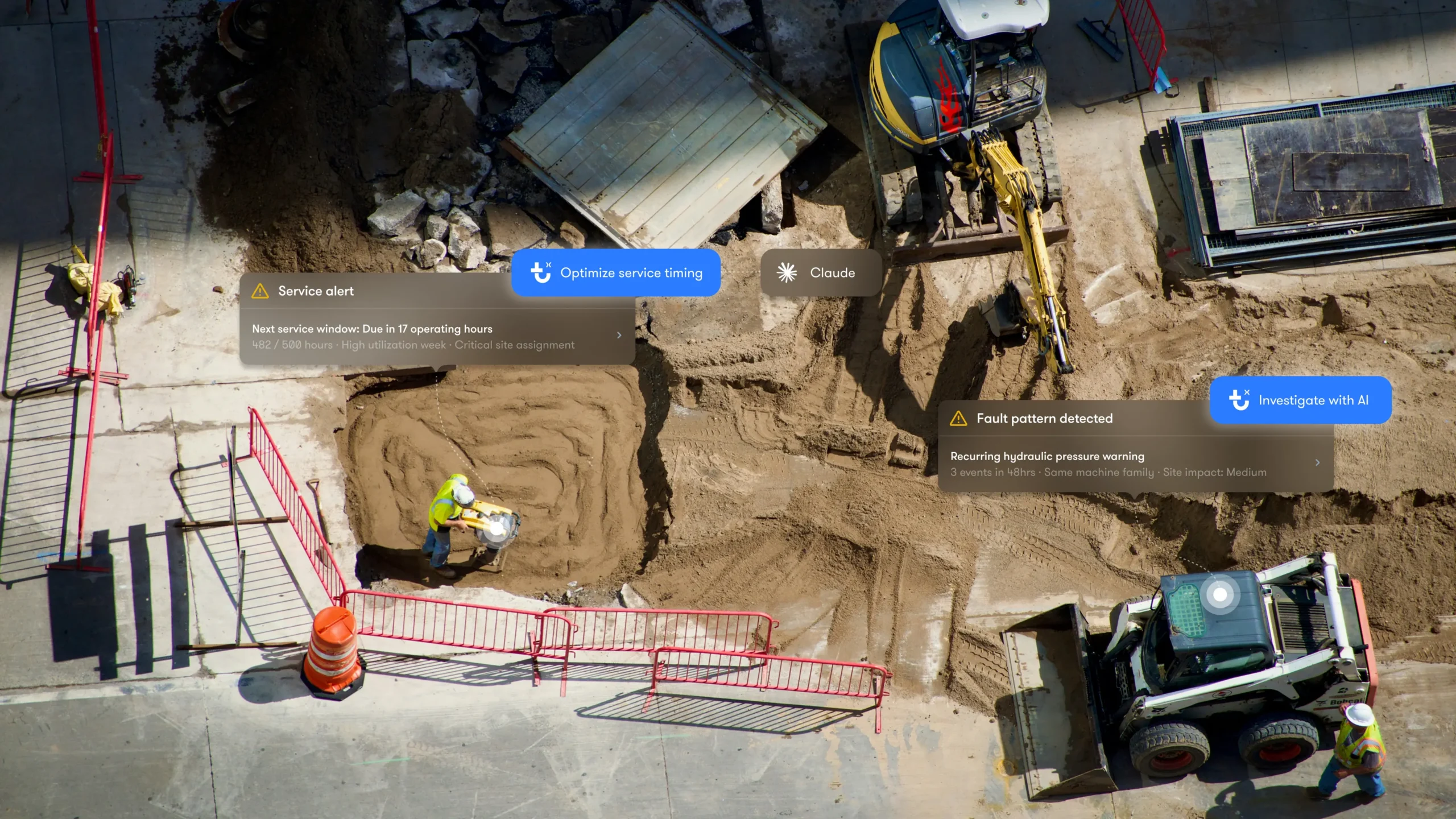
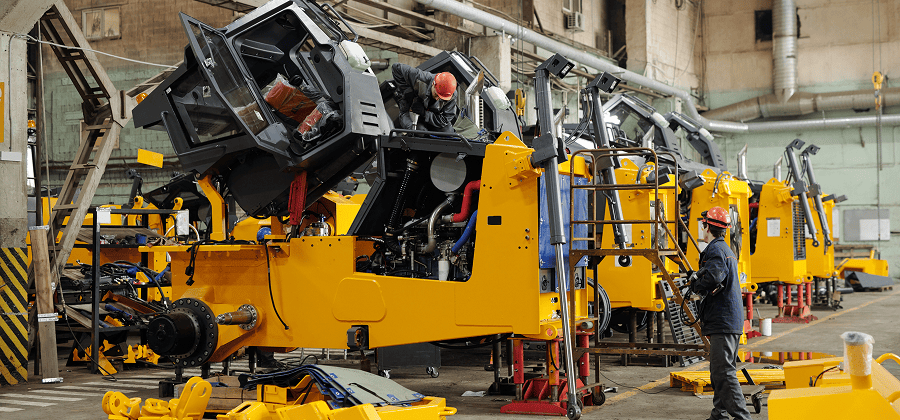
More than 150 OEMs already work with Trackunit on factory-fit connectivity, installing hardware directly on the production line. Most offer that connectivity under their own brand or through a white-label interface rather than Trackunit’s.
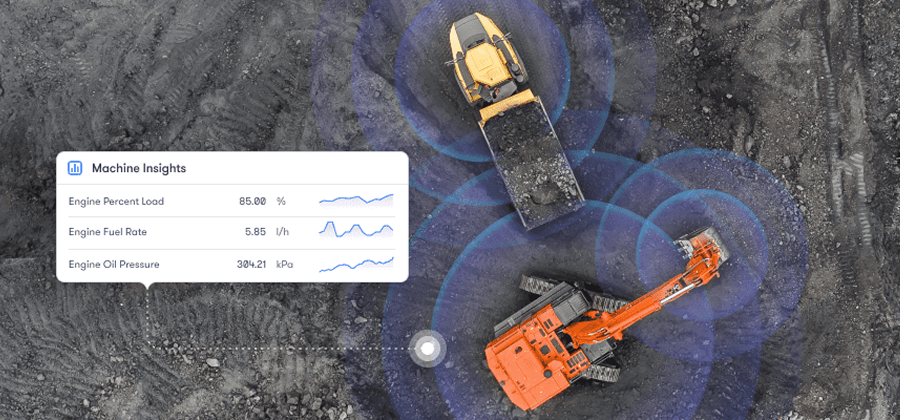
We work with component OEMs that already run highly developed telemetry platforms of their own. By leveraging data already captured by Trackunit IoT devices, with the data owners’ consent, we can offer OEMs access to more data at a much more reasonable cost.
A private, end-to-end OEM telematics platform makes sense when an OEM wants its own telematics environment, hardware through software, inside its own organization, not one shared with other manufacturers. Proemion, for example, runs a full OEM telematics solution trusted by more than 100 OEMs.
Trackunit takes a different approach: connecting a machine into an existing multi-OEM construction network, rather than building a private environment for one manufacturer alone.
A software-defined vehicle platform makes sense when an OEM needs full visibility from chip to cloud. Sibros, for example, offers exactly that, built for OEMs running OTA updates and software lifecycle management across trucks, fleets, and other connected vehicles.
The difference is scope. Trackunit connects off-highway construction machines into an existing multi-OEM ecosystem, instead of architecting the vehicle’s own software stack.
Industrial OEM connectivity and hardware makes sense when an OEM needs rugged, hardware-led connectivity across multiple industries, not a construction-specific data platform on top of it. CalAmp, for example, turns field data into design and warranty evidence across the industries it serves.
Where CalAmp focuses on the hardware and connectivity layer, Trackunit adds the platform on top: OEMs already on a hardware-only provider often route that data into Trackunit for the interface and analysis their own system doesn’t provide, without adding new hardware to the machine. That connection also opens Trackunit’s app marketplace, letting the OEM add capabilities such as insurance or fuel-cost tools without building them in-house.
Road-vehicle data aggregation makes sense when the machines are road vehicles already streaming data through their manufacturer, and the job is pulling that data together. Targa Telematics, for example, aggregates data already flowing from major road-vehicle brands.
Trackunit is built for a different case: OEMs manufacturing off-highway equipment themselves, not aggregating data that road-vehicle brands stream elsewhere.
A location dot and a fault code are table stakes now. Test any platform, Trackunit included, against these questions instead.
Three signals point to three different answers.
Request a demo and bring your own build, partner, or branding question to it.
Shouri Bagchi is Director, Enterprise Americas Region at Trackunit, with 18+ years in the equipment industry across Perkins Engines, Liebherr, and Trackunit. He works directly with OEM and component manufacturers, helping them turn fleet data into faster, more accurate decisions.
Partnering can make sense when proprietary platform engineering isn’t the differentiator, since building in-house pulls engineering hours away from the machine itself for years, not months. Trackunit’s build vs. buy breakdown for a construction data platform walks through the time-to-value math in detail.
An OEM can put its own brand on a telematics platform through a configurable, branded portal. The connectivity and data model underneath stay maintained by the platform provider.
Factory-fit connectivity doesn’t remove the need for a data platform. Fitting hardware only creates the data; a platform is what turns it into something the business can use.
Telematics can improve product design when the platform structures field data for that use. Trackunit’s Data-Driven Product Design blueprint turns fleet-wide load, duty-cycle, and wear data into evidence engineers can act on.
OEM telematics data can feed a manufacturer’s own AI tools when the platform exposes it through open access. IrisX MCP connects that data to ChatGPT, Claude, or Microsoft Copilot over the open Model Context Protocol.