




More than €170 billion in EU Cohesion Funds has been allocated across Central and Eastern Europe for 2021 to 2027, creating one of the region’s largest infrastructure investment cycles in decades.
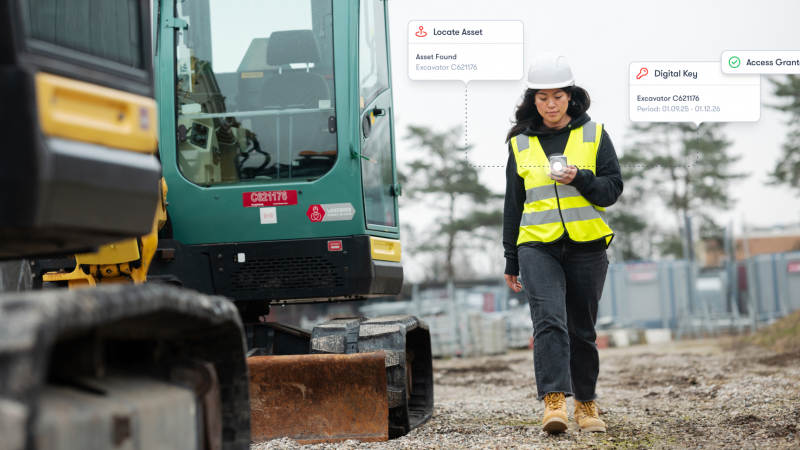
For construction businesses, the opportunity is obvious, but the challenge is proving you’re ready to compete. That means having the right equipment and evidence of how it performs throughout a project.
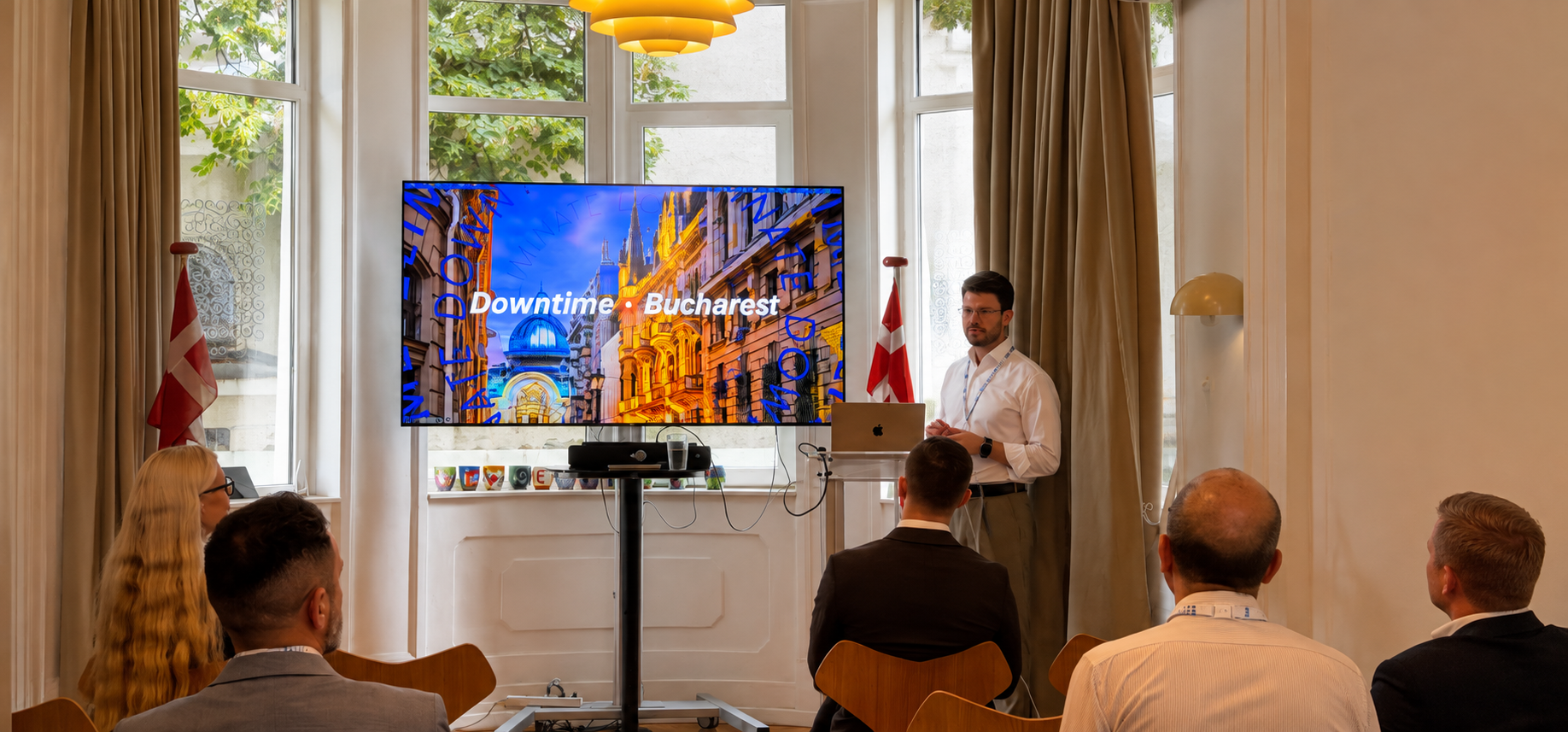
In the summer of 2026, my colleagues and I visited Prague, Warsaw, Budapest, and Bucharest. In each city, the Danish Ministry of Foreign Affairs Trade Council hosted us for discussions with leading contractors, rental companies, OEMs, and dealers preparing for the next wave of infrastructure investment.
Every market has major projects underway, from new rail lines and motorways to modernized freight corridors, all backed by this wave of funding. Along with that pipeline comes a growing demand for digital documentation. Public buyers want proof of performance, not just price.
That’s a real opportunity, and not just for roads and rail. It’s a chance to modernize the entire construction industry in the region.
| 🇨🇿 Czechia | 🇭🇺 Hungary |
| • EU Cohesion funding: €21.4 billion • Major projects: Prague-Kladno rail modernization • Key challenge: Consolidate data across multiple OEM platforms | • EU Cohesion funding: €22 billion • Major projects: Rail modernization and rolling stock investment • Key challenge: Standardize reporting across subcontractors |
| 🇵🇱 Poland | 🇷🇴 Romania |
| • EU Cohesion funding: €76.5 billion (largest allocation in the EU) • Major projects: Port Polska, Warsaw-Łódź high-speed rail • Key challenge: Unify data across owned, rented, and subcontracted fleets | • EU Cohesion funding: €31.5 billion • Major projects: Sibiu-Pitești motorway, TEN-T rail corridors • Key challenge: Build consistent fleet data practices ahead of growing infrastructure demand |
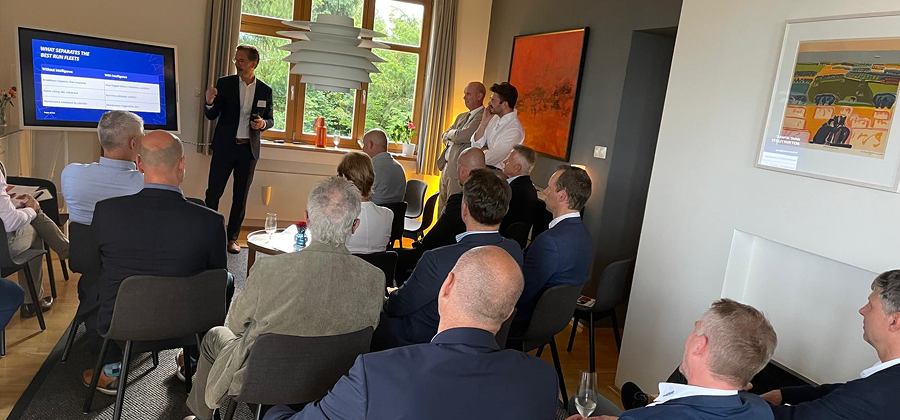
Public buyers evaluating EU-funded projects are asking for more than a competitive price. Under the EU Procurement Directive, they can weigh life-cycle cost alongside the upfront bid, so contractors and rental companies need to prove performance, not just price.
In practice, that means fleets need documented utilization and maintenance history. They also need consistent reporting across owned, rented, and subcontracted equipment, with records that hold up if a project is audited.
The EU’s procurement rules are changing what OEMs and dealers are expected to deliver, too. Equipment with built-in performance data gives their customers a real edge when they bid. So, telematics is becoming a baseline expectation rather than an add-on.
Meeting those expectations gets harder as a fleet grows, since the data is scattered across owned, rented, and subcontracted equipment.
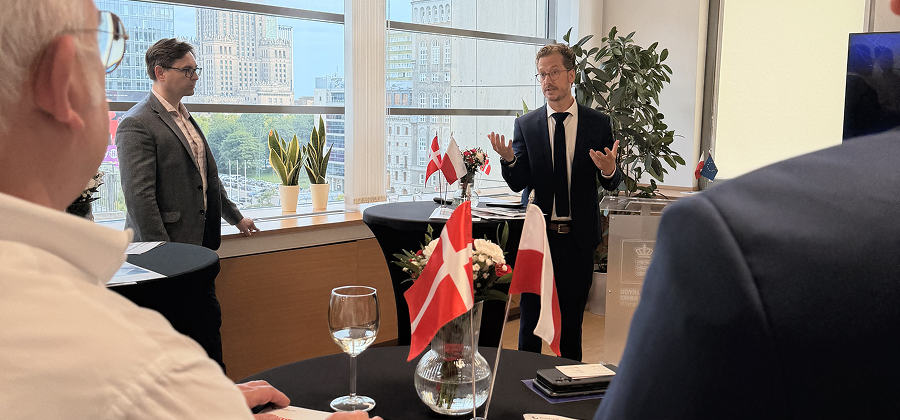
Three challenges come up again and again: visibility, reporting, and consistency. Fleet data is usually split across owned equipment, rental fleets, subcontractors, and multiple OEM systems that were never built to talk to each other.
Getting one answer out of all that has meant pulling numbers from each system by hand, then rebuilding the same report every time a customer or tender asks for one.
AI is changing that math. Open protocols such as MCP let AI tools connect directly to equipment data across brands, without a custom integration for every OEM system.
That turns raw machine data into a utilization report or performance dashboard in minutes instead of days, produced the same way every time, regardless of brand, project, or customer.
For companies bidding on EU-funded work, speed matters as much as the data itself. Those that can answer a procurement question quickly, backed by consistent records, look ready for larger, more demanding projects.
Central and Eastern Europe’s infrastructure pipeline will continue to create opportunities over the coming years.
Companies that prepare now, by building consistent data and reporting processes, will be better positioned for larger projects and changing customer expectations.
Those conversations reinforced one point above all else. Construction companies aren’t looking for more data. They’re looking for better ways to use the data they already have. That’s where the biggest opportunity lies.
If you’re operating across multiple Central and Eastern European markets and want to talk through what that looks like for your fleet, connect with me on LinkedIn.
Trackunit would like to extend a special thanks to the Danish Ministry of Foreign Affairs Trade Council, and to the Danish embassies in Prague, Warsaw, Budapest, and Bucharest, for hosting this roadshow and for their continued partnership across the region.
Kirill Kamenetsky is Regional Director for Central and Eastern Europe at Trackunit, based in Düsseldorf, Germany, where he leads the company’s expansion across the region’s construction and rental markets. He joined Trackunit in 2026 after six years at Shippeo, where he held senior sales and business development roles focused on real-time visibility solutions across the DACH and Eastern European markets.