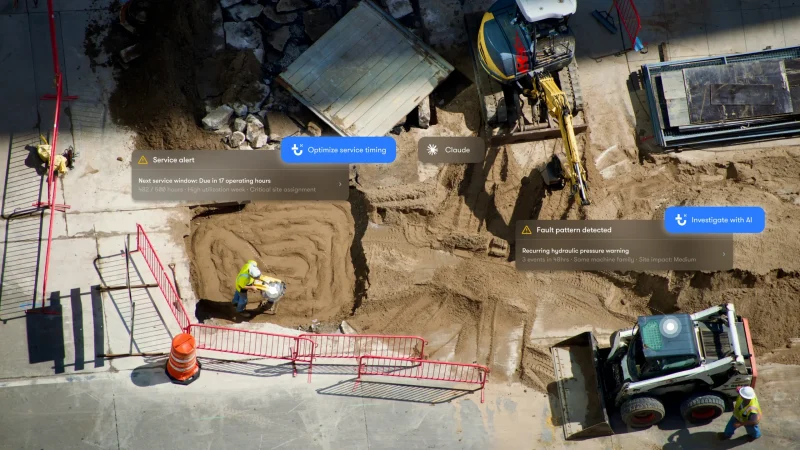






Where do AI and connected data actually make a difference? At Downtime NYC, two people who build around trains that never stop had answers.
By Mark Denise | Director, Contractor Business Development, Trackunit
Twenty years ago I worked in New York, on the East Side Access project and the World Trade Center transit hub. On those jobs I worked alongside Julie Kroloff and Bob Spero, who joined us at Downtime NYC in September 2026.
Julie founded Integrated Strategic Resources (ISR) in 2000, after rising through major engineering firms like ICF Kaiser and Stone & Webster. Bob Spero joined her at ISR in 2011 as VP of Rail and Transit, after close to three decades at the Long Island Rail Road.
Between them, they have seen this work from both sides, inside a public agency and inside the firms that serve one. That dual perspective, backed by decades of experience, gives them a clear view of the challenges construction teams face.
One key topic ran through the conversation: the industry has more data than ever, but turning it into decisions people can make together remains difficult. As our guests explained, that may be more of a people problem than a technology problem.
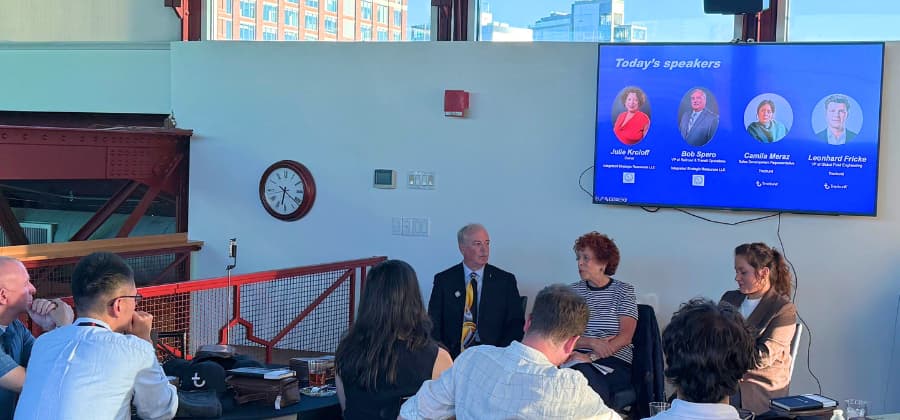
If you put the data in that’s good, it’ll give you good stuff out. — Bob Spero, Vice President Rail/Transit & Director of Operations, Integrated Strategic Resources
Bob Spero spent nearly three decades keeping trains running on the LIRR. On a live railroad, he explained, time is the scarcest thing you have. You work in the gaps between trains, in every kind of weather, and the service never stops for you.
That changes the math on project management. What you would finish in a month on open greenfield can take four or five months on the rail. You only ever get the track in short windows.
His fix is to treat every finished job as data for the next one. You started with a thousand feet of rail, how much did you use, how many people did you need, what was your productivity?
The next job comes up on a similar curve, and now you know. What did we use last time? How many flagmen? It’s right there. As Mr. Spero put it, “If you put the data in that’s good, it’ll give you good stuff out.”
If you hold on to your area of expertise and don’t understand how it needs to integrate into the next area, the whole project can go down the tubes really fast. — Julie Kroloff, Owner, Integrated Strategic Resources
Asked what her data environment would need to look like, Julie Kroloff’s answer was immediate: “Remove the silos.”
Kroloff argued that expertise held in isolation can become a problem of its own. “If you all hold on to your area of expertise and don’t understand how it needs to integrate into the next area, frankly the whole project can go down the tubes really, really fast.”
That challenge isn’t only about technology. Kroloff stressed that having the right expertise on a project only helps when teams can connect it with the people and work around them.
Bob Spero has lived the same problem on the rail. The breakdown he sees repeatedly is everyone waiting on each other.
Mr. Spero’s approach is “piggybacking,” with railroad crews and third-party contractors working within the same window instead of waiting on each other.
That requires preparation. Briefings are completed early, equipment is staged, and someone is ready to call the tower as soon as rush hour ends. Without that coordination, Mr. Spero said, 50 people can be left waiting for the work window to open.
What good coordination lines up in advance:
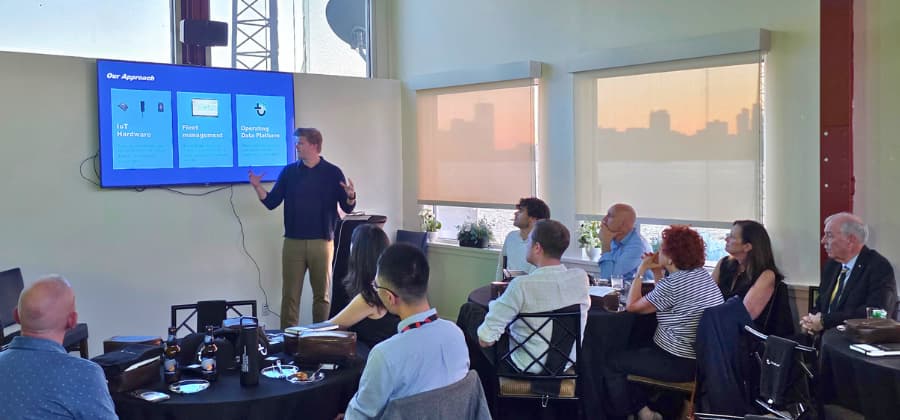
[IMAGE: Leonhard Fricke, Trackunit’s VP of Global Field Engineering, explores connected fleet intelligence in practice]
For Ms. Kroloff, AI can help connect information that teams already use separately. Bringing together schedules, asset utilization, and past project performance could help teams plan better. Teams could then coordinate overlapping work, make better use of available time, and apply lessons from previous projects.
But AI is only as useful as the information behind it. Ms. Kroloff recalled advice from a young engineer demonstrating an AI search: “Do not lie. Verify all your facts. Do not assume.”
Missing, fragmented, or inaccurate data won’t produce reliable answers. Teams still need trustworthy information and human oversight before acting on the results.
What trustworthy AI needs:
[IMAGE: The view across the Hudson River to New Jersey from the venue at Chelsea Piers]
Julie Kroloff and Bob Spero came at the problem from different sides, but landed in a similar place. Better tools can help teams plan, coordinate, and learn from past work. The harder part is getting people to trust the information and change established ways of working.
That matters as AI becomes part of more construction workflows. It can help teams make better use of their data and experience, but it can’t create collaboration or replace the judgment of the people doing the work.
That was also the value of Downtime NYC. Bringing experienced operators, contractors, and new perspectives into the same room creates the kind of exchange that technology alone can’t deliver.
Trackunit extends special thanks to Julie Kroloff and Bob Spero for sharing their insights and experience at Downtime NYC. Learn more about Integrated Strategic Resources (ISR) at isrllc.us.
Mark Denise is Director of Contractor Business Development at Trackunit. He began his career in the field on megaprojects including East Side Access and the World Trade Center transit hub, and now works with North America’s largest contractors on fleet visibility and equipment intelligence.
Connect with Mark on LinkedIn or reach him directly at [email protected].