



Rental agreements are signed between companies, but machines are started by people. On a crowded jobsite, that gap is where revenue and accountability quietly disappear.
I’ve spent nearly three decades in rental. For most of that time, the key was the contract. You handed it over at check-out, took it back at check-in, and whatever happened in between stayed on the jobsite.
The rental agreement names a company. The machine’s physical key names nobody. So as far as the machine is concerned, whoever holds that key is the operator.
That worked when a site had one contractor and a dozen machines. On a data center build with forty subcontractors, and hundreds of assets, it doesn’t work at all.
Picture a large warehouse project, the kind with a dozen trades working at once. One subcontractor rents a scissor lift to hang steel, and an electrician needs the same height to run their wiring.
Lifts are everywhere on a site like that. Someone finds one sitting idle, uses a universal key, and gets their work done.
Nothing unusual happened, and that’s precisely the problem. Those hours landed on the steel contractor’s invoice, while the electrician’s firm paid nothing.And if that lift comes back with a bent rail, nobody knows who was in the basket.
Rental companies today focus on three things: what’s being used, who’s using it, and why. None of that gets verified as long as the physical key still names nobody.
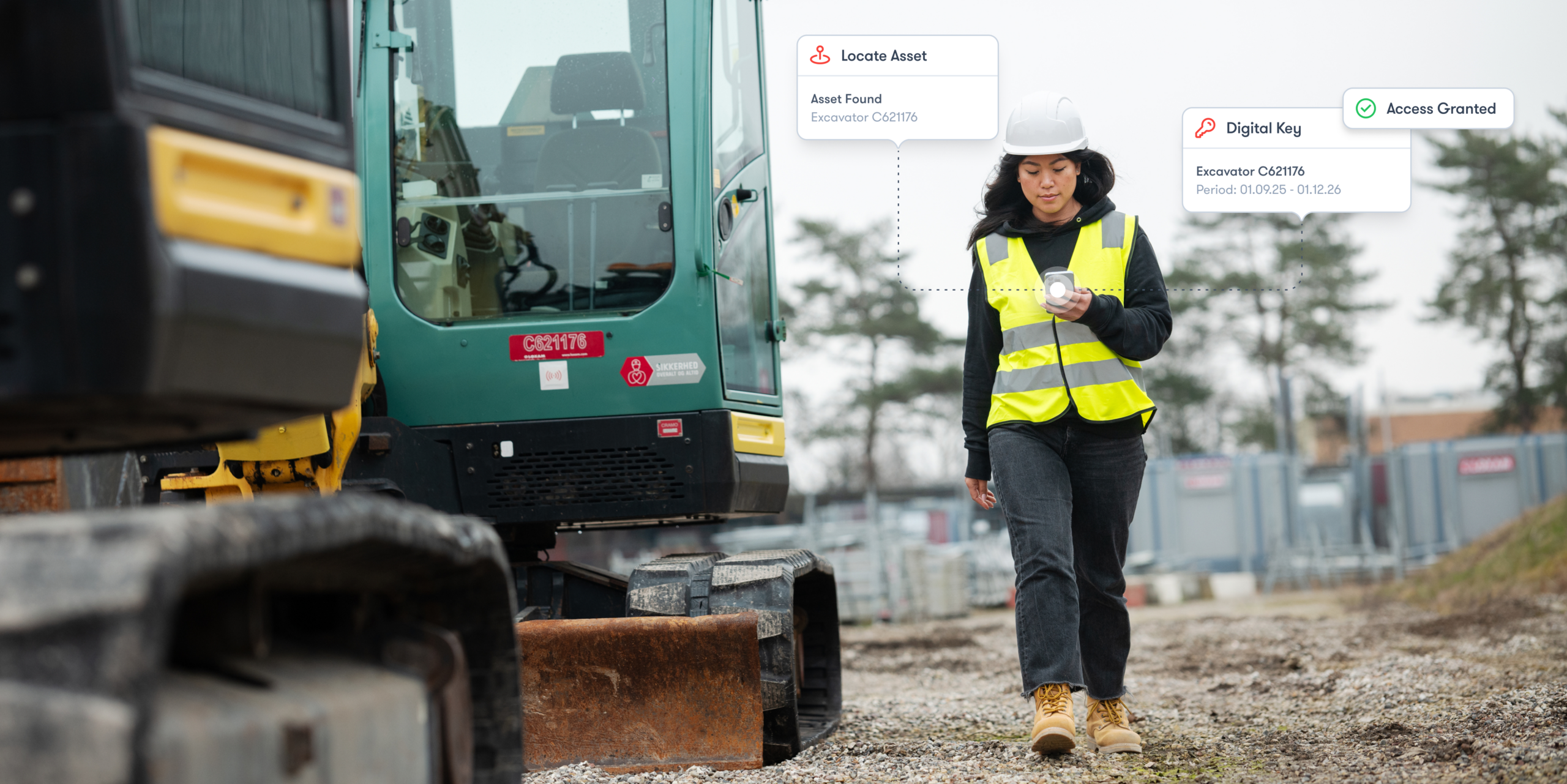
Digital access management doesn’t replace the physical key or the rental contract. It adds a credential tied to a named operator, as another step before the machine will start.
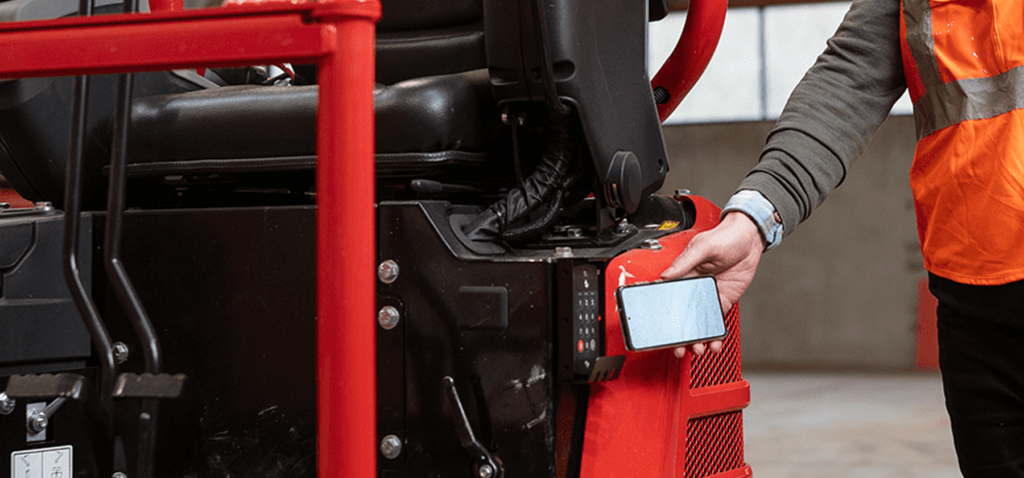
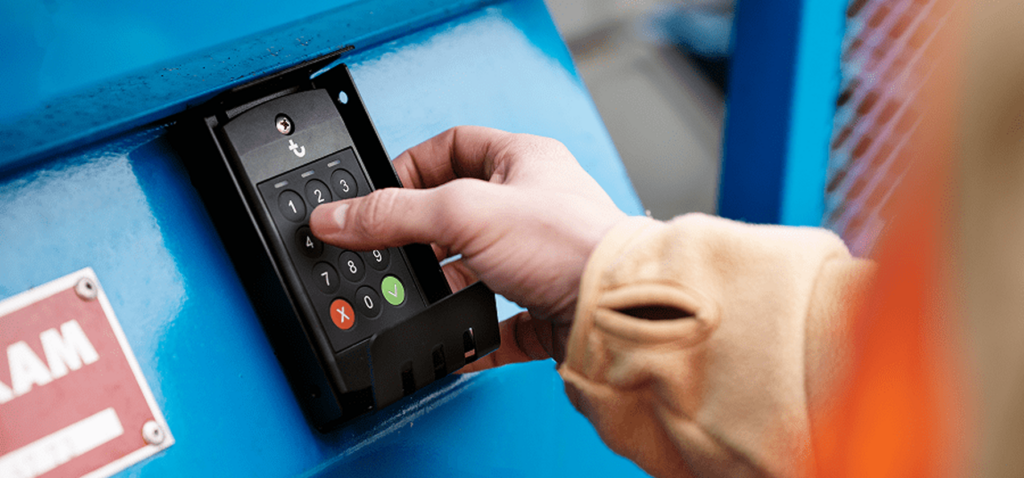
Trackunit Access Management runs on two pieces. Admins work in Trackunit Manager, and operators use the Trackunit On app. Operators start a machine with a digital key in the app, a PIN code, or an RFID card. That’s on top of however it’s normally started.
The customer’s own admins set the access window when they issue that credential, so permissions expire on their own. That last part sounds like paperwork until you think about off-hire.
When a contract ends, access can end the same day, from a desk. No more waiting for a truck on Tuesday.
Most rental firms come to access management to stop something. An injury, damage, or use by the wrong crew. The bigger prize is what it lets you account for. Once every start carries a named operator, machine hours trace back to the crew that ran them.
That doesn’t make those hours billable on its own, because billing follows the rental agreement, not the credential. What it does is give both sides a record to work from.
Where the contract allows it, you can use that record for usage allocation and sub-billing. That means charging machine time back to the sub that actually used it.
I see this most clearly on the big data center projects. A customer might have hundreds of forklifts moving materials around a plant.
They want a specific forklift assigned to a specific operator. That way they can track production, and that operator’s behavior and safety on the machine.
That’s attribution at the operator level. On projects like that the reporting already exists, pieced together by hand from timesheets and site logs. When it is built on operator data, it becomes routine.
Four conversations get easier once the record exists:
Jobsite and machine technology is evolving. It’s driving more accountability, from general contractors down to the crews using specific equipment.
Safety, cost, and customer demand are pushing this, not just rental companies. None of this is standard yet. Some use a code, some a phone, some a card. It isn’t required on every jobsite, so there’s real room for it to grow.
I called on these jobsites for years, and the difference was obvious long before anyone talked about digital access. An airport job meant jumping through hoops to get on site.
An elementary school down the road, I could visit whenever I chose. The urgency still depends on the type of project.
There’s a customer angle too. A contractor working with three rental companies juggles three different access systems on the same site.
That gets confusing fast. Whoever scales this across their fleet first gets a real edge, because customers get used to one system.
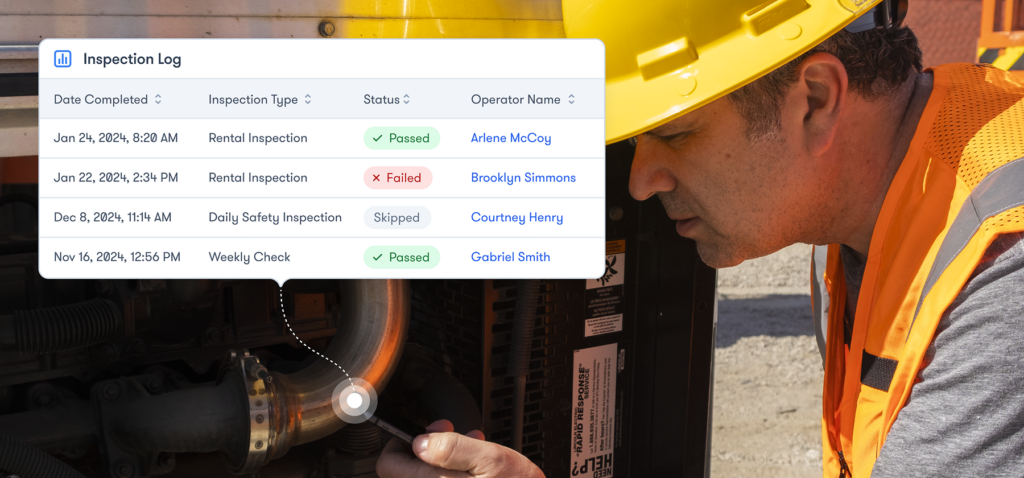
On-site pools are the obvious next step. A crew takes a machine out, uses it, and returns it. A pre-use check happens at each end, and the usage gets recorded against the crew that took it out.
The rental companies I work with want to package this data into insights that differentiate what they sell. Access is where that starts, because it’s the point where the contract finally reaches the machine.
The key was never really the point. The record is.
Andrew Grover is VP of Sales, AME Enterprise Rental at Trackunit, with nearly three decades of experience across rental operations, sales, and digital leadership. His career spans frontline roles at Herc Rentals to leading digital strategy for Caterpillar’s rental and used business, with assignments across Europe, the Middle East, Africa, and the Americas. He is passionate about helping rental companies grow through connected fleet strategies and digital transformation.