



For construction equipment OEMs, dealer efficiency is one of the biggest levers on uptime, warranty cost, and customer loyalty.
McKinsey has found that aftermarket and service now drive a majority of margins for many OEMs, with service margins up to four times higher than new equipment. That makes what happens inside a dealer’s service operation a strategic opportunity, not just a local concern.
When you sell a machine, you also sell the service experience that comes with it. That experience is won or lost inn how efficiently equipment is inspected, diagnosed, and repaired.
The same connected data that informs better engineering decisions also powers more efficient service.
Good technicians are extremely scarce. If dealers have managed to engage and retain them, the goal is to keep technicians focused on high-value work, not searching a job site for a machine or guessing at faults without data.
During my years as an engineer, I saw this scenario play out many times. A customer calls and says the machine has no power. Without connectivity, the response is reactive: send a technician out, hope they can find the machine on a large jobsite, and diagnose the issue from scratch, only to realize the wrong technician was dispatched without the right parts.
The technician drives back. A second visit gets scheduled. The machine stays down.
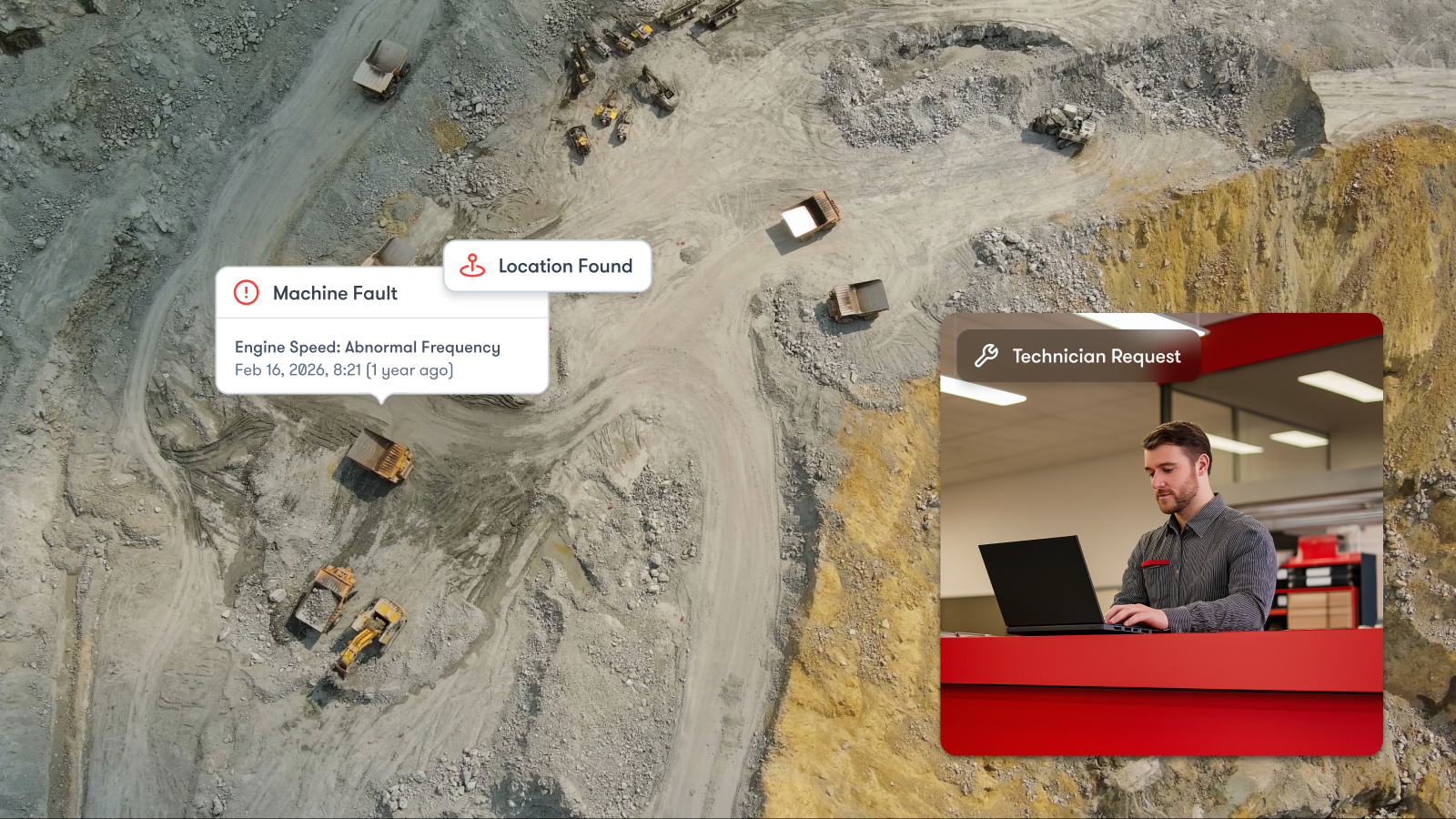
With connectivity, that same call looks completely different. The service desk pulls up the screen and checks track pressure against engine manifold intake pressure. Within minutes, the technician knows whether the issue is hydraulic or mechanical.
The right technician goes out with the right parts. The machine gets fixed on the first visit. For OEMs, that translates directly into lower cost-to-serve and customers who get the uptime they expected from the brand they chose.
Once machines are connected, the first step on any service call is no longer “send a truck”. It’s “open the screen”.
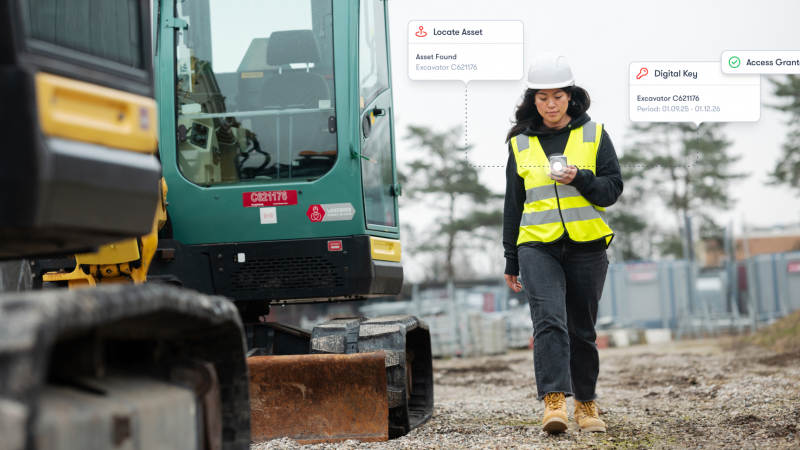
Location is the starting point. On large construction sites, a technician can lose significant time just locating a relatively small piece of equipment. GPS solves that before the truck leaves the yard.
Diagnostics is the next layer. When both location and fault data are available before dispatch, parts get ordered before the technician is sent, the right skill set gets matched to the actual fault, and in many cases the issue gets resolved on the first visit.
Every avoidable service visit eliminated is warranty cost saved and a customer experience strengthened.
Once individual calls can be handled from the screen, the next step is watching patterns across the machines in service.
This is not science-fiction prediction. It means answering practical questions: which machines keep overheating? Where does the same fault code keep coming back?
Overheating is a good example. A machine that keeps running hot might just need a radiator cleaned, or it might be the start of a larger issue.
If someone is reviewing that data every day, the customer gets a call before the machine fails in the field. That is a warranty claim that never gets filed and a customer relationship that stays intact.
Most of the real-world value right now is in preventive maintenance, not perfect prediction. Condition monitoring is already common across dealer networks. Predictive capabilities are emerging, and in the next five to ten years it will be realistic to estimate remaining useful life down to hours on some components.
The OEMs furthest along are already using this data to strengthen their broader aftermarket performance. The right maintenance approach makes that possible at scale.
How does full-fleet connectivity reduce warranty costs and improve service efficiency? The answer starts with consistency.
A common mistake is treating connectivity as an option code, something added only when a customer requests it. The result is a fleet where maybe 20% of machines are connected and 80% are not.
That ratio makes it nearly impossible to build consistent service processes. If a customer calls and says a machine has lost power, the service desk isn’t going to open the telematics screen if there’s only a one-in-five chance the machine is even visible.
They fall back to the old way of working. And once that habit forms, the value of connectivity stays on the shelf.
OEMs that deliver connectivity as standard see a fundamentally different pattern. Data is available on every call. One repeatable workflow replaces a patchwork of exceptions. Standard work becomes possible and training becomes consistent.
Connectivity adds upfront cost to a machine. But across its lifetime, the reduction in warranty claims, the improvement in service efficiency, and the earlier identification of failure patterns more than offset that investment.
No OEM builds the entire connectivity stack alone. It depends on partners. The real question is how much of that stack you choose to integrate and how quickly you can turn the data it generates into decisions.
Cost-to-serve goes down. Customer uptime goes up. The OEMs that have made that commitment see the difference clearly, and that data foundation also becomes the basis for differentiating their connected offering in the market.
The OEMs that are furthest along don’t treat digital as a standalone product. Connectivity is embedded in everything they: the machine, the financing, the service, the parts.
Digital is not a thing you do. It’s how you do things.
They focus internal effort on the applications and business logic that sit on top of a connected platform, and on turning data into decisions as fast as possible. Strong industry-specific partners handle the infrastructure and keep pace with the speed of software and AI iteration.
The OEMs winning on service aren’t doing it with better intentions. They’re doing it with better data, delivered consistently, across every machine in the field.
Federico Rio is a 25-year veteran of construction having cut his teeth in the heavy equipment industry with Caterpillar. Specializing in machine design, digital & technology, and sales & marketing, he joined Trackunit in 2023 where he is Senior Vice President of Product and Pricing.