





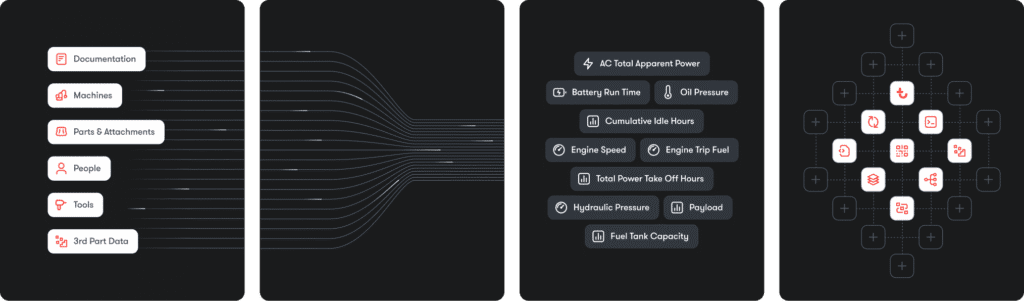
Unlike standalone telematics or fleet management software, a Construction Operating Data Platform harmonizes multi-source operating data into a standardized model. It ensures that equipment data from different OEMs, rental systems, contractors, and enterprise platforms can be securely integrated, analyzed, and automated at scale.In construction, operating data includes machine health, utilization, runtime, fuel consumption, attachments, compliance records, jobsite activity, and enterprise records.
A Construction Operating Data Platform ingests this data, normalizes it, governs it, and makes it usable across applications and AI systems.
IrisX is Trackunit’s Construction Operating Data Platform. It powers telematics and fleet management by transforming fragmented machine data into structured, AI-ready intelligence.
Telematics functions as the data ingestion layer within the platform. And fleet management operates as the workflow layer built on top of harmonized data. The Construction Operating Data Platform governs and orchestrates both.
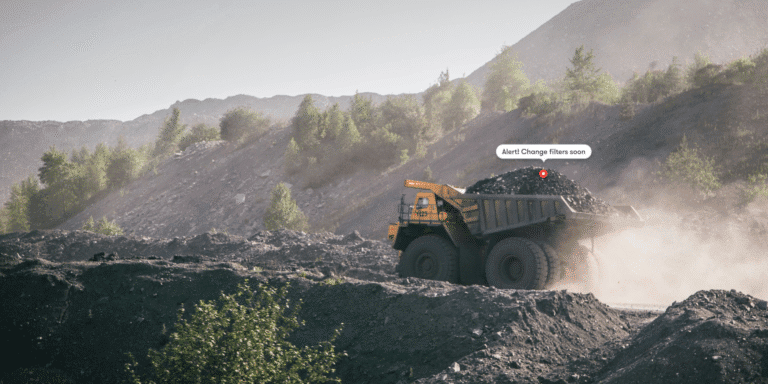
Construction generates massive volumes of operating data every day. A single excavator can transmit thousands of time-series data points during one shift. Multiply that across fleets, OEM brands, rental operations, contractors, and enterprise systems, and data fragmentation becomes unavoidable.
Without a unifying platform:
A construction operating data platform addresses these structural limitations
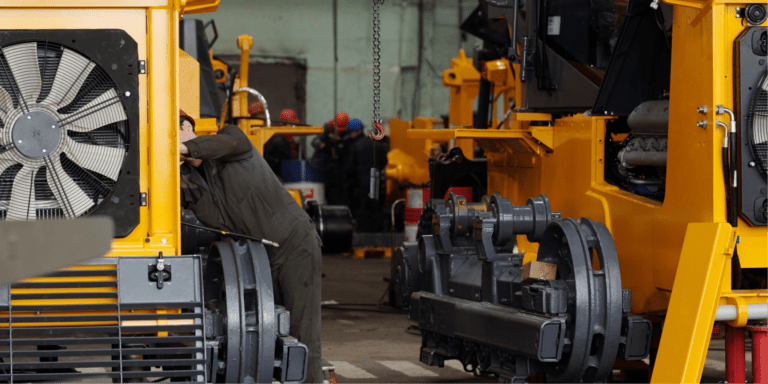
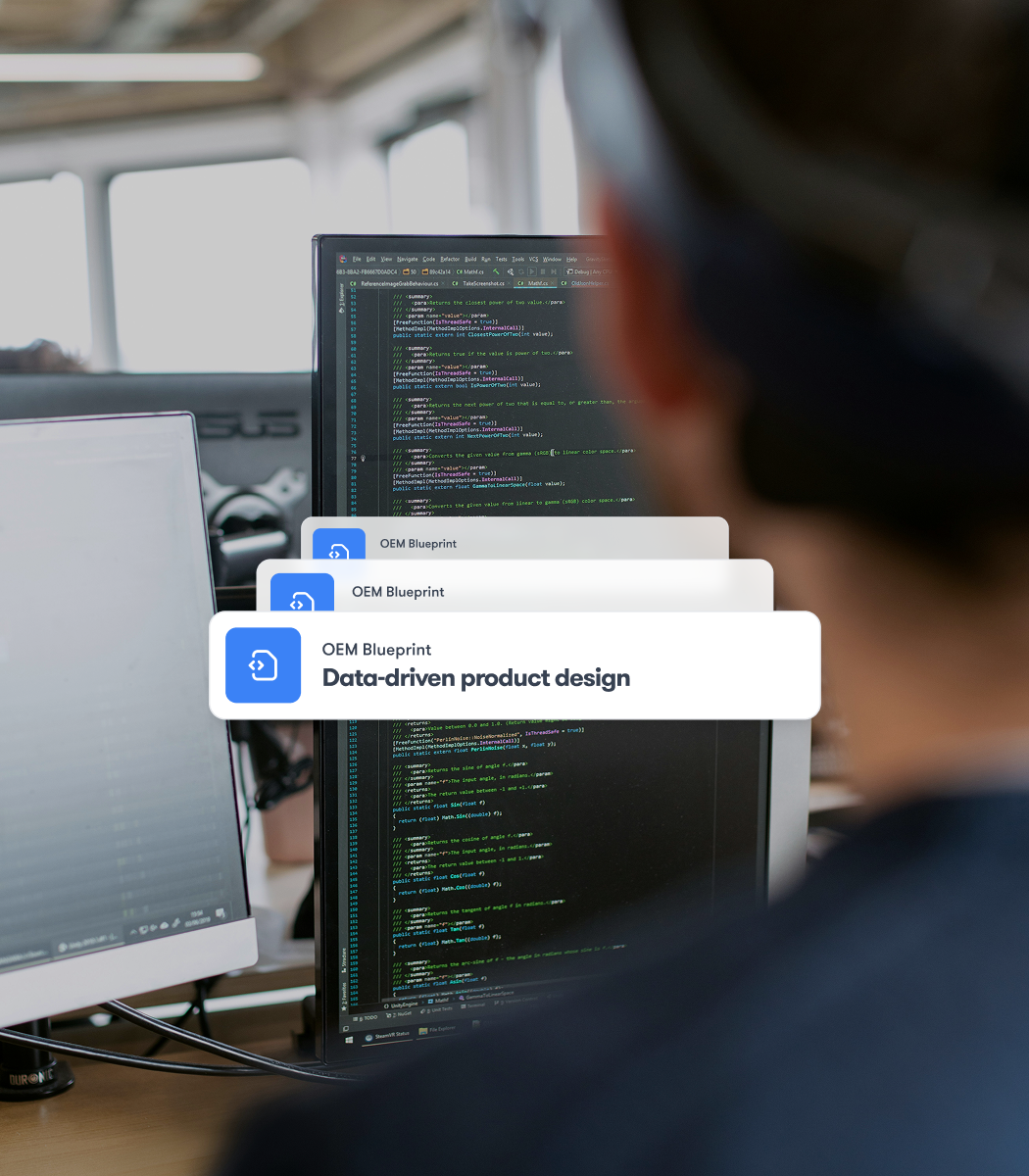
OEMs use a Construction Operating Data Platform to harmonize machine telemetry across global fleets and enable AI-driven product insights. Rental companies use it to unify equipment utilization, automate workflows, and benchmark performance across mixed fleets. Contractors rely on it to integrate telematics, project systems, ERP data, and operational dashboards in one governed environment. Each persona uses telematics and fleet management differently — but all depend on a shared operating data foundation.
Construction Operating Data Platform vs Fleet Management Software
When comparing construction technology platforms, it is important to distinguish between horizontal fleet software designed for transportation and vertically specialized platforms built for off-highway construction equipment. A Construction Operating Data Platform embeds OEM standards, machine diagnostics, rental workflows, and contractor ecosystems directly into its architecture.
| Construction operating data platform | Fleet management software |
|---|---|
| Designed for off-highway construction equipment | Designed primarily for on-road vehicles |
| Harmonizes multi-source machine and enterprise data | Tracks and reports equipment activity |
| Enables AI-ready data lakehouse architecture | Focuses on dashboards and visibility |
| Supports OEM integrations and mixed fleets | Focuses on routing and compliance |
| Enables cross-system automation workflows | Limited cross-system orchestration |
| Governs security, lineage, and data access | Minimal governance tooling |
Construction operating data platform
Telematics
Fleet management
A Construction Operating Data Platform must be secure by design. IrisX is ISO 27001 certified and built with end-to-end encryption. It provides access control, data lineage tracking, auditing capabilities, and governance controls. This means customers retain ownership of their data. The IrisX platform enables secure sharing, integration, and benchmarking without compromising control or compliance requirements.
By unifying operating data, organizations can:
AI operates on harmonized operating data within the Construction Operating Data Platform. By standardizing telemetry and enterprise data, the platform enables predictive maintenance, generative insights, automation workflows, and benchmarking across fleets. AI becomes an extension of governed data rather than a disconnected experiment.
Construction operating data includes machine telemetry, diagnostics, utilization metrics, attachments, enterprise records, and jobsite workflows generated by equipment-intensive businesses.
Telematics captures and transmits equipment data. Fleet management software uses that data for maintenance and reporting. A Construction Operating Data Platform governs, harmonizes, and orchestrates the data across systems.
A construction operating data platform integrates OEM data standards and harmonizes telemetry from multiple manufacturers within a unified architecture.
Trackunit delivers telematics capabilities, but Trackunit IrisX is the construction operating data platform that powers and governs those capabilities.
Mikkel Dalgas is Chief Technology Officer at Trackunit. He leads the architecture and development of IrisX, Trackunit’s Construction Operating Data Platform. With extensive experience in cloud infrastructure and enterprise data systems, he has focused on building secure, scalable, construction-specific platforms that unify operating data across OEMs, rental companies, and contractors.