




Early in my career as a mechanical engineer, I was assigned a task that reshaped how I think about building machines: Deciding whether to add cooling capacity to a construction machine’s transmission.
The supplier’s guideline was simple. if the machine runs at full speed for more than sixteen minutes straight, it needs extra cooling. The real question was: How often does that actually happen?
Adding unnecessary parts means higher cost, more complexity, and more points of failure. So I did what engineers do, I called customers and dealers. Some said it happened all the time, others said sixteen minutes at top speed was almost unheard of.
With no clear answer, we added the cooling. When in doubt, make it stout.
That instinct costs the industry millions. Many OEMs still design critical systems without truly understanding how operators use machines in the field.
The gap between design and reality is where most cost appears. A few years ago, getting useful insight from machine data required specialists, the right tools, and a lot of time, so most engineering teams worked around the data instead of through it.
That constraint has largely disappeared. Engineers can now query machine data directly and get answers in seconds instead of waiting on a dedicated data team.
If that transmission cooling question came up today, I’d type it in plain English into an equipment data platform like Trackunit IrisX and have the answer almost immediately: What percentage of machines ever run at full speed for more than sixteen minutes, and how often does it actually happen?
Applying AI to structured equipment data makes it practical to explore fault codes, utilization, location, and machine states in context, and the resulting consistency is strong enough to support real engineering decisions. This isn’t general-purpose AI — it runs on data that reflects how machines actually operate.
That shift is what lets teams move from analysis to action. Decision speed changes when answers arrive in seconds, and that’s exactly what you see as AI becomes mainstream in construction equipment and fleet management.
When engineers don’t design machines for actual use, those machines fail. Warranty claims follow, service costs increase, and customer trust erodes in ways that are hard to recover from.
Off-highway equipment customers are demanding higher uptime, lower total cost of ownership, and more reliable performance, which puts direct pressure on OEMs to improve how machines perform in real-world conditions. This is where gaps between design assumptions and actual usage start to show up in cost.
With field data, engineers can identify failure patterns earlier and work backward to understand the root cause. Is it a design issue, a usage pattern that no one considered, or something else entirely?
An old engineering adage says there’s no such thing as customer abuse, only missed requirements. If customers are doing something with your machine that breaks it, that behavior should have been part of the requirement.
The same connection between design decisions and downstream performance also enables OEMs to rethink how they support machines in the field, especially as connectivity transforms dealer service efficiency.
“There’s no such thing as customer abuse, only missed requirements.”
Overdesign carries its own costs too. It adds weight and complexity, and complexity creates additional failure modes. When you understand how operators actually use a machine, you can right-size components with confidence and avoid unnecessary cost.
A common concern is that data-driven engineering only works once you have a large, mature connected population. In practice, that’s not how it plays out.
Even a year of connected data is enough to distinguish between design issues and usage issues. Whether a rising failure rate points to a component specification, an unanticipated duty cycle, or an application the machine was never designed for, that distinction shapes how you respond—and now you can make that call much earlier in the lifecycle.
Collecting machine data early matters because the value compounds over time. OEMs that wait for a larger connected population are already limiting the insight available to them.
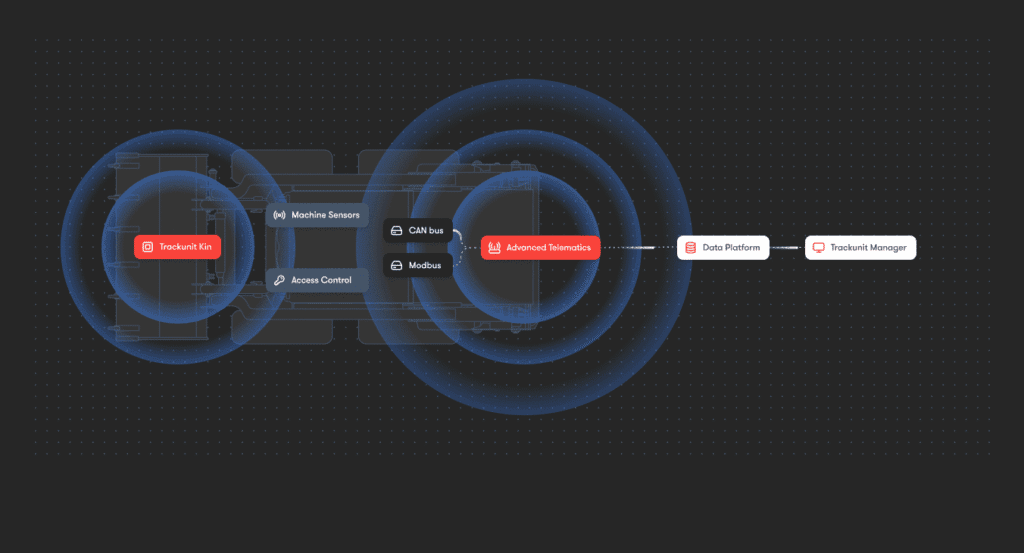
The longer you have the data, the more you can learn—and you cannot go back and collect what you missed. This is why more OEMs now focus on connecting every machine as a way to differentiate in the market.
The value of field data does not reset with each product generation. It builds.
OEMs that connected their machines several years ago now have lifecycle data that informs tomorrow’s product development. Engineers can see which components are consistently over-specified, where they can safely adjust, and which performance parameters matter most in real-world use.
The OEMs that perform strongly in the aftermarket tend to be the ones who understand their machines most deeply, and that understanding increasingly comes from field data rather than assumptions.
There is also a supply chain dimension that people rarely discuss. Some OEMs are using fleet usage data to improve demand forecasting, grounding production planning in actual usage rather than projections. With long lead times, even small improvements in forecast accuracy can have a meaningful impact.
Every machine leaving the factory this year will be used in ways no one fully anticipated. That is not a criticism of engineering; it is the reality of building equipment for complex operating environments.
The opportunity is in what happens next. OEMs that connect field data back into engineering decisions are not just improving individual machines; they are creating a continuous feedback loop where every machine in operation informs the next generation of design.
Over time, that capability deepens understanding of how operators actually use machines, which performance factors matter most, and where you can remove cost and complexity without adding risk.
Closing the gap between design and real-world use is not a one-time fix—it becomes a lasting advantage.