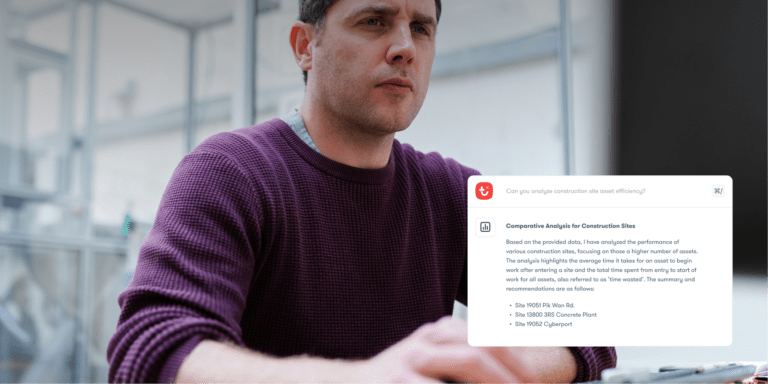





Future visions can often seem remote and unobtainable, but at Trackunit NEXT 2026, global contech Trackunit delivered a clear message to equipment OEMs and construction business owners that seismic changes in AI-powered operational intelligence is accelerating the business decision-making process today.
According to Trackunit, the next wave of competitive advantage won’t come from “more data”, it will come from making data usable. Users’ AI results must be trusted to be adopted, and put to work by everyone from analysts and fleet managers to technicians, site managers and operators.
Across a series of conversations and live demonstrations, Trackunit showcased how the operating data platform IrisX is already accelerating the path from insight to action. Today, machine and fleet data is driving practical, scalable outcomes with fewer breakdowns, faster diagnostics, less manual configuration, and safer sites.
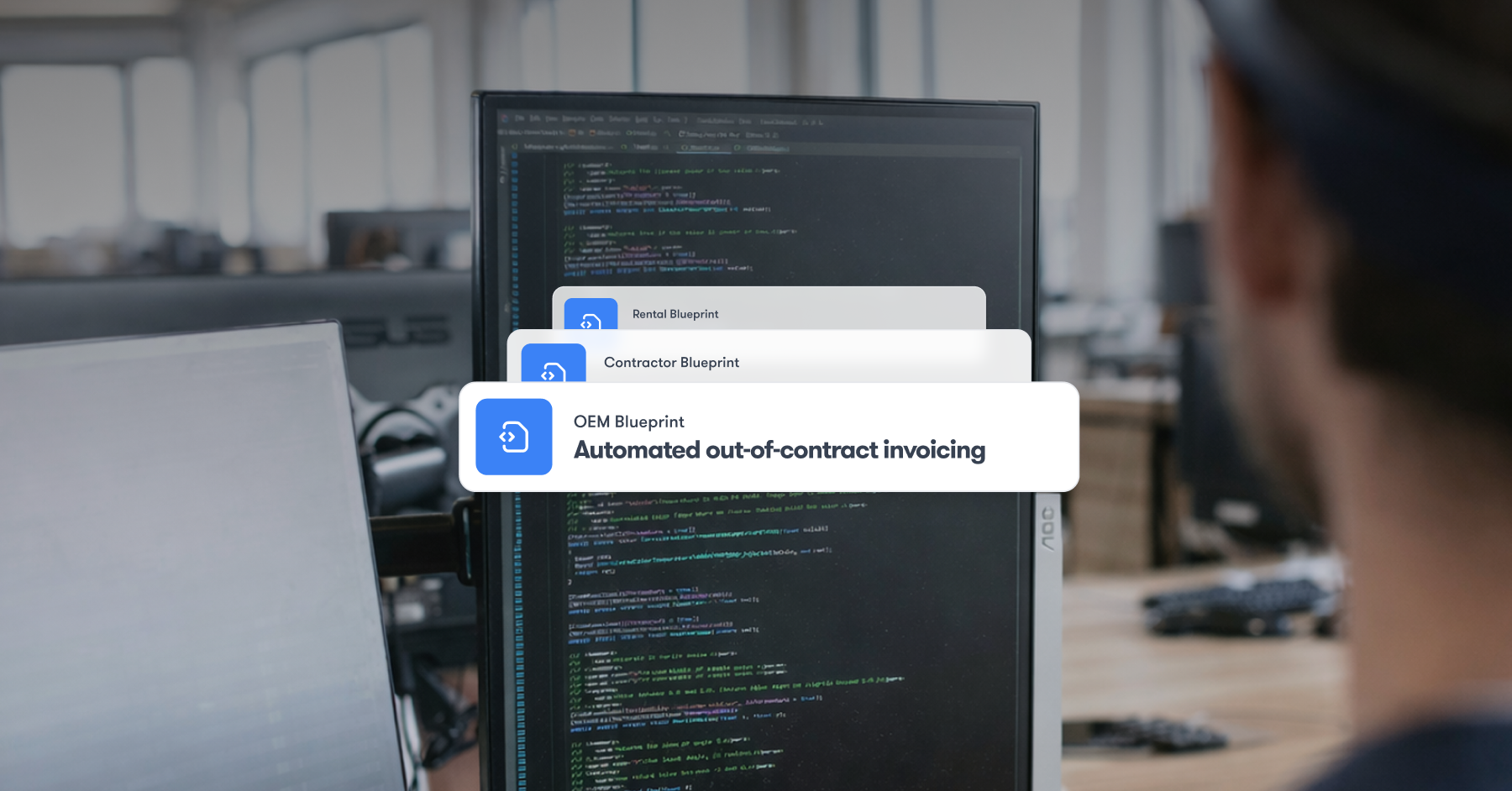
“The industry has reached an inflection point, where the old way of building solutions, with weeks of planning and months of engineering, is being replaced by rapid iteration and prototyping,” Trackunit CEO Soeren Brogaard said. Brogaard described how a customer request for a dashboard became something they could test immediately, rather than wait for development time. “Working prototypes are available in minutes,” he said.
A central NEXT 2026 theme was edge intelligence: using AI to search high-volume machine signals in real time, identify what matters, and help teams act before downtime happens. Trackunit highlighted a reality that every OEM, dealer, and rental company recognizes, where technicians are often dispatched with incomplete context, even though machines generate abundant fault codes and sensor data.
‘The industry has reached an inflection point, where the old way of building solutions, with weeks of planning and months of engineering, is being replaced by rapid iteration and prototyping. Working prototypes are available in minutes.’ — Søren Brogaard, Trackunit CEO
Søren Brogaard, Trackunit CEO
In the precision analytics demonstration on the IrisX platform, Trackunit showed how AI can automatically detect multiple fault codes and abnormal sensor behaviour, then translate that into likely causes, severity indicators, and recommended actions, including guidance such as addressing a blocked fuel filter or verifying stable fuel pressure under load.
This goes beyond monitoring, it supports active decision-making, enabling technicians to arrive with a service tech summary, prioritized checks, and first actions, reducing time-to-repair and helping prevent repeat failures.
For OEMs, this matters because diagnostics quality directly influences customer satisfaction, warranty costs, dealer efficiency, and brand reputation. For contractors and rental businesses, it is the difference between planned utilization and expensive disruption.
Trackunit also emphasized that AI’s biggest impact is not reserved for data scientists. The NEXT 2026 demos were intentionally built around usability, conversational interfaces that remove complexity and reduce technical training.
Demonstrations illustrated how users can “chat with your data” and also instruct the system to take action, such as identifying the next machine with upcoming service needs, generating operational summaries for a depot, creating access keys, or setting site-based theft alerts.
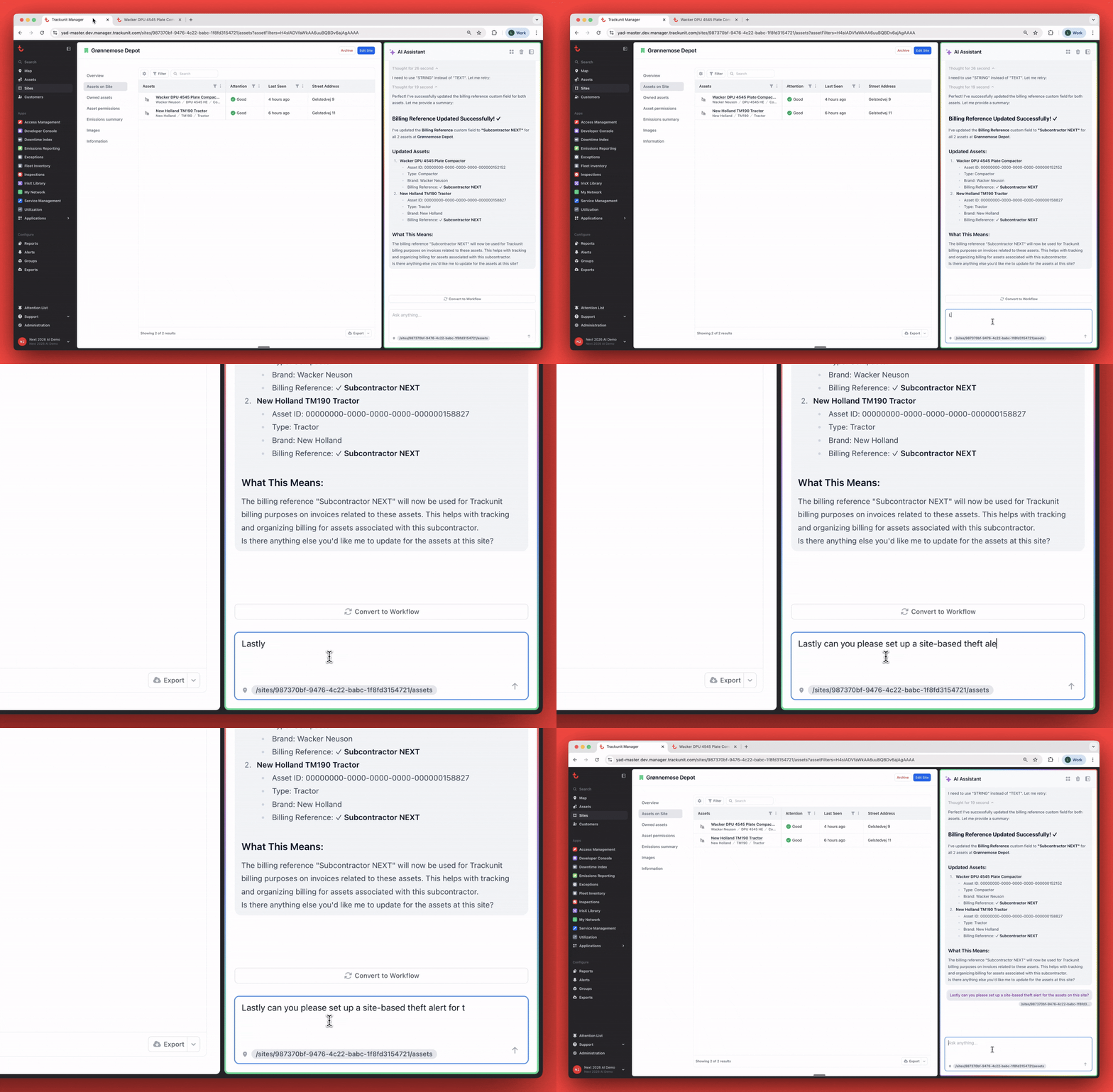
Critically, Trackunit linked this to safety and risk reduction. Theft alerts and access management are historically time-consuming to configure, but can now be executed through conversation, helping protect assets in the field.
Brogaard framed this as a shift in what technology enables across an organization, non-technical teams, previously “afraid of code” can now deliver insights and build value far beyond spreadsheets and slide decks.
One of the strongest NEXT 2026 threads was that AI success is not just a model challenge, it’s an ecosystem challenge. Danny Lange, an AI Leader and ex-Google, VP of Business Intelligence and Artificial Intelligence, highlighted broader technology shifts, focused on how businesses can move faster by leveraging partners and integrating information across boundaries.
“The Sputnik moment of ChatGPT, is that the computers now understand plain human language, and they can communicate in plain language, that’s new,” said Lange. “An AI Agent is active autonomous software, running and watching over things.
“In the AI space operational software is constantly searching and reviewing data and will notify you if there are changes. That is the big difference,” he said. “The Agent is there 24/7 and getting back to you when there’s something relevant.”
‘In the AI space operational software is constantly searching and reviewing data and will notify you if there are changes. That is the big difference.’
— Danny Lange, AI expert
Its access to real world data, from sensors on users, machines, tools and external data on weather and deliveries, is a game changer, said Lange. Trackunit connected that thinking directly to construction, as system boundaries expand and integrations become easier, operational intelligence must be available where work happens, not trapped inside a single application, he added.
Independent research underscores the same challenge NEXT 2026 addressed: the opportunity is real, but organizations struggle to scale adoption.
RICS’ Artificial intelligence in construction report 2025 (surveying 2,200+ professionals globally) found that about 45% of respondents reported no AI implementation, and another 34% were only in early pilots, while regular use remains rare, just under 12% reported regular use in specific processes.
The same report highlights practical barriers that Trackunit’s “usability & interoperability” approach is designed to overcome, especially lack of skilled personnel (46%), integration with existing systems (37%), and data quality/availability (30%).
At NEXT 2026, Trackunit demonstrated how IrisX is a foundation that helps the industry move faster, without forcing companies into expensive, multi-year reinvention cycles. As Brogaard put it, the goal is to think of Trackunit as “a data partner rather than a software vendor,” enabling stronger data strategy and faster time to impact.
The Trackunit NEXT 2026 Live link to the recorded webinar is here.