




Most large rental fleets are already connected. That investment has been made. The conversation has moved on.
What’s new is who’s asking for it and what they expect. The pressure is no longer coming from supporting internal rental operations. It is coming from customers, and the bar they are setting is rising fast.
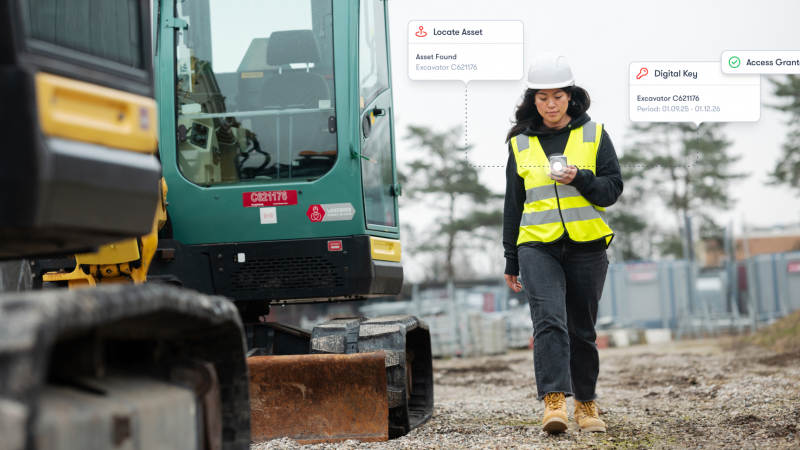
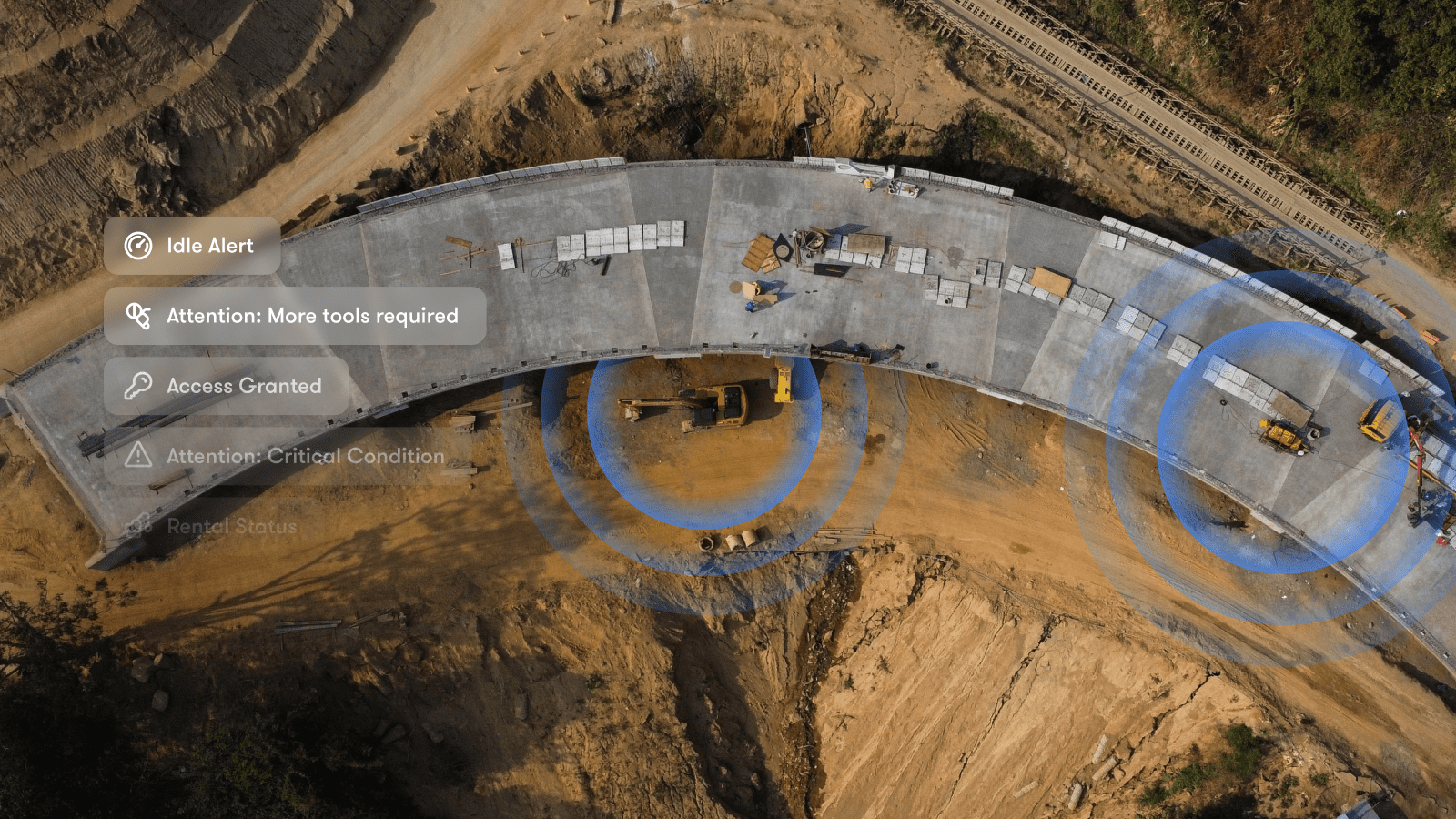
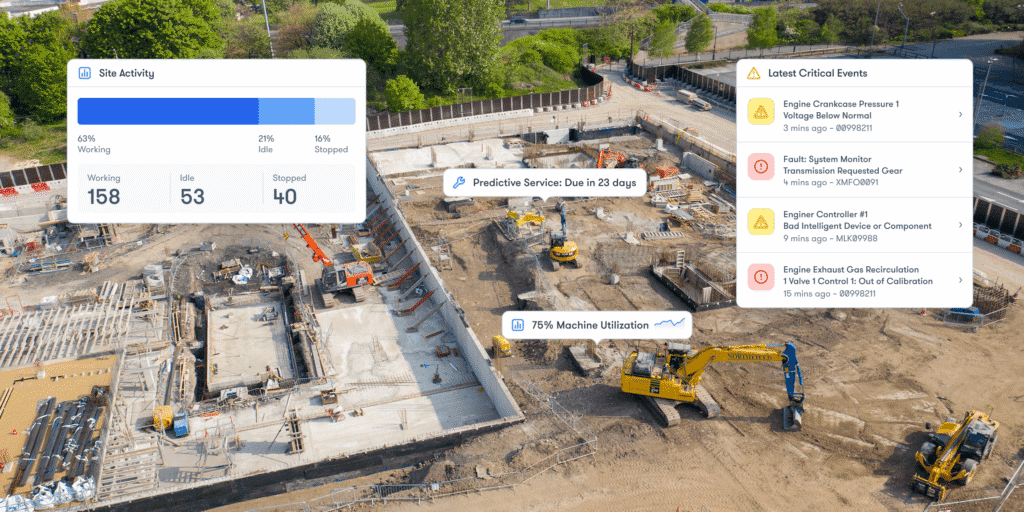
A connected jobsite is one where every asset on site is visible, traceable, and accountable in real time. For rental companies, meeting that standard is becoming a condition of doing business with the customers who matter most.
The urgency around connected jobsites is not uniform. It depends entirely on the type of project and the contractors running it.
Compare an airport terminal build to a residential school project. The airport involves a multitude of contractors, thousands of workers, and equipment moving across a tarmac governed by strict access and security protocols.
Every machine on site needs to be accounted for. At any given time, the main contractor needs to know what is on site, where it is,what its operational status is, and who is using it.
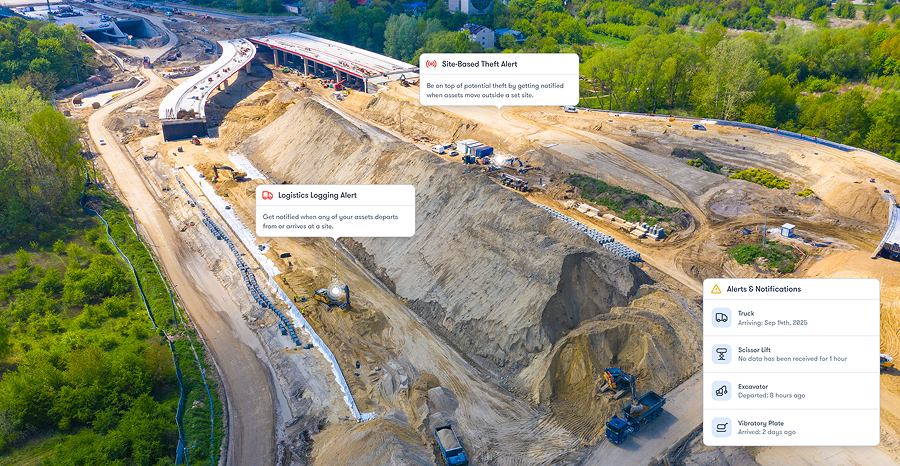
The school project is different. It is a greenfield site. Subcontractors can quickly come and go. The main contractor wants to know where equipment is, but the scrutiny could be lower.
The same rental company serves both. The expectations they face are not the same, and the gap between those expectations is widening.
Contractors running the most complex, highest-value projects are moving toward a world where connectivity is a procurement requirement. Rental companies that can meet it are in the conversation. Those that cannot are being asked to explain why or left out.
Deloitte’s 2026 Engineering and Construction Industry Outlook finds that leading contractors are deploying AI-driven analytics, real-time project platforms, and connected jobsites to improve planning, safety, and delivery. For rental partners, plugging machine and operator data into those workflows is now a qualifying requirement, not an optional extra.
The clearest signal of where this is heading comes from large rental companies that are building connectivity into their go-to-market strategy.
One leading rental company wanted to go to market saying 90% of their fleet is connected. Not as a technical detail buried in a contract. As a differentiator they could sell to contractors. Their pitch was straightforward: any asset on any jobsite would be connected, visible, and accountable.
That is a commercial argument built on connectivity. The contractors driving this demand are not asking for connectivity as a bonus feature. They are asking because their own customers are asking them.
Project owners, main contractors, and regulators are pushing visibility requirements down the supply chain. Rental companies provide key asset solutions to execute on the projects, and the pressure lands on them.
Contractors now expect rental partners to deliver:
Here is where most rental companies run into trouble. Connectivity and visibility are not the same thing.
A rental company can have 80% of its fleet connected and still be unable to give a customer a clear picture of all that is on their jobsite. In branch performance reviews, it is common to see a long list of assets on a spreadsheet with no clear view of which machines are doing the work.
That is not a connectivity problem. It is a data usability problem.
When only 15% of a fleet is connected, no one builds workflows around it. Technicians stop checking screens because the odds that a specific machine has data are too low to make the habit stick.
The same logic applies when data exists but cannot be acted on. Partial visibility does not drive consistent behavior.
Customers do not care which OEM manufactured which machine. They care whether the rental company can tell them what is happening across their site, right now, in one place.
Rental companies that have brought mixed-fleet data into a single view are the ones that can answer that question. Those that have not are exposed every time a customer asks it.
The commercial upside of connected jobsites goes beyond winning new contracts. It changes the customer relationship itself.
All rental companies today are competing for the same customers. The ones offering connected services are trying to upsell, but not every customer understands the value yet, or is in a position to extract it. That is changing fast, and the rental companies that have built the capability before the demand peaks will be best positioned.
When a rental company gives a contractor real-time visibility into the assets on their site, uptime status, location, utilization, that becomes a service the contractor depends on. Switching to a competitor means losing that visibility. The data becomes part of the relationship, not just an add-on.

Rental companies competing purely on price and availability are in a race that is hard to win. Rental companies that deliver connected services as part of the rental experience are offering something that is harder to replace.
Accounts with long-term contracts and complex requirements are exactly where that difference shows up most.
The rental companies best positioned for this shift are not necessarily the ones with the most connected assets. They are the ones that have turned connectivity into a consistent, customer-facing capability.
That means bringing mixed-fleet data into a single view that can be shared with customers. It means being able to answer questions about jobsite assets without manual reconciliation across portals. It also means having the operational discipline to maintain that visibility across every branch and every job.
Most rental companies sit somewhere between connectivity and true jobsite visibility. The ones that close that gap fastest will win the accounts where connected jobsite capability is no longer optional.
The bar is rising. The rental companies that meet it are not just winning contracts. They are building the kind of customer relationships that are genuinely hard to replace.
Andrew Grover is VP of Sales, AME Enterprise Rental at Trackunit, with nearly three decades of experience across rental operations, sales, and digital leadership. His career spans frontline roles at Herc Rentals to leading digital strategy for Caterpillar’s rental and used business, with assignments across Europe, the Middle East, Africa, and the Americas. He is passionate about helping rental companies grow through connected fleet strategies and digital transformation.