





Every rental company, no matter its size or maturity, is facing the same challenge, namely the sheer volume of data flowing in from assets, systems, customers, and jobsites.
Telematics pings, work orders, billing systems, and inspection logs are near constant delivering more information to the industry than ever before. Despite that, many organizations feel they have never had less clarity.
This is not because of a lack of technology, but the opposite. Over the past decade, rental companies have invested heavily in systems designed to solve specific problems. One tool for fleet tracking. Another for maintenance. A third for invoicing. A fourth for customer communication. Each tool has value on its own and together, they create a patchwork.
But with data scattered across multiple systems, even the simplest operational questions become complex: Is a machine available? Has it been serviced? Is it being used efficiently? Where is the opportunity to improve margin? Can we use the insights to differentiate our business?
The information exists, but it lives in different places, owned by different teams, in formats that do not automatically speak to one another. And while the sector continues to grow, so too does the gap between data volume and data usability.
‘But with data scattered across multiple systems, even the simplest operational questions become complex: Is a machine available? Has it been serviced? Is it being used efficiently? Where is the opportunity to improve margin?’
Most rental companies are somewhere between crawl and walk on their digital maturity path. They have connected assets. They have data. Their teams actively try to use it. But they may not yet have the systems, capacity, or unified structure to fully unlock the value within it.
This is also not unique to any particular customer regardless of size or type. Whether a company has 1,000 assets or 200,000, the strategic intent is the same: use data to strengthen customer experience, optimize operations, and drive better business decisions.
But the industry is increasingly recognizing a reality: as data grows, so does the complexity of managing it. The organizations that thrive will be the ones that move deliberately with a defined technology and digital strategy that allows them to leverage data to operate more efficiently today, while putting the groundwork in place for the future.
The good news is that a clearer path forward is emerging. The industry is entering what can be called the single platform era, a shift from fragmented systems to harmonized data environments where information flows into one secure, dependable source.
‘The industry is entering what can be called the single platform era, a shift from fragmented systems to harmonized data environments where information flows into one secure, dependable source.’
This does not signal an overnight transformation or the replacement of every existing tool. Rather, it means consolidating data so it can be visualized, interpreted, and acted upon coherently. The platform becomes the foundation for decision-making, not another silo.
For example, when a machine returns to the depot, a unified platform could automatically register its arrival, flag upcoming service requirements, schedule inspection, and surface availability to the sales or operations team, without any requirement for manual input.
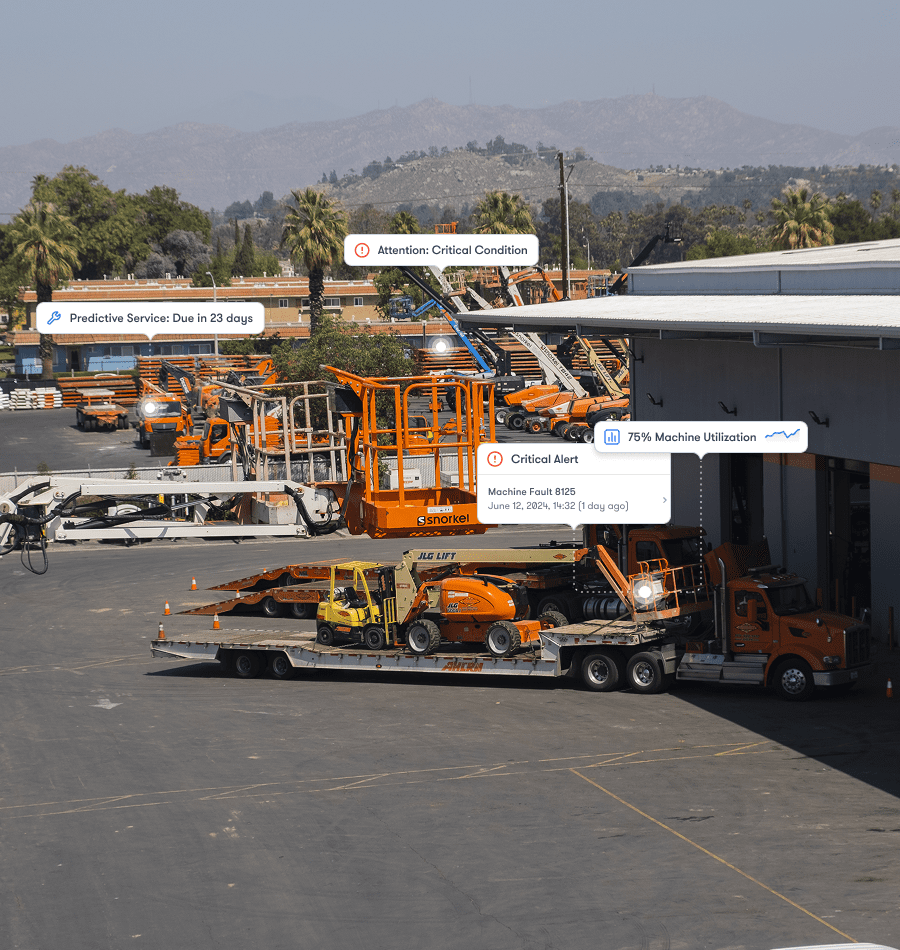
The transition from manual coordination to orchestrated insight doesn’t just reduce headaches; it accelerates the business.
That is of course timely as customer expectations are evolving rapidly. Transparency, uptime, sustainability reporting, and accurate jobsite information are no longer differentiators, they are table stakes. Many of the larger rental companies are responding via online portals to support customer rented-asset, insights needs, and helping the industry transform how and what data is shared with customers.
Meanwhile, operations teams of both the customer and the rental company are looking for ways to reduce idle time, predict maintenance needs, and plan fleet mix with greater certainty. Data holds the answers, but only when it is harmonized into a form they can trust and utilize.
That is why now is such a pivotal moment. The companies laying the foundations today — connecting their data streams, defining their use cases, and preparing their platforms — are already setting the pace and will be perfectly positioned to take advantage of the next industry acceleration.
A notable trend is that even the largest rental companies, those historically inclined to build everything in-house, are reconsidering how they scale. Many have discovered that while they can develop certain capabilities internally, accelerating value often requires external support.
It’s no longer a binary choice between “do it yourself” and “outsource everything.” Increasingly, the model is do it with me, working with partners to complement internal priorities and move faster.
This matters because the industry is not standing still. Electrification, smart-site integration, regulatory requirements, and customer expectations continue to intensify. Data consolidation and utilization isn’t simply a technological step; it is a strategic one.
As companies mature digitally, they will see the opportunity shift from simply gathering data to building applications on top of it:
These innovations require connected, reliable data sets, another reason why establishing a coherent, orchestrating platform is becoming so important. Without unified data foundations, AI may struggle to deliver consistent or trustworthy outputs. With them, entirely new value propositions become possible.
‘The data challenge isn’t going away tomorrow, but it is becoming manageable. The industry is slowly but surely moving toward harmonization, clarity, and orchestrated decision-making.’
While the destination is clear, the journey will not be the same for everyone. Some organizations will sprint; others will move step-by-step. The important part is beginning. Each connected asset, each integrated data stream, each workflow automated all move a rental business from crawl to walk, and from walk toward run.
And critically, the companies that position themselves now will be ready when customer expectations, regulatory pressures, and operational demands hit the next inflection point. Those who wait may find themselves scrambling to catch up rather than building strategically.
The data challenge isn’t going away tomorrow, but it is becoming manageable. The industry is slowly but surely moving toward harmonization, clarity, and orchestrated decision-making. The light at the end of the tunnel comes from recognizing the path forward, and taking the steps now that make future transformation possible.
Rental companies continue to excel at solving customer physical asset demands. The difference today is they can leverage connected data and unified platforms to meet customers’ data transparency and insights requirements to offer a more complete service.
And it’s the platform that’s key. Because when your data speaks the same language, your business finally can too.